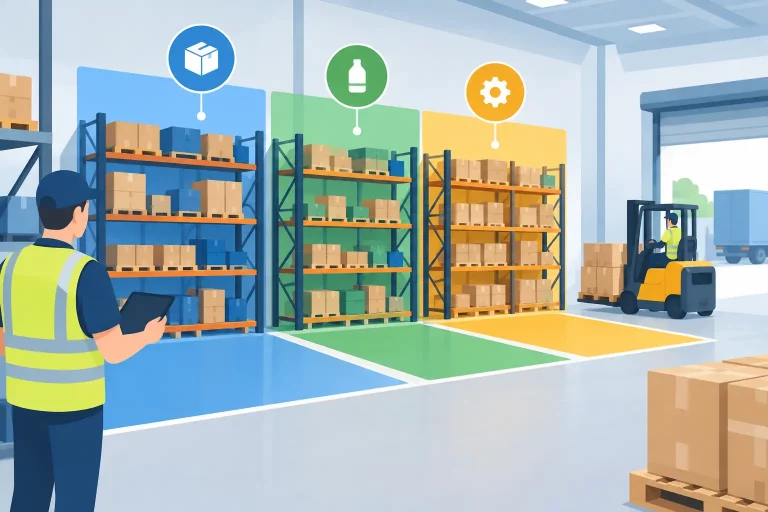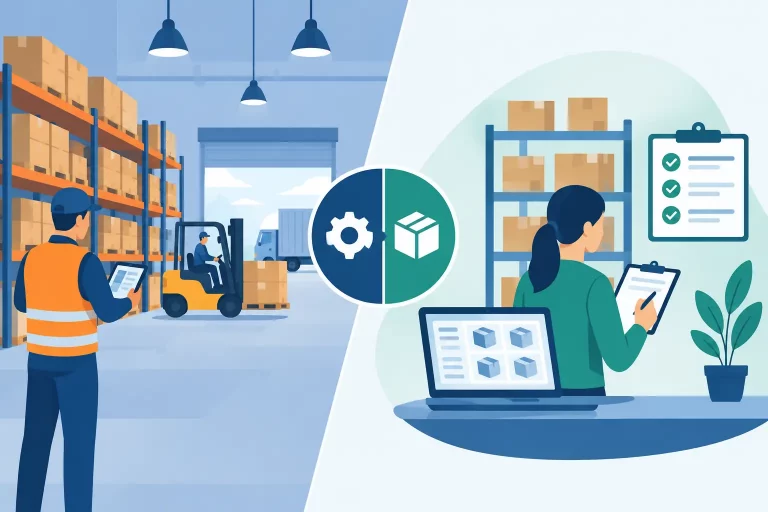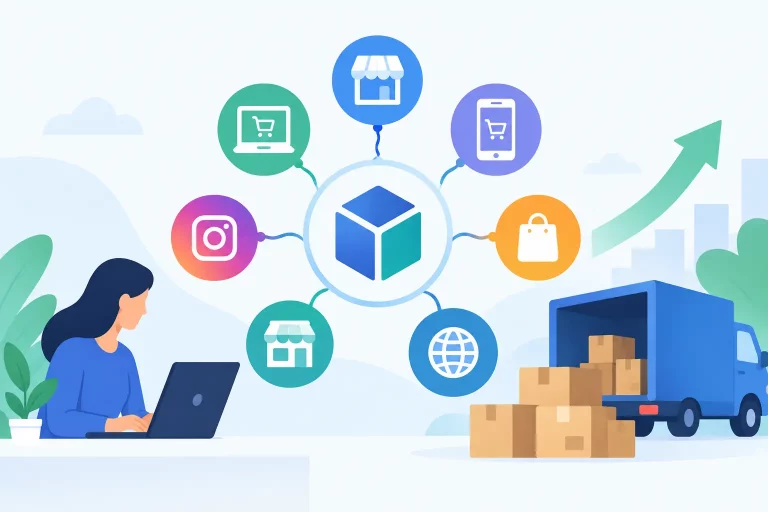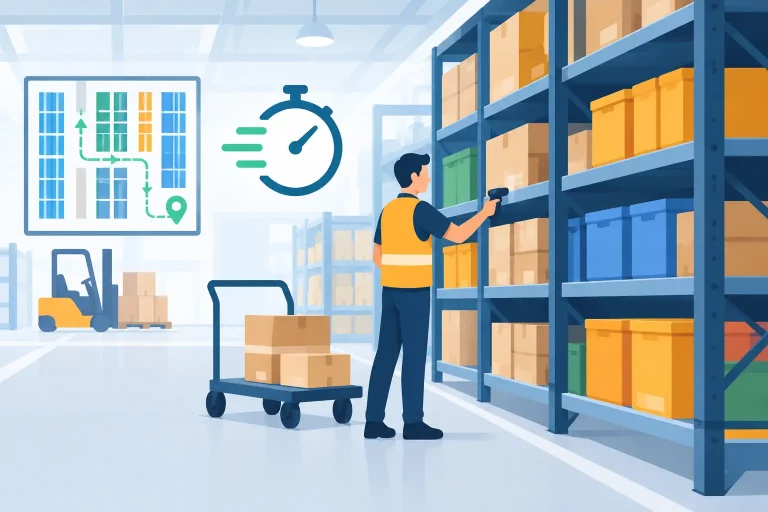
Shipping problems rarely start at the label. They start when orders live in one system, inventory in another, and warehouse teams are forced to work around disconnected tools. That is why evaluating the best ecommerce shipping platforms is not just about postage discounts. It is about control over fulfillment speed, order accuracy, carrier selection, and the operational workload behind every shipment.

For a small store shipping a few dozen packages a day, a basic label tool may be enough. For a multichannel business selling on Shopify, Amazon, Walmart, eBay, and wholesale channels at the same time, shipping software becomes operational infrastructure. The right platform reduces manual work, keeps orders moving, and helps prevent expensive mistakes that show up as late deliveries, split shipments, and support tickets.
What the best ecommerce shipping platforms actually solve
Most merchants start looking for shipping software because they want better rates. That matters, but it is rarely the full problem. In practice, shipping friction usually comes from order routing, carrier rules, warehouse handoffs, address issues, inventory visibility, and exception handling.
A strong platform should pull orders from every sales channel into one workflow, apply shipping logic automatically, generate labels without extra clicks, and push tracking details back to the source channel. If your team still exports CSVs, checks stock manually, or rekeys order data into carrier portals, the issue is bigger than postage cost.
For growing sellers, the best platform is usually the one that fits into a wider operating model. That means it should work with your inventory, warehouse, purchasing, and marketplace systems instead of acting like a standalone shipping island.
How to evaluate the best ecommerce shipping platforms
The right choice depends on order volume, channel mix, warehouse complexity, and how much automation your team actually needs. A platform that works well for a single-brand DTC store may fall short for a seller managing marketplace SLAs, multiple warehouses, bundles, and wholesale orders.
Start with your order flow
Look at how orders enter the business, how they get prioritized, and what slows fulfillment down. If you sell across multiple channels, centralized order management should matter as much as label creation. Shipping software that cannot keep pace with multichannel operations often creates bottlenecks somewhere else.
Check carrier flexibility
Some platforms are strongest for domestic parcel shipping. Others are better for rate shopping, regional carriers, or international paperwork. If your carrier mix is changing as you grow, avoid locking yourself into a tool that only works well for one shipping profile.
Review warehouse support
If your shipping process involves pick lists, scan-based packing, multiple locations, or team-based fulfillment, you need more than a simple print-label app. Warehouse functionality often determines whether shipping stays efficient at scale.
Measure automation depth
Rules-based shipping matters when volume increases. The difference between a good and mediocre platform often comes down to whether it can auto-select service levels, route orders by warehouse, flag exceptions, and reduce decision-making at the packing station.
9 best ecommerce shipping platforms to consider
1. ShipStation
ShipStation is one of the most recognized names in ecommerce shipping, and for good reason. It supports a wide range of carriers and sales channels, has solid automation rules, and is generally easy for small and midsize merchants to adopt.
Its strength is accessibility. Teams can get up and running quickly, and it handles common shipping workflows without much friction. The trade-off is that some businesses eventually outgrow it when they need deeper inventory control, more advanced warehouse processes, or tighter operational coordination across channels.
2. ShippingEasy
ShippingEasy is often a fit for smaller ecommerce businesses that want shipping plus basic customer marketing features. It covers the core label and order management needs well enough for straightforward operations.
Where it works best is simplicity. Where it can become limiting is complexity. If your operation includes multiple warehouses, wholesale workflows, or a large marketplace footprint, it may not deliver the level of control required.
3. Easyship
Easyship stands out for international shipping support and cross-border functionality. Merchants that sell globally often look at it for duties, taxes, and courier options that are easier to manage than piecing together international workflows manually.
It is a strong option when global expansion is the main priority. If your bigger issue is domestic multichannel operations or warehouse coordination, the shipping features may be strong while the broader operational picture still needs other systems.
4. Shippo
Shippo is popular with small businesses and developers because it offers straightforward carrier access and a relatively clean experience. It is often used by brands that want simple label generation and rate comparison without a heavy implementation.
That simplicity is the appeal. It is less ideal for merchants who need deep workflow automation, warehouse management, or end-to-end control across inventory and fulfillment.
5. Ordoro
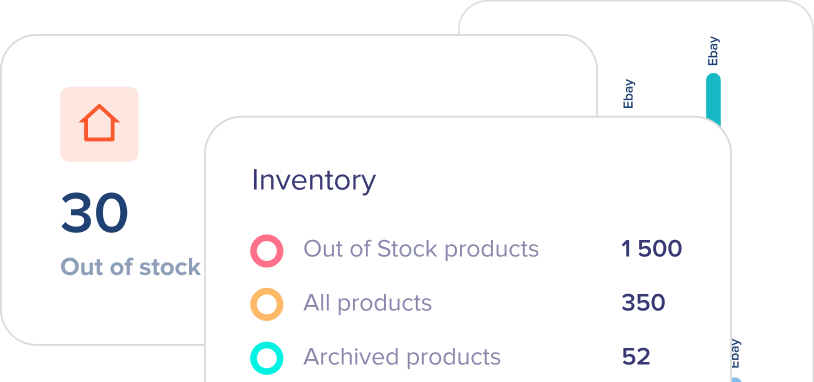
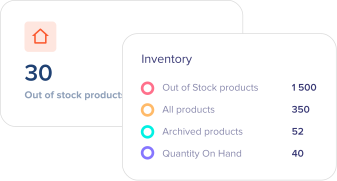
Ordoro is worth attention for merchants that want shipping tied more closely to inventory management. It offers shipping, kitting, and supplier-related functionality that can help operations teams get more visibility than a basic shipping app would provide.
For some businesses, that middle ground is useful. For others, especially those with more complex multichannel and warehouse requirements, it may still sit between categories without fully replacing broader operations software.
6. Pirate Ship
Pirate Ship has earned a loyal following because it is simple, low-friction, and cost-conscious. For smaller sellers shipping mostly domestic parcels, it can be a very practical option.
The limitation is clear. It is not built to be a central operations platform. If your team needs shipping automation connected to inventory, marketplaces, warehouse workflows, and purchasing, this type of tool will likely be too narrow.
7. Veeqo
Veeqo combines shipping with inventory and order management, which makes it more relevant for growing multichannel sellers than shipping-only tools. Merchants that need broader visibility often put it on their shortlist for that reason.
Its fit depends on how deep your operational needs go. Businesses with higher SKU counts, more warehouse complexity, or more demanding wholesale processes should look closely at whether the feature set matches the next stage of growth, not just current needs.
8. Shipping software inside larger commerce operations platforms
For many scaling merchants, the best answer is not a dedicated shipping app at all. It is a broader operations platform with strong shipping built in. This matters when shipping is tightly connected to inventory availability, order routing, warehouse execution, and multichannel sales.
That is where platforms like eSwap become more relevant. Instead of treating shipping as a separate task after the order comes in, the workflow runs through one operational system. Orders, stock, warehouses, carriers, and channel updates stay connected. That reduces manual handling and gives operators more control over speed and accuracy.
9. Carrier-native tools
UPS, FedEx, USPS, and other carriers all offer their own software and portals. These can work for businesses with a simple carrier strategy or negotiated relationship they want to preserve.
The problem is that carrier-native tools are rarely built for multichannel orchestration. They help you ship with that carrier. They do not usually solve the larger workflow issues that come with modern ecommerce operations.
What separates a useful tool from a scalable platform
The difference usually comes down to whether the software helps your team process shipments faster without creating new blind spots. A useful tool prints labels. A scalable platform connects shipping to inventory accuracy, warehouse logic, order prioritization, and channel sync.
This is where many merchants make the wrong decision. They buy for today’s label volume instead of tomorrow’s operational complexity. The result is predictable: they save a little time on postage but still struggle with backorders, split fulfillment, and manual exception handling.
If your business is adding channels, warehouses, staff, or wholesale accounts, shipping software should support that growth pattern. Otherwise you will end up replacing it just as order volume becomes harder to manage.
Which platform is best for your business?
If you are a smaller seller with basic shipping needs, tools like Pirate Ship, Shippo, or ShippingEasy may be enough. If you need stronger carrier management and automation without major operational complexity, ShipStation is often a reasonable choice.
If international shipping is a major priority, Easyship deserves a close look. If you want shipping tied more closely to inventory, platforms like Ordoro or Veeqo may be more relevant.
But if your main challenge is not printing labels – it is managing the entire path from sales channel to warehouse to shipment confirmation – then a broader commerce operations platform is often the better investment. In that case, shipping should be part of a connected system, not another disconnected app your team has to work around.
The best ecommerce shipping platforms do more than help you buy postage. They help you ship accurately, move faster across channels, and keep operations under control as volume rises. That is the standard worth buying for.