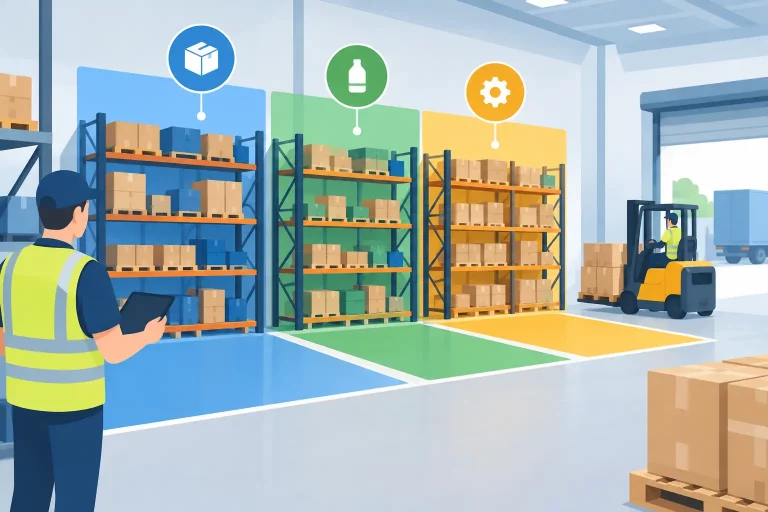
A wholesale order should not require a spreadsheet check, an inventory lookup, a pricing confirmation, and a separate shipping workflow before it can leave the warehouse. Yet that is how many growing merchants operate until order volume exposes every gap. The right software for wholesale order management gives teams one place to control orders, stock, customer terms, fulfillment, and purchasing without creating another disconnected system.

For wholesalers selling through B2B channels alongside Shopify, Amazon, eBay, Walmart, and direct sales, the challenge is bigger than entering purchase orders. Every wholesale commitment affects available inventory, warehouse capacity, replenishment needs, and the stock customers see across every sales channel. The system must keep those moving parts aligned in real time.
Why Wholesale Orders Create Operational Pressure
Wholesale orders are often larger, more variable, and more conditional than direct-to-consumer orders. A single buyer may order by case, pallet, pack size, or individual unit. They may have negotiated price lists, payment terms, minimum order requirements, special shipping instructions, or a dedicated warehouse allocation. Managing these details outside the main commerce operation creates avoidable risk.
The most visible risk is overselling. When wholesale stock is reserved in a spreadsheet but marketplace inventory is not updated, a merchant can sell the same units twice. The result is backorders, canceled orders, rushed transfers, and customer service work that should never have been necessary.
The less visible risk is slow decision-making. If operations managers cannot see open wholesale orders next to current stock, incoming purchase orders, and marketplace demand, they cannot confidently decide what to replenish or where to allocate inventory. Teams start relying on manual checks, personal knowledge, and last-minute corrections. That process does not scale with more customers, products, or warehouses.
What Software for Wholesale Order Management Must Control
Wholesale management software should work as part of the broader commerce operation, not as an isolated B2B order entry tool. Its purpose is to make wholesale orders actionable from the moment they are created through fulfillment, invoicing, and replenishment.
Centralized Order Capture and Processing
Orders can arrive from a B2B portal, sales representatives, email, EDI workflows, phone calls, or recurring customer arrangements. A centralized system records each order against the correct customer, pricing rules, products, fulfillment location, and payment status. Operations teams should not need to rekey the same order into inventory, shipping, and accounting systems.
This creates a clearer processing queue. Teams can see which orders are pending approval, awaiting payment, ready to pick, partially allocated, backordered, or shipped. That visibility matters when a warehouse is balancing priority wholesale accounts with daily retail fulfillment.
A useful system also supports order edits without losing control. Wholesale buyers frequently adjust quantities, add SKUs, or request split shipments. The software should update inventory commitments and fulfillment instructions as changes occur, while maintaining a clear record of what changed and when.
Real-Time Inventory Availability
Inventory accuracy is the foundation of wholesale operations. The system must account for stock on hand, committed stock, stock in transit, damaged units, safety stock, and inventory available at each warehouse. Without these distinctions, the available quantity displayed to sales teams and customers is not reliable.
For multichannel merchants, inventory synchronization needs to happen across both wholesale and retail channels. When a wholesale order reserves 500 units, available stock should adjust across connected marketplaces and storefronts according to the business’s allocation rules. When a purchase order is received, that stock should become available where it is actually stored.
There is no single allocation strategy that fits every business. Some merchants reserve inventory for high-value wholesale accounts. Others fulfill all channels from shared stock. Businesses with seasonal demand may maintain channel-specific buffers. Good software supports these operational choices instead of forcing teams into a one-size-fits-all inventory model.
Customer-Specific Pricing and Terms
Wholesale pricing is rarely a single discount applied to a retail catalog. Customers may have contracted prices by SKU, quantity tier, brand, or order volume. They may buy in different currencies, receive payment terms, or have tax exemptions and shipping rules that differ from other accounts.
Managing these rules manually makes pricing errors almost inevitable. A wholesale order management system should apply the correct price and terms automatically when the customer is selected. This protects margin and gives the sales team confidence that approved agreements are being followed.
The same principle applies to product catalogs. Not every wholesale customer should see or order every SKU. A B2B operation may need customer-specific catalogs, pack configurations, minimum quantities, or discontinued-product restrictions. These controls reduce incorrect orders before they reach the warehouse.
Warehouse Execution and Shipping
An order is only valuable when it can be picked, packed, and shipped accurately. Wholesale fulfillment often requires workflows that differ from parcel-based retail shipping, including case picking, pallet labels, freight coordination, appointment requirements, and split shipments from multiple locations.
Warehouse teams need clear pick instructions tied to the actual order requirements. They also need the ability to process orders by status, priority, location, carrier, and shipping method. When those instructions live in a separate system or arrive as notes in an inbox, fulfillment speed drops and mistakes increase.
Shipping integration is equally important. The platform should pass order details into carrier workflows, generate the necessary documentation, and return shipment status to the order record. This gives customer service and sales teams accurate answers without asking the warehouse to track down each shipment.
Purchasing and Replenishment Visibility
Wholesale commitments should inform purchasing decisions. A system that shows only current stock may make inventory look healthy even when large confirmed orders will consume most available units next week. Teams need visibility into demand from open wholesale orders, retail sales, safety stock requirements, and incoming purchase orders.
With this information in one operational view, buyers can prioritize replenishment based on real demand rather than guesses. They can identify products that need reorder action, see which suppliers are supporting fulfillment, and avoid purchasing excess stock simply because data is fragmented.
Where Disconnected Tools Break Down
A collection of separate tools can work at low volume. A storefront platform handles web orders, spreadsheets track wholesale accounts, shipping software produces labels, and accounting software manages invoices. The trouble begins when the same product, order, or customer exists in several places and changes in one system are not reflected everywhere else.
Manual exports may appear manageable until a large order is edited after inventory has already been synced to marketplaces. Then someone must remember to update the allocation, revise the picking list, notify finance, and adjust the shipping plan. Each handoff adds delay and creates another opportunity for error.
The operational cost is not only canceled orders. It includes time spent reconciling inventory, investigating discrepancies, responding to customers, and training new employees on workarounds. These costs compound as the business adds sales channels and warehouses.
Choosing a System That Supports Growth
When evaluating wholesale order management software, start with the workflows that currently create the most friction. Is the business overselling across channels? Are customer-specific prices difficult to enforce? Is the warehouse receiving incomplete instructions? Are buyers working without a reliable view of committed inventory?
Then assess whether the platform connects the functions that need to act on the same data. Inventory, orders, warehouse activity, shipping, purchasing, product catalogs, and accounting workflows should not require constant manual reconciliation. Integrations matter, but so does the quality of the operational data moving through them.
Scalability also means flexibility. A system should support more SKUs, customers, warehouses, and sales channels without requiring a parallel set of spreadsheets. It should provide controls that match the business’s fulfillment model, whether orders ship from one warehouse, multiple facilities, or third-party logistics partners.
eSwap brings wholesale orders into the same operational environment as multichannel inventory, fulfillment, shipping, purchasing, and catalog management. This gives teams a connected view of demand and execution instead of asking them to coordinate critical work across disconnected tools.
The best time to improve wholesale order management is before operational workarounds become standard practice. When every order, inventory movement, and fulfillment decision runs through a controlled system, growth becomes a capacity question rather than a daily exercise in preventing errors.