A lot of operational problems get mislabeled as “inventory issues” when they are really order flow problems. And just as often, teams blame fulfillment delays on order volume when the real issue is inaccurate stock data. That is why understanding inventory management vs order management matters. If you sell across multiple channels, run a warehouse, or manage wholesale and direct-to-consumer sales at the same time, confusing these two functions creates expensive mistakes fast.
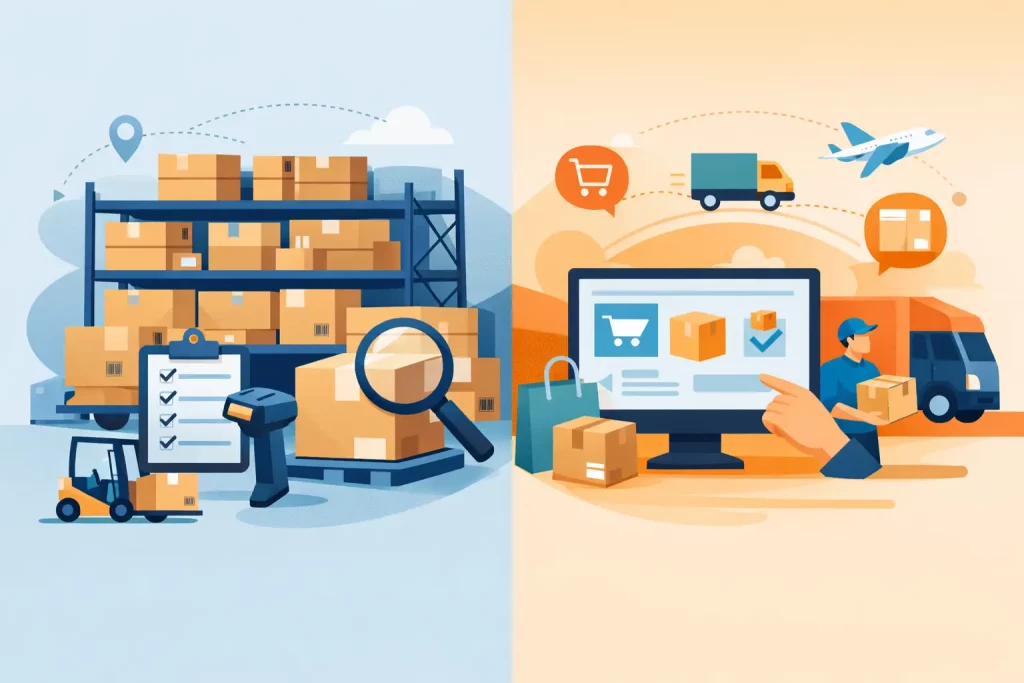
They are closely connected, but they are not the same. Inventory management controls what stock you have, where it is, and when it needs to move or be replenished. Order management controls what customers buy, how those purchases move through your business, and how they get fulfilled correctly. One tracks product availability. The other manages the transaction lifecycle.
When those functions are handled in separate tools, spreadsheets, or disconnected channel dashboards, businesses start losing control. Overselling increases. Picking slows down. Purchasing decisions get less accurate. Customer service teams spend more time fixing preventable issues. Growth becomes harder than it should be.
What is the difference between inventory management vs order management?
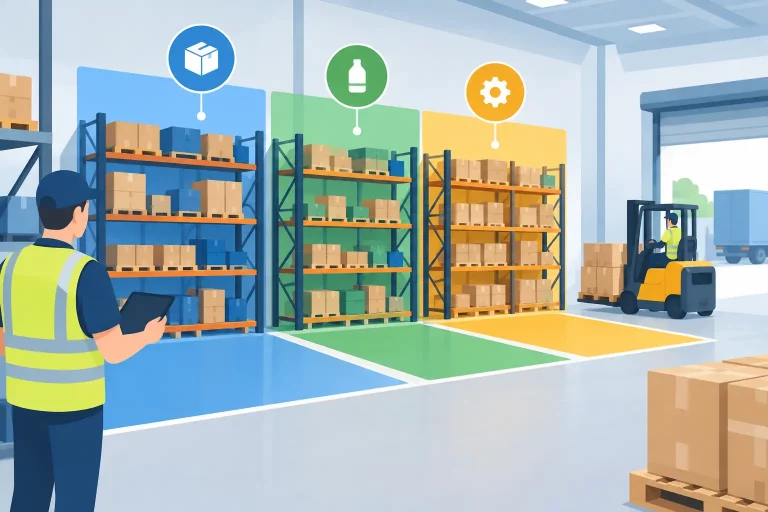
Inventory management is the operational discipline of tracking stock levels, locations, movements, and availability. It covers receiving, warehousing, stock adjustments, transfers, replenishment planning, and inventory accuracy. The goal is simple: know exactly what you can sell and where that stock sits before a sale creates a problem.
Order management starts when a customer places an order and continues until that order is fulfilled, shipped, invoiced if needed, and closed out. It includes order capture, payment status, routing, picking, packing, shipping, status updates, and exception handling. The goal here is speed and accuracy from checkout to delivery.
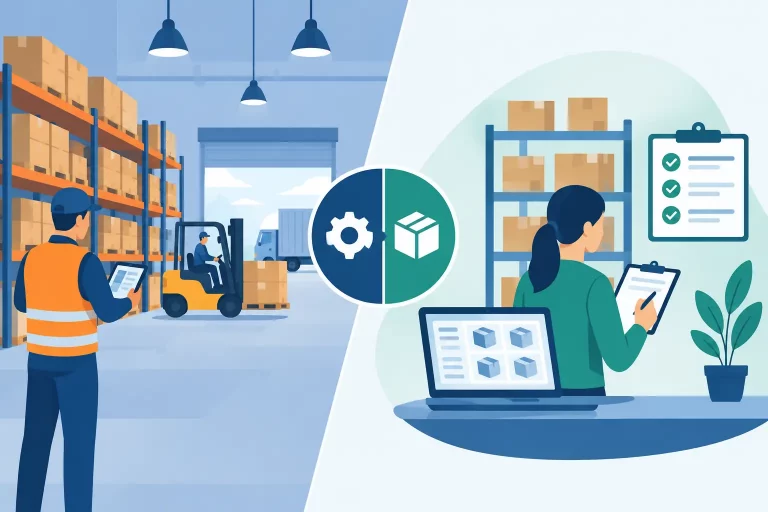
The distinction sounds straightforward, but the overlap is where businesses get into trouble. An order cannot be fulfilled correctly without accurate inventory data. Inventory cannot be reserved or allocated properly without reliable order data. In practice, these are separate functions that need to operate as one system.
Why the difference matters in real operations
If you only look at the definitions, inventory management vs order management can sound like a textbook distinction. In a live commerce environment, the difference shows up in the daily bottlenecks your team is trying to fix.
Say a product is listed on Shopify, Amazon, Walmart, and a B2B wholesale portal. Inventory management is responsible for keeping stock counts synced, accounting for warehouse transfers, and reflecting what is truly available to sell. Order management is responsible for ingesting each order, applying fulfillment rules, routing it to the right warehouse, and pushing it through shipping.
If inventory is wrong, your order team inherits the mess. They have to backorder, split shipments, contact customers, or cancel orders. If order workflows are weak, your inventory data gets distorted by delayed allocations, missed picks, or returns not being processed correctly. One weak point affects the other immediately.
This is why growing sellers cannot afford to treat inventory and orders as isolated back-office tasks. They are core operating systems for multichannel control.
Inventory management: what it actually covers
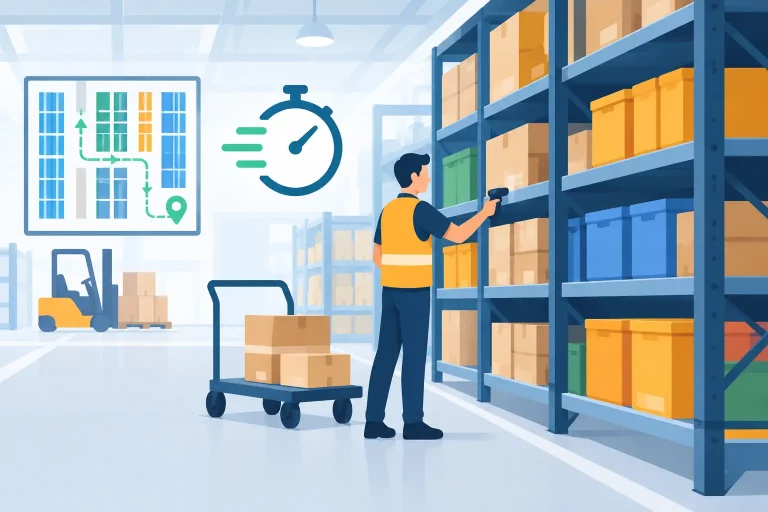
Inventory management is broader than counting units on a shelf. For most growing commerce businesses, it includes stock receiving, barcode-based updates, warehouse bin locations, kitting, bundles, transfers between warehouses, damaged stock handling, and reorder planning. It also includes channel availability logic, especially when not every warehouse can fulfill every order type.
Good inventory management answers practical questions fast. How much sellable stock is left? How much is committed to open orders? What is incoming from suppliers? Which warehouse should carry more units? Which SKUs are at risk of stockout? Which products are tying up cash?
This function is especially important for operators selling across multiple marketplaces because one bad stock count can trigger overselling across every connected channel. The more channels, warehouses, and sales models you add, the more costly inventory errors become.
Accurate inventory management also improves purchasing. If stock data is clean, demand planning becomes more reliable. Buyers can reorder based on real movement instead of guesswork. That lowers both stockouts and overstock.
Order management: more than just processing orders
Order management is often treated as a simple handoff from checkout to shipping, but it is much more than that. It is the workflow engine that keeps sales moving without creating fulfillment chaos.
A strong order management process captures orders from every channel in one place, validates order details, applies business rules, reserves inventory, triggers warehouse tasks, updates shipping status, and handles exceptions quickly. It also helps teams prioritize orders based on cutoff times, shipping methods, warehouse capacity, or customer type.
For businesses managing both retail and wholesale, order management gets more complex. Wholesale orders may require different payment terms, larger quantities, custom pricing, partial fulfillment logic, or manual approval steps. Direct-to-consumer orders usually need speed and automation. Marketplace orders often come with strict service-level expectations. One-size-fits-all workflows usually break under that kind of complexity.
That is why order management is not just about moving orders through the queue. It is about controlling how different order types are routed and fulfilled so operations stay fast without losing accuracy.
Where inventory and order management overlap
The overlap between these functions is where operational performance is won or lost.
The moment an order comes in, inventory has to be checked, reserved, and updated. If the item is out of stock, the order workflow has to decide whether to backorder, split the shipment, source from another warehouse, or stop the order. If a return is received, inventory needs to be adjusted while the order record is updated. If a purchase order is received late, open orders may need rerouting.
None of this works well when systems are disconnected.
A separate inventory tool and a separate order tool can work for small sellers with low complexity. But once order volume increases or sales channels multiply, manual syncing starts creating delays and data conflicts. Teams end up checking multiple dashboards, correcting counts by hand, and reacting to errors after customers notice them.
Centralization changes that. When inventory and order workflows share the same operational data, stock updates happen in real time, allocations are more reliable, and warehouse teams can work from one source of truth.
Common mistakes businesses make
One common mistake is assuming inventory accuracy alone will solve fulfillment issues. It helps, but it will not fix slow order routing, poor pick workflows, or missing shipping automation.
Another is focusing only on order speed. Fast processing looks good until orders are pulled against inaccurate stock, routed to the wrong warehouse, or fulfilled without considering channel priorities.
A third mistake is relying on channel-native tools for too long. Marketplaces and storefronts are useful sales endpoints, but they are not designed to run complex multichannel operations across inventory, shipping, wholesale, and warehouse workflows. Once a business grows beyond a few simple sales streams, fragmented tools start adding friction instead of reducing it.
There is also the issue of partial visibility. Some teams know what sold but not what is truly available. Others know what is in stock but cannot easily see order bottlenecks across channels. Neither view is enough when you are trying to scale.
How to choose the right operational setup
The right setup depends on your business model, order volume, warehouse structure, and channel mix. A single-channel brand shipping from one location has fewer moving parts than a multichannel merchant with wholesale accounts, marketplace rules, and multiple fulfillment points.
Still, the direction is usually the same. As complexity grows, inventory management and order management need to be connected inside one operational framework. That does not just reduce admin time. It improves stock accuracy, fulfillment speed, purchasing decisions, and customer experience at the same time.
For operators evaluating systems, the key question is not whether you need inventory management or order management more. You need both. The better question is whether your current tools keep them aligned in real time.
That means looking beyond basic order import and stock sync. Can the system support warehouse logic, purchasing workflows, channel-specific availability, shipping operations, and wholesale requirements together? Can it automate repetitive actions without hiding important exceptions? Can your team trust the data enough to make fast decisions?
This is where a commerce operations platform earns its value. A system like eSwap brings inventory, orders, shipping, warehouses, catalog control, and purchasing into one environment, which gives growing sellers tighter control without adding process sprawl.
The operational view that supports growth
Inventory management vs order management is not a debate about which function matters more. It is a question of operational maturity. Businesses that separate them too aggressively usually end up with slower fulfillment, more manual corrections, and weaker visibility.
When inventory is accurate and order workflows are controlled, the whole business runs with less friction. You can sell across more channels with less overselling risk. You can fulfill faster without guessing. You can buy smarter because stock movement and sales demand are easier to trust.
That is the real advantage. Better systems do not just help you keep up with volume. They give you the control to grow without letting complexity take over.