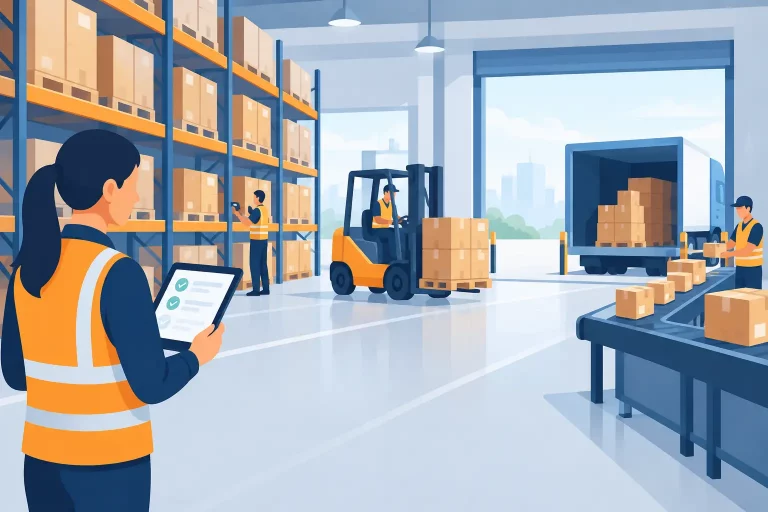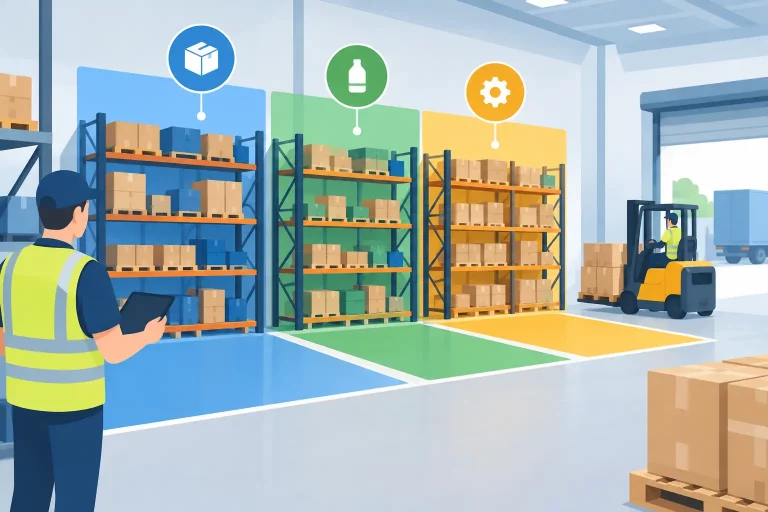
A late shipment is rarely just a warehouse problem. For a multichannel seller, it can trigger a marketplace performance issue, a customer service ticket, a stock discrepancy, and a rushed replenishment decision at the same time. That is why the 3PL vs in-house fulfillment decision deserves more than a simple cost-per-order comparison.
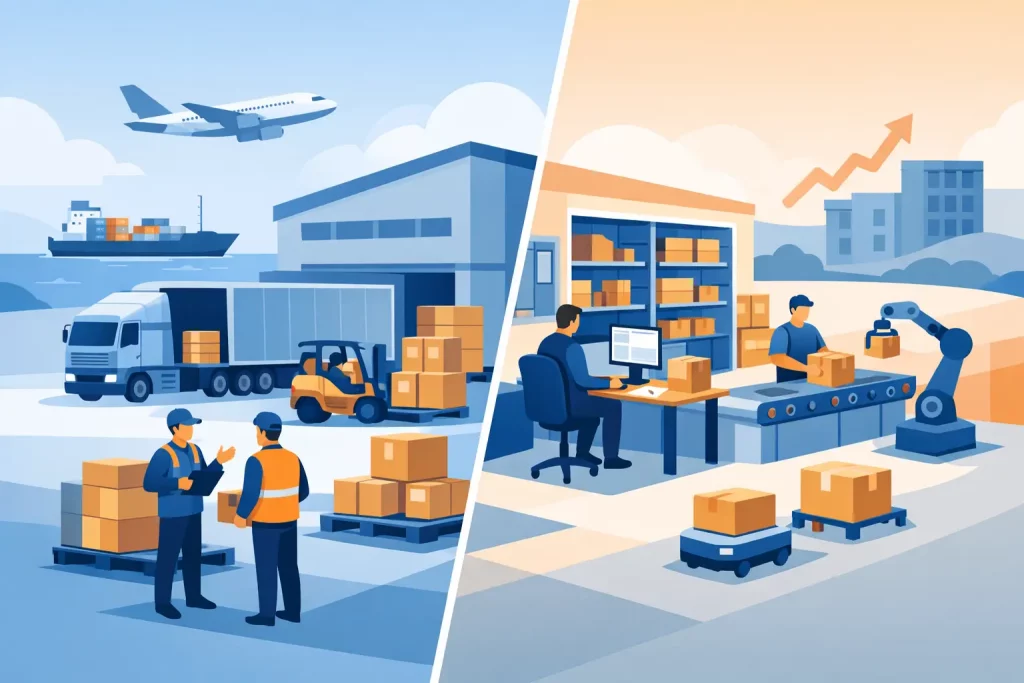
The right model depends on your order volume, product complexity, channels, service promise, and need for operational control. A third-party logistics provider can remove warehouse labor and space from your daily workload. An in-house operation can give you tighter control over inventory, packaging, and shipping execution. Both can support growth. Both can also create expensive friction when the operating model does not match the business.
3PL vs In-House Fulfillment: The Core Difference
A 3PL stores inventory and fulfills orders on your behalf. Your team sends inventory to its facility, orders flow into the provider’s system, and the 3PL picks, packs, ships, and often handles returns. You pay for receiving, storage, pick-and-pack activity, packaging, shipping, and sometimes account management or special handling.
In-house fulfillment means your business runs the warehouse function directly. You lease or own the space, hire and train staff, set warehouse processes, purchase supplies, negotiate carrier rates, and manage the technology that connects orders to shipping and inventory records.
The practical distinction is accountability. With a 3PL, you outsource physical execution but still own the customer experience and inventory outcomes. With in-house fulfillment, your team owns both execution and the systems required to keep it accurate.
Neither model is automatically more efficient. A 3PL can be highly effective for predictable, standard orders. An internal warehouse can outperform when products, order profiles, or service requirements demand close attention. The better question is where your business needs control and where it needs flexibility.
When a 3PL Makes Operational Sense
A 3PL is often the right choice when warehouse work is preventing your team from focusing on merchandising, channel growth, purchasing, or customer acquisition. It can also reduce the risk of signing a long lease or building a warehouse team before demand is proven.
For businesses shipping across the United States, a provider with multiple fulfillment locations can place inventory closer to customers. That may lower transit times and support more competitive delivery promises without requiring your company to operate several facilities.
A 3PL can also help during volatile growth periods. Seasonal brands, fast-growing marketplace sellers, and businesses expanding into new regions may need capacity that changes quickly. Hiring temporary labor, adding packing stations, and finding overflow storage are handled by the provider rather than your internal team.
Still, outsourced fulfillment is not hands-off fulfillment. You need accurate item data, clear receiving rules, approved packaging specifications, inventory reconciliation processes, and defined service-level expectations. If orders, inventory, and product records are disconnected before they reach the 3PL, outsourcing can magnify the problem.
Watch the variable-cost model closely
The attraction of a 3PL is often the ability to turn fixed warehouse costs into variable costs. That can protect cash flow at lower volumes. But variable costs rise with order complexity.
A simple single-item order may be economical. Costs can change quickly when orders contain multiple items, inserts, custom packaging, bundles, regulated products, returns, kitting, or special carrier requirements. Storage fees also become significant when inventory sits longer than expected.
Ask for pricing based on your actual order profile, not an average order. Review the number of units per order, SKU dimensions, monthly storage, peak-season volume, return rates, and any special handling. A low advertised pick fee does not show the full landed fulfillment cost.
Protect visibility and service accountability
A 3PL should provide timely data on receipts, available inventory, orders in process, shipments, exceptions, and returns. But visibility is only useful if the data stays aligned with the rest of your commerce operation.
When marketplace listings, direct-to-consumer stores, wholesale orders, and the 3PL each show different stock levels, overselling becomes more likely. The provider may have physically accurate counts while your sales channels continue to offer inventory that is no longer available.
Set clear rules for receiving discrepancies, cycle counts, damaged goods, canceled orders, cutoff times, and late-shipment exceptions. These details determine whether the provider acts like an extension of your operations team or a separate vendor you have to chase for answers.
When In-House Fulfillment Delivers More Value
In-house fulfillment is often a stronger fit when your products or customer experience require specialized handling. This includes fragile goods, high-value inventory, products with strict quality controls, made-to-order items, customized packages, subscription boxes, and complex bundles.
It is also valuable when fulfillment is a competitive advantage. If your brand depends on branded unboxing, same-day shipping, careful quality checks, or flexible order changes, an internal team can respond faster because decisions and execution happen under one roof.
For higher-volume businesses with stable demand, in-house operations may produce lower per-order costs over time. Once warehouse rent, equipment, labor, and management are spread across enough shipments, the economics can improve. That advantage only holds when the operation is disciplined. Poor slotting, manual picking, inaccurate inventory, and weak labor planning can erase it quickly.
Control creates responsibility
Operating your own warehouse gives you direct control over receiving, bin locations, pick paths, packing standards, and carrier selection. It also means every process failure is yours to identify and correct.
Your team needs reliable workflows from the moment inventory arrives. Purchase orders should match received quantities. Products need consistent SKU labels and locations. Orders need clear allocation rules across warehouses and channels. Shipping labels must be created from accurate service and address data. Returns need to restore, quarantine, or write off inventory correctly.
Without a connected operations system, internal fulfillment can become a collection of spreadsheets, shipping portals, and manual updates. That creates delays at exactly the point where scale requires speed.
The Decision Is Usually About Complexity, Not Just Volume
Order volume matters, but it is not the only threshold. A business shipping 500 highly customized orders per month may benefit from in-house fulfillment. Another shipping 5,000 standardized orders may be better served by a 3PL.
Evaluate the decision through four operational questions:
- How variable are your orders, products, and packaging requirements?
- How much control do you need over same-day decisions and customer experience?
- Can your current team maintain accurate inventory across every sales channel?
- What will fulfillment cost at normal volume, peak volume, and a slower-than-expected month?
The answers should include the cost of errors, not only the cost of labor. A fulfillment model that appears cheaper can become expensive when it causes overselling, marketplace penalties, avoidable split shipments, excess stock, or missed delivery commitments.
Build the Systems Before You Change the Warehouse Model
Whether you choose a 3PL, an internal warehouse, or a hybrid approach, centralized data is the foundation. Orders should flow from every channel into one operational view. Inventory availability should update as products sell, transfer, receive, return, or ship. Teams should be able to see what is available, allocated, in transit, and at risk.
This is especially important for sellers using more than one location. You may keep fast-moving products in-house while using a 3PL for regional distribution, overflow inventory, or marketplace-specific programs. A hybrid model can work well, but only when inventory allocation and order routing rules are clear.
An operations platform such as eSwap can centralize orders, inventory, warehouse activity, shipping, purchasing, and multichannel listings in one system. That gives internal teams and external fulfillment partners a more reliable operational record, reducing the manual work that leads to stock errors and shipping delays.
Before moving inventory to a provider or expanding an internal warehouse, document the workflows that cannot fail. Define your SKU data standards, inventory ownership rules, channel priorities, fulfillment cutoffs, exception handling, and reporting cadence. Then test those workflows with a limited set of products or orders before committing the full operation.
Choose the Model You Can Manage Well
The best fulfillment strategy is the one that supports profitable growth without reducing visibility. A 3PL can give you capacity and geographic reach. In-house fulfillment can give you control and flexibility. A hybrid model can provide both, but it adds coordination requirements.
Make the decision based on the work your operation must perform every day, not the model that sounds simpler on paper. When inventory, orders, shipping, and warehouse data stay connected, your fulfillment choice becomes a growth tool instead of another source of operational risk.