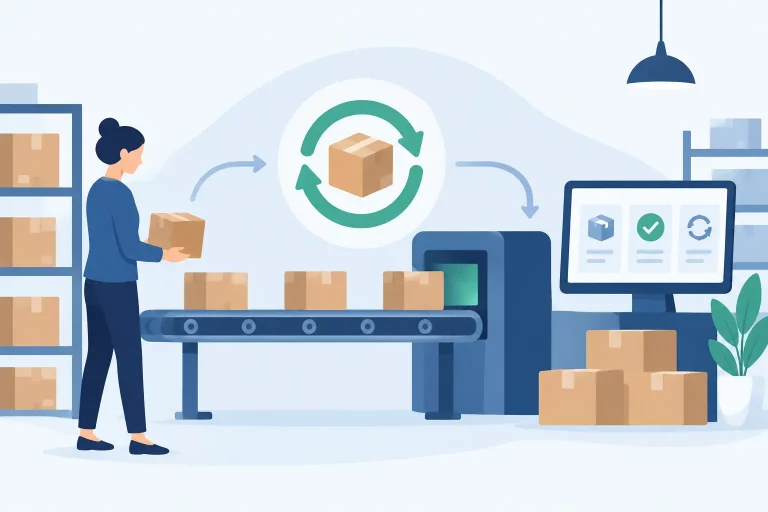
A customer reports a defective item, and your team needs to identify every affected order before the issue becomes a larger recall. If you cannot tell which lot was received, where it was stored, and which customers received it, the problem is not just inventory accuracy. It is operational exposure. Learning how to track lot inventory gives multichannel sellers the control to manage expiration, quality holds, recalls, and supplier accountability without slowing fulfillment.

Lot tracking assigns a unique identifier to a group of products received, produced, or packaged together. That identifier stays connected to the inventory through receiving, storage, picking, shipping, returns, and adjustments. For businesses selling food, cosmetics, supplements, medical products, electronics, or any product with traceability requirements, this is foundational. For other merchants, it is still a practical way to reduce loss and answer difficult customer or supplier questions quickly.
What lot inventory tracking should show
A lot number alone is not enough. A usable lot inventory process records the movement and status of each lot, not simply its existence in a spreadsheet. At any point, an operations manager should be able to see how many units from a specific lot are available, committed to orders, in transit, on hold, damaged, expired, or already shipped.
Each lot record should be tied to the product SKU, supplier, purchase order or production batch, receipt date, and warehouse location. When applicable, add manufacture date, expiration date, cost, quality-control status, and serial or regulatory reference numbers. These fields create a complete operational record rather than a loose label on a carton.
The same SKU may exist in several lots at once. A vitamin bottle from lot A104 and an identical bottle from lot B216 can look interchangeable to a shopper, but they are not interchangeable to your warehouse team if one expires sooner or is under review. Your system must treat them as distinct inventory pools while still presenting accurate total availability to each sales channel.
Build lot tracking into every inventory movement
The best time to establish lot control is at receiving. Waiting until stock is already in storage creates gaps that are difficult to repair later. Require the receiving team to capture or scan the lot number as products arrive and verify the quantity against the purchase order.
A practical workflow has four connected controls:
- Create or capture the lot number during receiving, along with the received quantity and relevant dates.
- Assign the inventory to a defined warehouse and bin location before it becomes available for sale.
- Apply a picking rule, usually first-expired, first-out or first-in, first-out, so the correct lot is selected for each order.
- Record the lot on the shipment transaction so every outbound unit remains traceable to the customer order.
This process needs to apply to transfers, returns, kitting, and inventory adjustments as well. If 40 units move from a main warehouse to a 3PL location, the transfer must retain the lot identity. If a customer return can be resold, the team must confirm its lot before adding it back to available stock. If inventory is written off due to damage or expiration, the adjustment should reduce the specific lot, not just the SKU total.
Choose the right allocation rule for each product
Most lot-controlled businesses use FEFO, or first-expired, first-out. The warehouse allocates the available lot with the earliest expiration date first, which reduces the risk of product aging out while newer inventory ships ahead of it. FEFO is usually the right choice for perishable goods, supplements, beauty products, and regulated products with a usable-life requirement.
FIFO, or first-in, first-out, can work when receipt order matters more than the stated expiration date. This is common for products without formal expiration dates or when the oldest received stock should move first. The trade-off is that FIFO can send later-expiring stock ahead of earlier-expiring stock if receiving dates and expiration dates do not line up.
There are cases where neither automatic rule should apply. A lot under quality review, a recalled lot, or inventory reserved for a wholesale customer must be blocked from normal allocation. Your inventory platform should support lot statuses and hold rules, allowing the warehouse to keep affected stock physically and digitally separate.
Centralize lot data before selling across channels
Multichannel selling makes lot tracking harder because inventory may be listed on Shopify, Amazon, eBay, Walmart, a B2B portal, and through sales representatives at the same time. Customers do not see lots, but every order draws down a physical unit from a specific lot. When sales channels, warehouse tools, and purchasing records operate separately, lot-level accuracy breaks down quickly.
The operational goal is one inventory record that updates all channels. The platform should reserve inventory as orders arrive, allocate the appropriate lot based on your rules, and reduce lot quantities when shipments are confirmed. This prevents a warehouse from picking stock that has already expired, is held for inspection, or was consumed by an order from another channel.
Centralization also matters when stock is split across locations. A SKU may have 300 units in a New Jersey warehouse and 200 in a California warehouse, but the lots and expiration profiles can differ. Channel-level availability should reflect what can actually be fulfilled from each location, while warehouse teams see the lot and bin details required to pick correctly.
For growing sellers, a connected operations system such as eSwap can bring inventory, purchasing, orders, warehouse workflows, and shipping activity into one control point. The value is not merely having lot fields in the catalog. It is maintaining the lot record as inventory moves through the business and across every connected sales channel.
Make warehouse execution easy to follow
Lot tracking fails when it depends on people remembering exceptions. Your warehouse process should tell associates which lot to receive, put away, pick, count, and hold. Barcode scanning is particularly valuable because it validates the product and lot at the point of action, reducing manual keying errors.

At receiving, label cases or pallets clearly if supplier labels are incomplete or hard to scan. During putaway, keep lots separated in defined bins whenever possible. Mixing lots in the same picking location can be workable for fast-moving products, but only when the system and physical labels make the required pick order obvious. Otherwise, it creates a recurring source of incorrect allocations.
Pick tickets, mobile picking workflows, and packing verification should display the assigned lot. Do not let staff substitute another lot simply because it is closer or easier to reach unless an authorized rule permits the change. A substitution may be harmless for some products, but it can disrupt FEFO rotation and leave a near-expiry lot behind.
Monitor exceptions before they become write-offs
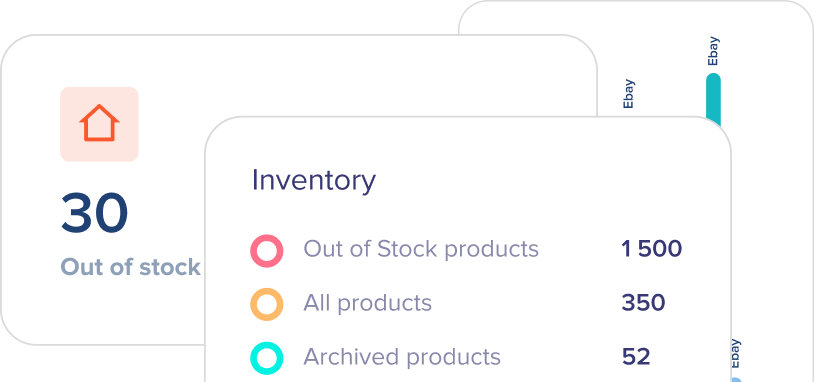
Lot inventory tracking is most valuable when it drives action. Build operational reports around the exceptions that affect revenue, customer experience, and compliance. Review inventory approaching expiration, lots on quality hold, lots with zero movement, and discrepancies between physical counts and system balances.
Set expiration thresholds that match your business model. A DTC brand may stop selling a product online when it has fewer than 90 days remaining, while a wholesale business may need 180 days to meet retailer requirements. The correct threshold depends on transit time, customer expectations, and whether products can be discounted or reworked. One rule for every SKU rarely works.
Cycle counts should also happen at the lot level. Counting only the total SKU quantity can hide a serious problem: your total may be correct while the quantity assigned to each lot is wrong. Target counts to high-value lots, near-expiry stock, fast-moving products, and locations with recent adjustments or receiving issues.
Prepare for recalls and customer inquiries
A well-run recall workflow starts with a lot search, not a warehouse-wide investigation. When a supplier identifies a defective lot, your team should be able to place that lot on hold immediately, stop it from allocating to new orders, find every warehouse location containing it, and identify all shipments associated with it.
The shipment history should support two directions of traceability. You need to trace forward from a lot to the orders and customers who received it. You also need to trace backward from an order or return to the lot and supplier source. Both are essential when responding to a marketplace claim, a chargeback, a supplier dispute, or a regulatory request.
Speed matters, but accuracy matters more. Overly broad recalls create unnecessary refunds and waste. Incomplete recalls create greater customer and compliance risk. Lot-level records let your team isolate the actual affected inventory and communicate with confidence.
Common lot tracking mistakes to avoid
The most common mistake is treating lot numbers as notes instead of inventory controls. If a lot number is entered at receiving but is not required during picking and shipping, the chain of traceability ends before it becomes useful.
Another issue is allowing expired or held lots to remain in available stock. A product can appear available at the SKU level while its only remaining units are unsellable. Your available-to-sell calculation must account for lot status, expiration rules, reservations, and warehouse location.
Finally, avoid building the process around manual spreadsheets once order volume increases. Spreadsheets can document lot balances, but they struggle to keep pace with real-time orders, transfers, fulfillment changes, and multiple warehouses. The more channels and people involved, the more valuable system-enforced workflows become.
Reliable lot tracking is not a paperwork exercise. It is the operating discipline that lets you ship the right inventory, protect customers, manage product aging, and respond decisively when a problem appears. Start by making lot capture non-negotiable at receiving, then carry that identity through every inventory movement. That is how traceability becomes a practical advantage rather than a last-minute scramble.