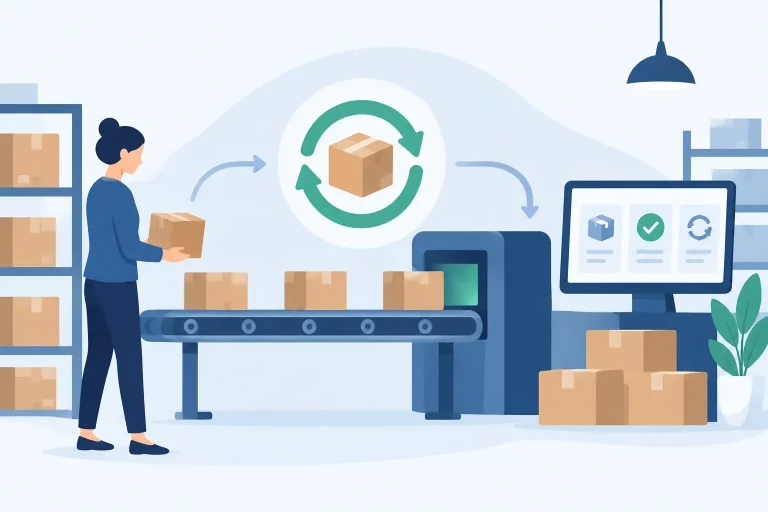
Selling the same catalog on Amazon, eBay, and Shopify sounds like growth until operations start breaking under the load. One oversold SKU, one delayed sync, or one warehouse picking from outdated stock can turn a strong sales month into a customer service problem. That is why amazon ebay shopify integration matters most at the operational level, not just at the sales channel level.

For growing merchants, the real challenge is not getting connected. It is staying accurate while orders, listings, inventory, shipping, and purchasing all move at once. If each channel is managed separately, teams end up duplicating work, correcting preventable mistakes, and losing time to reconciliation. A proper integration strategy fixes that by centralizing control and reducing the gaps between systems.
What amazon ebay shopify integration should actually solve
A lot of sellers approach integration as a simple connector problem. They want Amazon to talk to eBay, eBay to talk to Shopify, and everything to update automatically. That is part of the picture, but it is not enough if the business is scaling.
The real goal is to create one source of truth for operational data. That includes current stock by warehouse, active listings by channel, incoming orders, shipping status, returns, product data, and purchasing activity. When that information lives in separate tools, teams cannot trust what they are seeing. They start checking multiple dashboards before making simple decisions, and that slows down everything from replenishment to fulfillment.
A strong multichannel setup should let you manage products once, allocate inventory accurately, route orders efficiently, and maintain visibility across the business in real time. If your current setup still requires spreadsheet checks or manual quantity updates, you do not have an integration strategy. You have a patchwork.
Why disconnected channel management fails fast
Selling on one marketplace can hide a lot of process issues. Selling across three channels exposes them quickly.
Inventory is usually the first pressure point. If Amazon sells five units but eBay and Shopify do not receive the update fast enough, overselling follows. If stock is split incorrectly across warehouses or reserved inventory is not reflected properly, the problem gets worse. A team that spends its day fixing stock errors is not focused on growth.
Order management is the next weak spot. Separate order flows create duplicate picking logic, different shipping rules, and fragmented customer communication. That means slower fulfillment, inconsistent service levels, and more exceptions to manage manually. Once volume increases, those manual interventions pile up.
Catalog control also becomes difficult. Product titles, channel-specific attributes, pricing, bundles, and variations need structure. Without centralized catalog management, sellers end up maintaining the same product data in multiple places. That increases listing errors and makes it harder to launch new products cleanly.
The operational case for centralized control
The most effective amazon ebay shopify integration setups are built around control, not convenience. Convenience helps at the beginning. Control matters when volume rises, inventory spreads across locations, and fulfillment rules become more complex.
Centralized control means inventory updates flow from one core system. Orders from every channel land in one operational queue. Shipping rules can be applied consistently. Warehouse teams can work from accurate pick lists. Purchasing teams can plan replenishment against total demand instead of channel-by-channel estimates.
This changes how a business runs day to day. Instead of reacting to errors after they happen, teams can prevent them with better visibility and automation. Instead of hiring more people to manage channel complexity, they can scale with cleaner workflows.
That is where a commerce operations platform becomes more valuable than a basic channel connector. The difference is not technical jargon. It is whether the system can support inventory accuracy, fulfillment speed, and multichannel growth without adding chaos behind the scenes.
Amazon eBay Shopify integration and inventory accuracy
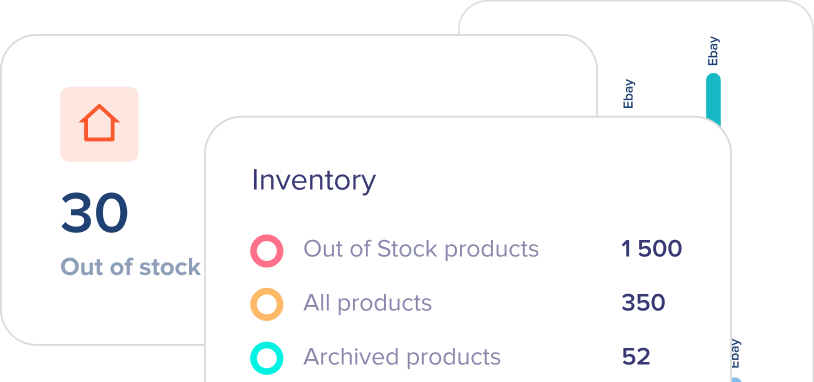
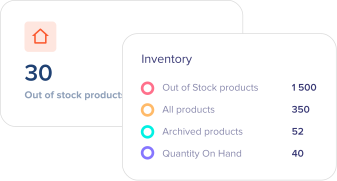
Inventory accuracy is the center of multichannel performance. If stock counts are wrong, everything downstream suffers. Listings become unreliable, orders get delayed, customer trust drops, and warehouse work becomes reactive.
A strong integration should update inventory across Amazon, eBay, and Shopify from a centralized stock position. It should also account for real operational conditions, including reserved stock, incoming purchase orders, multi-warehouse availability, kits or bundles, and channel-specific allocation rules. Simple quantity syncing is often not enough for businesses with more complex inventory movement.
This is where trade-offs matter. Some sellers want every channel to pull from one pooled inventory number. Others need tighter control, with different stock buffers for marketplaces or different warehouse assignments by sales channel. There is no universal rule. The right structure depends on your fulfillment model, margins, product velocity, and tolerance for stock risk.
If your business sells fast-moving SKUs, seasonal products, or items shared across retail and wholesale, inventory logic needs to be precise. A generic connector may move quantities, but it may not give you the operational controls needed to protect availability and margin.
Orders, shipping, and warehouse flow in one system
Once orders start flowing from multiple channels, speed depends on what happens after the sale. This is where many sellers discover that integration is not just about syncing data. It is about running fulfillment with fewer handoffs.
When Amazon, eBay, and Shopify orders are managed in one system, teams can apply common shipping logic, assign warehouse tasks more consistently, and reduce the time spent switching between platforms. Orders can be filtered by priority, shipping service, location, or exception status. That makes it easier to spot delays before they affect customers.
Warehouse operations also improve when pick, pack, and ship steps are connected to live order data. Staff do not need to work from separate channel dashboards or manually cross-check inventory status. They can process work from one queue and trust that stock levels will update across channels as fulfillment happens.
This is especially important for businesses with more than one warehouse, third-party logistics partners, or mixed fulfillment models. The more moving parts you have, the more expensive operational inconsistency becomes.
Listings and catalog management across channels
Most sellers underestimate how much time is lost to poor catalog structure. Product data that looks manageable in one store becomes difficult when it has to support Amazon listing requirements, eBay specifics, and Shopify storefront presentation at the same time.
A better integration approach centralizes catalog data so teams can manage core product information once while still adjusting for channel differences. That includes titles, SKUs, barcodes, variants, images, dimensions, and category mapping. It also helps when launching new products or cleaning up a large catalog with duplicate or mismatched records.
The benefit is not only speed. It is accuracy. If your catalog is organized properly, it becomes easier to report on sales, forecast purchasing, and understand product performance across channels. If it is not, every downstream process becomes harder than it should be.
What to look for in an integration platform
Not every platform built for amazon ebay shopify integration is designed for operational scale. Some are fine for basic channel syncing, especially for smaller catalogs or low order volume. But if your business is already dealing with warehouse complexity, purchasing needs, or wholesale alongside retail, the system has to do more.
Look for centralized inventory management, real-time order aggregation, shipping workflow support, and strong catalog controls. Multi-warehouse visibility matters if stock is stored in more than one location. Automation rules matter if you want to reduce repetitive task handling. Reporting matters if you need to make purchasing and fulfillment decisions from actual data rather than guesswork.
It also helps to choose a platform that does not treat B2B and wholesale as separate from the rest of your operation. For many growing merchants, retail and wholesale draw from the same inventory and depend on the same back-office workflows. Splitting those functions across disconnected systems creates another layer of avoidable friction.
For businesses that need broader operational control, a platform like eSwap fits naturally because it is designed to centralize inventory, orders, shipping, warehouses, purchasing, and multichannel sales in one environment rather than acting as a lightweight sync tool.
The real return on integration
The return on integration is not just more channel coverage. It is fewer errors, faster fulfillment, tighter inventory control, and better use of team time.
When systems are connected properly, staff spend less time correcting listings, reconciling stock, and manually routing orders. Managers gain clearer visibility into demand and operational bottlenecks. Founders can scale channel sales without feeling like every new order creates more back-office strain.
There is still an implementation decision to make. Some businesses need a fast connector because their model is simple and volume is low. Others need deeper infrastructure because complexity is already slowing them down. Knowing the difference is what keeps integration from becoming another short-term fix.
If Amazon, eBay, and Shopify are all part of your growth plan, the right question is not whether those channels can connect. It is whether your operation can stay accurate, fast, and controlled once they do.