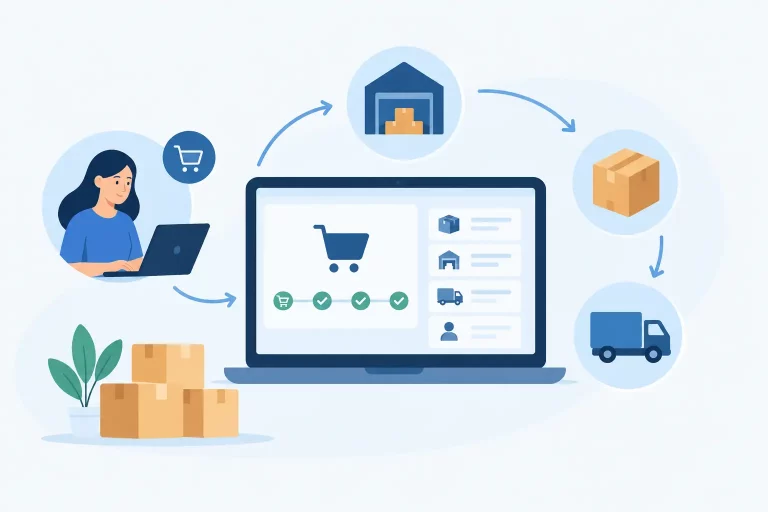
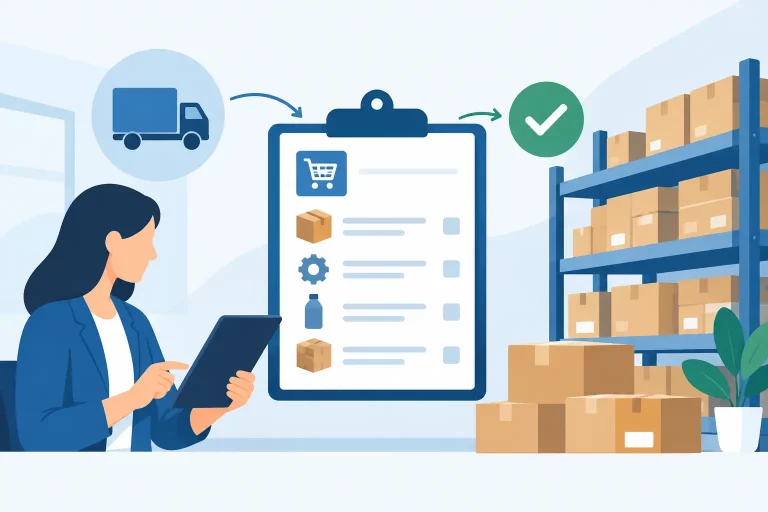
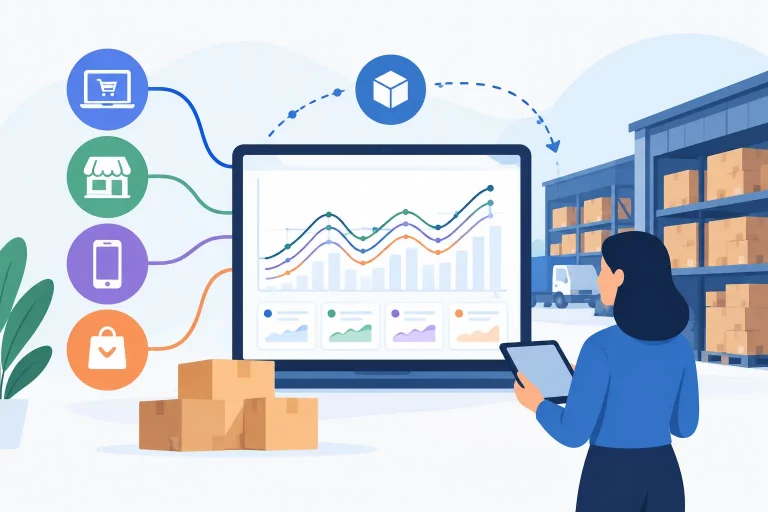
A customer buys a product on your Shopify store, but the closest warehouse is low on stock. Another location has inventory, Amazon has reserved units, and the customer selected two-day shipping. The order is not simply waiting to be picked. It needs a decision.
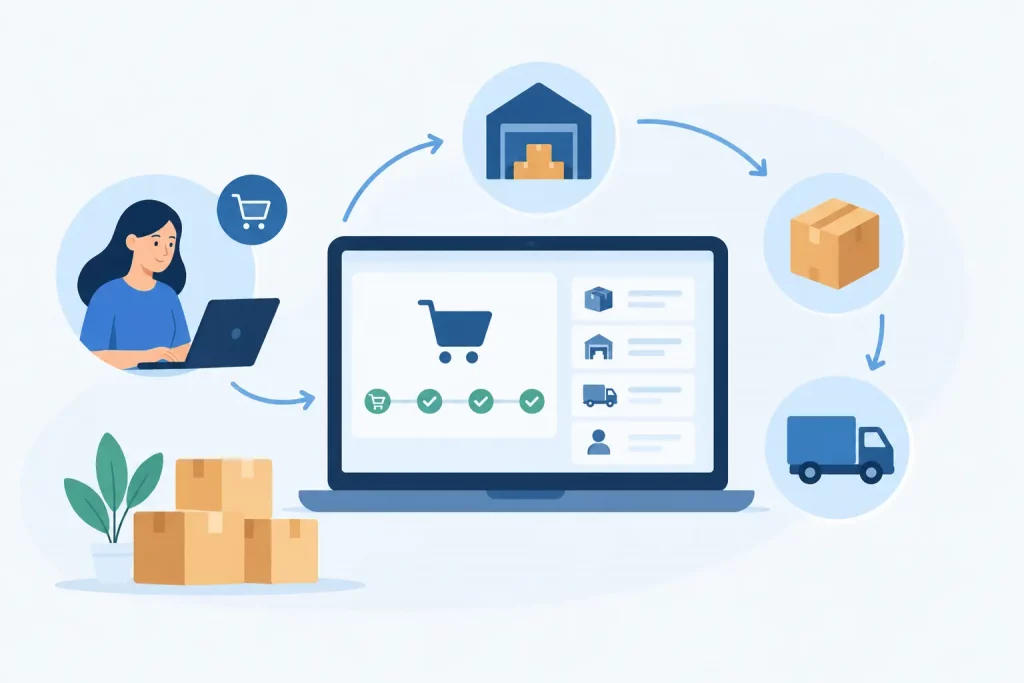
What is order orchestration? It is the process of automatically directing each order through the best available fulfillment path based on rules such as inventory availability, warehouse location, shipping service, customer promise, order priority, and cost. For multichannel sellers, it turns a collection of sales channels, warehouses, and fulfillment options into one controlled operation.
Without orchestration, teams make these decisions manually or rely on disconnected systems to make partial decisions. That leads to split shipments, missed service levels, overselling, unnecessary shipping costs, and more time spent fixing exceptions. With the right orchestration logic in place, orders move from checkout to delivery with clear rules and reliable operational data behind them.
What Is Order Orchestration?
Order orchestration sits between order capture and fulfillment execution. It receives an order from a storefront, marketplace, B2B portal, or sales team, then determines how that order should be fulfilled before sending clear instructions to the warehouse, shipping system, dropship supplier, or fulfillment partner.
The goal is not merely to move an order from one status to the next. The goal is to make the best fulfillment decision every time, using current inventory and operational constraints.
For example, a merchant may sell the same SKU through Shopify, Amazon, Walmart, eBay, and wholesale accounts. That SKU may be stored across two warehouses, a retail location, and a third-party logistics provider. Order orchestration applies business rules to decide which inventory should be allocated, where the order should ship from, whether items should ship together, and which carrier service should be used.
An order management system may collect orders from multiple channels. Order orchestration adds the decision-making layer. It helps ensure the order is assigned to the right source before the fulfillment team starts picking and packing.
How Order Orchestration Works in Practice
The workflow begins when an order enters the commerce operation. The system validates the order data, including customer address, payment status, product information, shipping method, and any channel-specific requirements. It then checks available inventory across eligible stock locations.
Next, orchestration rules evaluate the fulfillment options. A standard rule might assign an order to the nearest warehouse with enough available stock. A more advanced rule might protect inventory reserved for a wholesale customer, avoid fulfilling low-margin items from an expensive location, or prioritize a warehouse with available labor capacity.
Once the order is allocated, the system sends it to the appropriate fulfillment workflow. That could mean generating a pick task in a warehouse, creating a shipping label, transmitting the order to a 3PL, or routing the order to a dropship supplier. As the order progresses, status updates flow back to the sales channel and customer-facing systems.
The process also needs to handle exceptions. If the selected warehouse cannot fulfill the order because stock is damaged, a carrier cutoff has passed, or an address fails validation, the orchestration logic should apply a fallback rule. It may reroute the order to another location, select an alternate shipping service, or place the order in an exception queue for review.
That exception handling is where operational control matters most. A routing rule that works only when everything is perfect will not protect fulfillment performance at scale.
The Business Problems Order Orchestration Solves
Multichannel growth often creates operational complexity before a business realizes it. Orders increase, new channels are added, and more fulfillment locations come online. At first, teams can manage the work through spreadsheets, channel dashboards, and manual warehouse instructions. Eventually, the volume makes that approach expensive and error-prone.
Order orchestration reduces this pressure by replacing individual decisions with consistent rules. It helps prevent overselling by checking inventory before allocation and updating availability as inventory is committed. It reduces fulfillment delays by directing orders to the right location immediately instead of waiting for a team member to review them.
It also gives merchants better control over shipping costs. Sending every order from a single warehouse may be operationally simple, but it can increase zone charges and delivery times. Routing orders from the most appropriate eligible location can improve delivery performance without creating unnecessary split shipments.
For wholesale businesses, orchestration can enforce account-specific requirements. A wholesale order may need to ship on a certain carrier account, use specific packaging, include compliance documents, or wait until all lines are available. Those rules should be part of the fulfillment process, not knowledge held by one experienced employee.
The Rules That Drive Better Fulfillment Decisions
Order orchestration is only as useful as the rules and data supporting it. Every merchant needs to decide which outcomes matter most: speed, shipping cost, inventory protection, consolidation, service level, or warehouse workload balance. The answer depends on the business model.
A high-volume DTC brand may prioritize shipping from the closest location to meet delivery expectations. A distributor may prioritize shipping complete orders to avoid partial deliveries. A merchant selling high-demand products may reserve a portion of inventory for its highest-margin channel or most valuable B2B accounts.
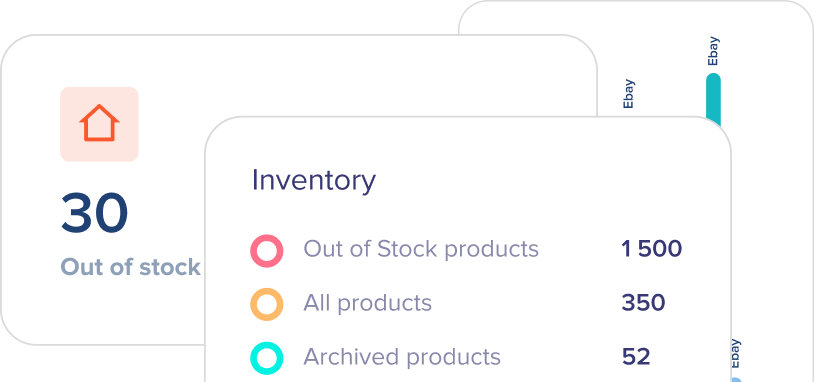

Common orchestration rules include allocating orders based on available stock, assigning orders to the nearest eligible warehouse, prioritizing a preferred fulfillment location, holding orders with fraud or address issues, and selecting carrier services based on customer shipping commitments. These rules should be clear enough for operations teams to review and adjust as demand patterns change.
There are trade-offs. The closest warehouse is not always the best warehouse if fulfilling from it creates a split shipment. The lowest-cost shipping method is not the right choice if it misses a promised delivery date. Protecting inventory for one channel may reduce availability on another. Effective orchestration makes these trade-offs intentional instead of leaving them to chance.
Order Orchestration Depends on Accurate Data
Automation cannot correct unreliable inventory. If stock counts are delayed, duplicate product records exist, or warehouse locations are not properly tracked, routing decisions will be wrong even if the rules are well designed.
A dependable orchestration setup requires a centralized view of sellable inventory, committed inventory, incoming purchase orders, and stock movement by location. Product data must also be consistent across channels. If the same item is listed under different SKUs without a reliable mapping process, the system cannot accurately determine what is available to fulfill.
Warehouse execution matters just as much. Once an order has been allocated, pickers need accurate instructions, shipping teams need the correct service and label, and inventory must update when items are picked, packed, shipped, returned, or adjusted. Orchestration is not a stand-alone feature. It is connected to inventory management, warehouse workflows, shipping operations, purchasing, and channel integrations.
Order Management vs. Order Orchestration
The terms are often used together, but they solve different problems. Order management focuses on collecting, processing, tracking, and updating orders across sales channels. It gives teams one place to see order status and manage the order lifecycle.
Order orchestration focuses on deciding how those orders should be fulfilled. It applies allocation and routing logic across inventory locations, warehouses, carriers, fulfillment partners, and fulfillment methods.
A growing seller needs both. Centralized order management prevents teams from working across separate marketplace and storefront dashboards. Orchestration prevents that centralized order queue from becoming another manual decision queue.
A Multichannel Example
Consider a retailer with warehouses in New Jersey and Nevada, a 3PL in Texas, and sales through Shopify, Amazon, and wholesale accounts. A customer in Colorado places an order for three items on Shopify. Two items are available in Texas, while the third is available in both Texas and Nevada.
A basic system may allocate the third item from Nevada because it sees stock there first. That creates two shipments and higher shipping costs. An orchestration rule can recognize that all three items are available in Texas and route the complete order to the 3PL instead.
Now consider a wholesale order containing the same products. If the wholesale account requires palletized shipping and a specific carrier, the system can apply different routing rules based on the customer type. The products are the same, but the fulfillment requirements are not.
Building an Order Orchestration Strategy
Start by documenting where orders originate, where inventory is held, and which teams or partners fulfill each type of order. Then identify the decisions your team makes repeatedly. If staff regularly ask which warehouse should ship an order, whether to split an order, or which carrier service to select, those are candidates for automation.
Implement the highest-impact rules first. For many businesses, that means inventory-based allocation, warehouse priority, and shipping-service selection. Add more detailed rules as the operation becomes more complex. Trying to automate every edge case on day one can make configuration difficult to manage.
The platform should also provide visibility after rules are applied. Operations teams need to see why an order was routed to a specific location, identify orders held for exceptions, and adjust rules without relying on disconnected systems. eSwap brings inventory, orders, warehouse execution, shipping, purchasing, and multichannel connections into one operational environment, giving teams the data foundation needed to route orders with confidence.
Order orchestration is most valuable when it becomes a daily operating discipline, not a one-time configuration project. Review fulfillment performance, shipping costs, split-order rates, stockouts, and exception volume regularly. The best routing rule is the one that continues to support customer promises while keeping the operation accurate, efficient, and ready for the next stage of growth.