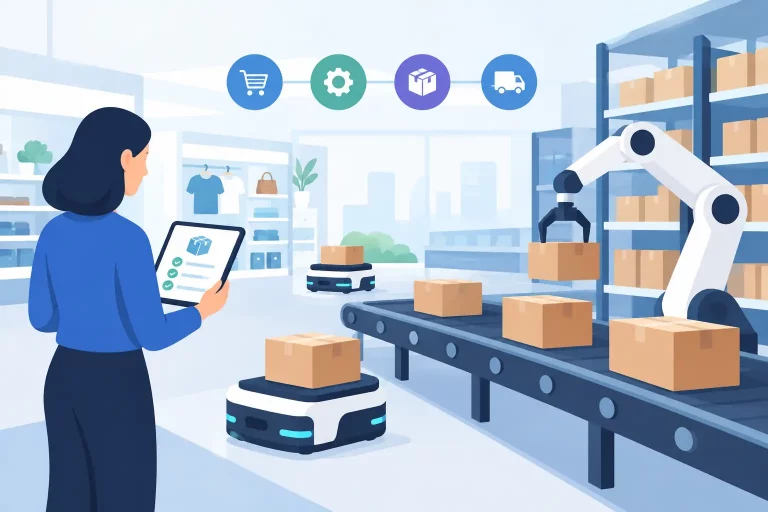
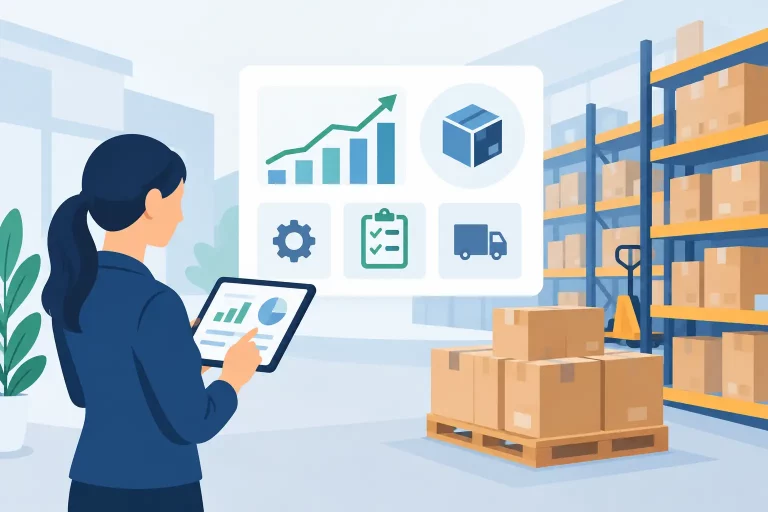
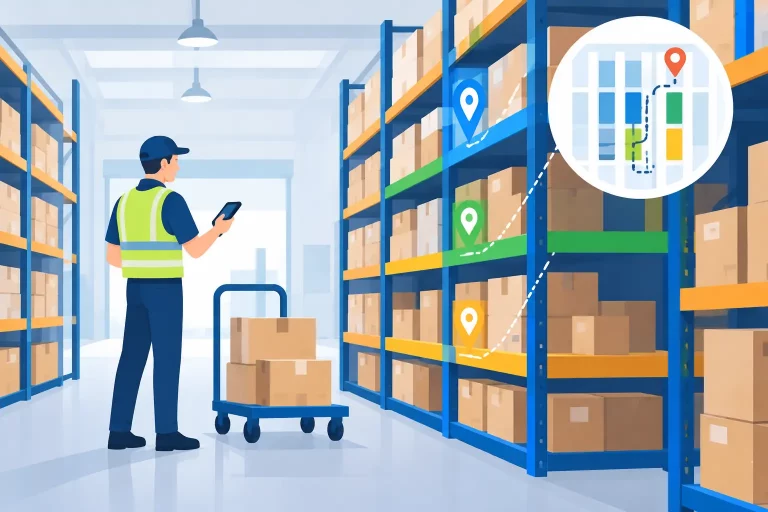
A retailer receives 5,000 wholesale orders from a major trading partner, while its direct-to-consumer store is processing orders every few seconds. Both workflows depend on data moving correctly, but they often require different connection methods. EDI versus API integrations is not simply a technical choice. It affects how quickly orders enter your system, how reliably inventory updates, how easily you meet partner requirements, and how much manual work your operations team carries.

For multichannel merchants, the right answer is often not EDI or API. It is knowing where each integration model belongs in the operation and managing both from a central system of record.
What EDI Does in a Commerce Operation
Electronic Data Interchange, or EDI, is a standardized way for businesses to exchange documents electronically. In retail and wholesale, those documents commonly include purchase orders, order acknowledgments, advance ship notices, invoices, inventory reports, and shipment confirmations.
Rather than having a buyer email a purchase order and a supplier key it into an order management system, EDI sends the document in a structured format that both systems can interpret. A large retailer may issue an EDI 850 purchase order. The supplier returns an EDI 855 acknowledgment, sends an EDI 856 advance ship notice when goods leave the warehouse, and follows with an EDI 810 invoice.
The value is consistency at scale. Large retailers, distributors, and enterprise buyers often require EDI because it gives them predictable document formats, established compliance rules, and an auditable process for high-volume B2B transactions. For a supplier, EDI can remove repetitive order entry, reduce transcription errors, and prevent missed compliance milestones that lead to chargebacks.
EDI is built around defined business documents and agreed standards. That strength can also make it less flexible. Mapping documents, testing transactions, certifying with a trading partner, and handling exceptions can take time. Changes may require coordination with a provider, customer, or internal technical team. It is dependable for structured partner workflows, but it is not designed for every real-time commerce event.
What APIs Do Differently
An application programming interface, or API, lets software systems request, send, or update data directly through defined endpoints. In commerce operations, APIs commonly connect sales channels, marketplaces, shipping carriers, payment platforms, warehouse tools, accounting systems, and customer-facing applications.
For example, an API can send a new Shopify order to an operations platform as soon as the customer completes checkout. It can update available stock after a warehouse pick is confirmed, retrieve carrier rates before a label is purchased, or push tracking details back to a marketplace. These exchanges can happen in near real time and can support a wider range of actions than standardized business documents alone.
APIs are especially useful when speed and operational responsiveness matter. If the same SKU is selling through Amazon, eBay, Walmart, a branded storefront, and wholesale channels, stock changes need to reach every relevant channel quickly. Delays create overselling risk, customer service issues, and expensive cancellations.
API connections are also generally more flexible for custom workflows. A business may use an API to create rules around order routing, warehouse allocation, product data enrichment, returns, fraud checks, or replenishment signals. The trade-off is that API quality varies. Each provider has its own documentation, rate limits, authentication requirements, field definitions, and update schedules. A connection that looks simple at launch still needs monitoring as platforms change their APIs.
EDI Versus API Integrations: The Practical Differences
The clearest distinction is the business problem each method was built to solve. EDI is optimized for standardized B2B document exchange between trading partners. APIs are optimized for direct, programmatic communication between applications.
That difference shows up in four operational areas:
- Transaction requirements: EDI is often mandatory when selling to enterprise retailers, distributors, or government buyers. APIs are more common for marketplaces, ecommerce platforms, carriers, and modern software tools.
- Data timing: APIs can provide immediate updates or frequent synchronization. EDI transactions may be processed on a schedule, although timing depends on the partner and provider.
- Flexibility: APIs support customized data requests and workflows. EDI relies on structured document standards, which improve consistency but constrain customization.
- Implementation and maintenance: EDI requires document mapping and trading-partner compliance. APIs require development capability, credential management, error handling, and maintenance when endpoints change.
Neither method automatically produces accurate operations. An EDI purchase order can still fail if a product identifier is mapped incorrectly. An API inventory update can still create errors if the underlying stock counts are wrong. Integration method matters, but clean product data, clear warehouse processes, and one trusted inventory record matter just as much.
When EDI Is the Better Fit
EDI is the better fit when your customer requires it or when your wholesale volume depends on repeatable document-driven processes. A brand supplying a national retailer may need to meet exact requirements for purchase orders, carton labels, advance ship notices, and invoices. In that environment, the question is rarely whether EDI is modern enough. The question is whether the process is compliant, accurate, and fast enough to protect the account.
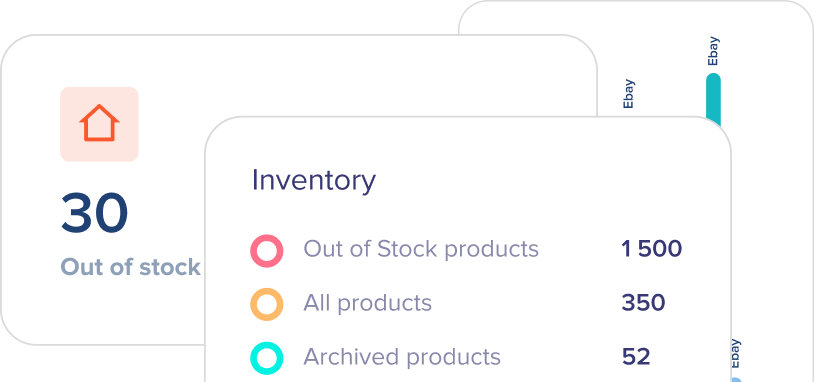

It is also a strong choice when multiple B2B partners exchange similar documents at meaningful volume. Once the structure is in place, EDI can reduce manual entry across orders, invoices, and shipment confirmations. That reduction is valuable for teams managing wholesale growth without expanding headcount for administrative work.
However, do not treat EDI as a set-and-forget connection. Monitor rejected transactions, late acknowledgments, missing ship notices, and invoice discrepancies. Retailer penalties often result from execution gaps rather than from the EDI technology itself.
When APIs Are the Better Fit
APIs are usually the better fit for high-velocity multichannel commerce. A merchant selling across several marketplaces and storefronts needs orders, cancellations, tracking events, listings, and inventory changes to move quickly. API-driven connections help keep the operating picture current as demand changes throughout the day.
They are also useful when workflows need to be tailored. An operations team might route marketplace orders to one warehouse, wholesale orders to another, and oversized products to a specialized fulfillment partner. API connections can carry the data needed to automate those decisions rather than relying on exports, spreadsheets, and manual re-entry.
The caution is dependency management. If a sales channel changes an API field, a carrier limits requests, or an integration token expires, the impact can spread quickly. Teams need alerts, exception queues, and clear ownership for failed syncs. Fast data movement is only useful when failures are visible and recoverable.
Most Growing Merchants Need Both
A business can use APIs to keep its Shopify store, Amazon listings, warehouse workflows, shipping tools, and accounting data aligned while using EDI to serve a retail chain or wholesale customer. These are not competing strategies. They are complementary connection methods for different parts of the same order lifecycle.
The operational risk appears when each connection operates in isolation. If EDI wholesale orders sit outside the same inventory pool as marketplace orders, available stock becomes unreliable. If shipment confirmations are not pushed back to the correct channel, customers and trading partners lose visibility. If catalog identifiers differ between systems, teams spend time resolving preventable exceptions.
A centralized commerce operations platform can bring those flows into one control point. eSwap, for example, helps merchants manage inventory, orders, fulfillment, shipping, purchasing, and multichannel activity in a connected workflow. The goal is not to force every partner into one integration type. It is to make sure every transaction updates the same operational truth.
Choose Based on the Workflow, Not the Label
Before selecting or expanding an integration, start with the workflow. Identify where orders originate, which inventory locations can fulfill them, what confirmations customers or partners expect, and where exceptions are currently handled. Then assess the connection method required by each system and the speed at which the data must move.
If a major retailer requires EDI, build a compliant process around that requirement. If daily marketplace volume is creating oversells and delayed tracking, prioritize reliable API synchronization. If both are true, centralize inventory and order orchestration so one sales channel does not create chaos for another.
The most effective integration strategy is the one that gives your team accurate stock, timely order flow, and clear control when something goes wrong. That is how connection technology becomes an operational advantage instead of another system to manage.