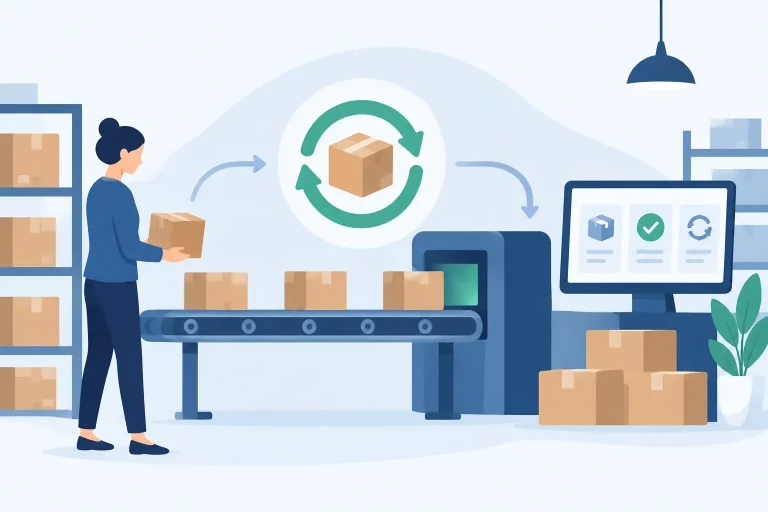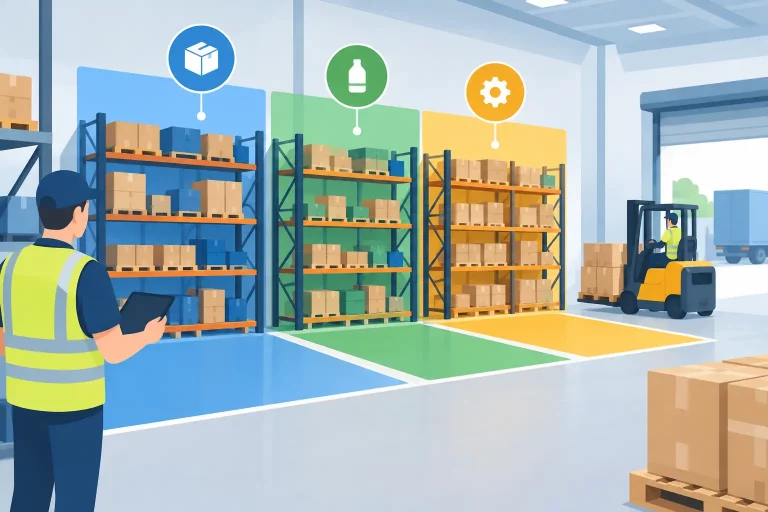
A supplier invoice can make a product look profitable right up until the freight bill, customs charges, and warehouse handling costs arrive. Without a reliable landed cost calculation, merchants often price from a number that has little connection to the real cost of getting inventory ready to sell. The result is predictable: margins shrink, replenishment decisions weaken, and high-volume products can quietly become unprofitable.
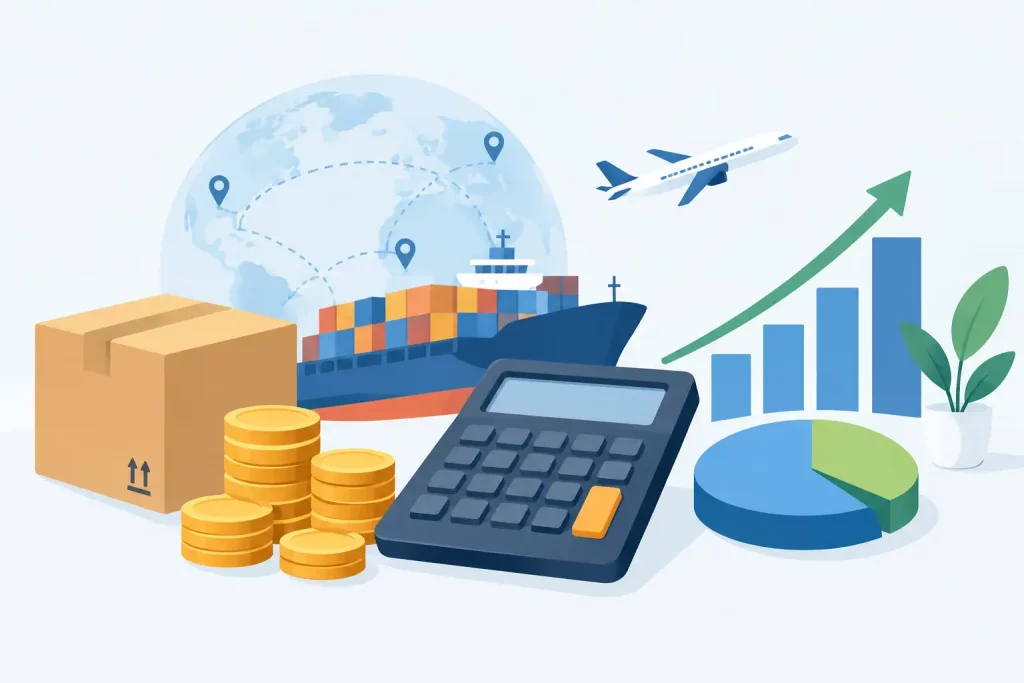
For multichannel sellers, this is not just an accounting exercise. Landed cost is operational data. It affects purchase orders, inventory valuation, product pricing, channel profitability, and the confidence your team has in every buying decision.
What Is a Landed Cost Calculation?
Landed cost is the total cost of acquiring a product and moving it into a sellable position. It starts with the supplier’s unit price, then includes the expenses required to bring that inventory to your warehouse, fulfillment center, or another receiving location.
The basic formula is straightforward:
Landed cost per unit = (Product cost + additional acquisition costs) / total units received
The challenge is not the formula. It is collecting complete costs, assigning them to the right purchase order or shipment, and allocating shared expenses fairly across the items received.
A typical landed cost calculation may include product cost, inbound freight, duties and tariffs, customs brokerage fees, cargo insurance, inspection costs, port charges, packaging, and receiving or handling fees. Whether every category belongs in your calculation depends on your accounting policy and operating model. The key is consistency. If one inbound shipment includes freight in item cost and another records it separately, your margin reporting will not be comparable.
Why Supplier Cost Alone Creates Bad Decisions
Supplier cost is only one component of inventory cost. This distinction matters most when sourcing internationally, ordering in bulk, or receiving mixed shipments with varying product values and dimensions.
Consider a merchant purchasing 1,000 units of a product for $10 each. The purchase order value is $10,000. Freight adds $1,500, duties add $800, insurance is $200, and receiving costs are $500. The inventory does not cost $10 per unit. Its landed cost is $13 per unit:
($10,000 + $1,500 + $800 + $200 + $500) / 1,000 = $13
If that product is priced using the $10 supplier cost, the business may believe it has a healthy gross margin when it does not. A $3 difference per unit becomes a $3,000 margin gap across the shipment.
That gap becomes harder to spot across Amazon, Shopify, eBay, Walmart, wholesale orders, and multiple warehouses. Channel fees, fulfillment costs, and promotional discounts add another layer, but those should not be confused with landed cost. Landed cost answers what it took to acquire the inventory. Contribution margin answers what remains after selling and fulfilling it through a specific channel. Teams need both views to manage profit accurately.
Build the Calculation Around the Purchase Order
The cleanest process starts before inventory arrives. Create the purchase order with expected item costs, quantities, supplier terms, and destination details. As freight, duty, and other invoices are received, attach or record those charges against the same purchase order or inbound shipment.
This approach creates a clear audit trail. Your operations team can see what was ordered, what arrived, what costs were expected, and what costs were ultimately incurred. Finance gains a more accurate inventory valuation, while buyers can compare projected and actual acquisition costs by supplier, route, and product.
Timing matters. Some costs are known before the goods ship, while others arrive weeks after receipt. A practical workflow allows estimated landed costs at the purchasing stage and updates them when actual invoices are available. Do not wait for every final document before receiving inventory if it will slow fulfillment. Instead, receive stock with a controlled provisional cost, then reconcile the variance when the final charges are confirmed.
This is where centralized commerce operations software can reduce manual work. With purchasing, inventory, warehouse receiving, and order data in one operational system, teams can maintain a consistent cost record instead of relying on disconnected spreadsheets and late adjustments.
Choose the Right Allocation Method
Many inbound charges apply to an entire shipment rather than a single SKU. Freight may cover multiple cartons, duties may apply across several product categories, and brokerage fees often relate to the shipment as a whole. Those shared costs need an allocation method.
There is no single right method for every expense. The goal is to match the allocation method to the driver of the cost.
Allocate by Unit Count for Similar Products
Dividing costs evenly by unit works when items are similar in value, size, weight, and handling requirements. For example, if a shipment contains 500 identical units, an even allocation is easy to calculate and explain.
This method becomes less reliable for mixed purchase orders. A small accessory and a bulky appliance should not necessarily receive the same share of freight costs just because the shipment contains one unit of each.
Allocate by Product Value for Duties and Insurance
Value-based allocation assigns a larger share of costs to higher-value goods. It is often appropriate for ad valorem duties, cargo insurance, and some import-related expenses because those charges are tied directly to declared product value.
For example, if SKU A represents 70% of the product value in a shipment, it receives 70% of the allocable cost. This protects lower-value products from carrying an unrealistic portion of the total expense.
Allocate by Weight or Volume for Freight
Freight cost is frequently driven by shipment weight, pallet space, carton size, or dimensional weight. When a purchase order includes both lightweight items and large, heavy products, weight- or volume-based allocation generally produces a more useful cost per unit.
The trade-off is data quality. If product weights and dimensions are missing or inaccurate in your catalog, the calculation will be inaccurate as well. Maintaining clean product data is not administrative overhead. It is necessary for trustworthy purchasing and profitability reporting.
Account for Currency and Cost Timing
International purchasing introduces exchange-rate risk. A supplier quote in one currency may not match the final cost recorded when payment is made. Decide whether your policy uses the exchange rate at purchase order creation, invoice date, payment date, or goods receipt. Then apply that policy consistently.
The same principle applies to fluctuating freight and tariff costs. A historical landed cost is useful for inventory valuation, but it may not be sufficient for the next buying decision. Buyers should also review current estimated landed cost before placing a reorder, especially when ocean rates, duties, or carrier surcharges are changing.
Keep these two questions separate: What did the inventory on hand actually cost? What is the next replenishment likely to cost? Both are essential, but they serve different operational purposes.
Use Landed Cost to Improve Pricing and Replenishment
Once landed cost is accurate, it becomes a practical control point across the business. Pricing teams can set minimum prices based on real product acquisition cost rather than supplier quotes. Buyers can compare suppliers beyond the quoted unit price. A lower-priced supplier is not always cheaper after lead time, freight, duty exposure, quality issues, and receiving requirements are considered.
Inventory planners can also make better reorder decisions. A SKU with strong sales but rising landed cost may require a price adjustment, a supplier negotiation, a different shipping method, or a revised reorder quantity. A product with a slower sales rate may still justify replenishment if its landed cost and contribution margin remain strong.
Warehouse teams benefit as well. When inventory is received against a purchase order and costs are tracked at the SKU level, discrepancies become visible earlier. Short shipments, damaged units, unexpected freight charges, and supplier invoice errors are easier to investigate before they become permanent margin problems.
Common Landed Cost Calculation Errors
The most damaging mistakes are usually process failures, not math errors. Teams omit freight because it is invoiced separately, apply the same allocation method to every cost type, or update costs only at month-end after products have already sold.
Another common problem is double counting. A supplier may include certain freight or packaging charges in the product invoice, while the receiving team adds them again as separate landed costs. Clear cost categories and purchase-order documentation prevent this.
Finally, avoid treating average cost as a substitute for shipment-level accuracy. Average costing can be useful for ongoing inventory valuation, particularly when identical stock is received frequently. But it can hide meaningful changes in a specific inbound shipment. Track actual landed cost at receipt when possible, then use your selected costing method consistently for inventory and financial reporting.
Make Cost Visibility Part of Daily Operations
Landed cost should not live in a spreadsheet that only finance reviews after the month closes. It belongs in the same operating workflow as purchasing, inventory receiving, catalog management, and order fulfillment.
For a growing multichannel business, that visibility creates control. Teams can identify which SKUs are truly profitable, which suppliers are becoming more expensive, and where inbound costs are undermining planned margins. eSwap helps centralize the purchasing, inventory, warehouse, and order data needed to keep those decisions grounded in current operational records.
The best landed cost calculation is not the most complicated one. It is the one your team can apply consistently, update when conditions change, and use before a margin problem reaches the customer order.