A product can sell steadily for months, then run out in two days after a marketplace promotion, a seasonal shift, or a listing gain. For multichannel merchants, that gap between what the team expects and what customers actually buy creates lost revenue, rushed purchasing, and fulfillment problems. AI inventory forecasting helps close that gap by turning sales, stock, order, and purchasing data into more timely demand signals.

The goal is not to replace an experienced inventory planner with a black box. The goal is to give planners and operators a faster, more accurate basis for deciding what to buy, where to place it, and when to replenish it. When inventory data is centralized across sales channels and warehouses, forecasting becomes an operational advantage instead of a monthly spreadsheet exercise.
Why Traditional Forecasting Breaks Down
Basic forecasting methods usually rely on a recent sales average. That can work for a stable catalog with one sales channel and predictable lead times. It becomes unreliable when a business sells the same SKU through Shopify, Amazon, eBay, Walmart, wholesale accounts, and in-person channels.
A simple average does not understand why demand changed. It may treat a weekend promotion as normal demand, miss a stockout that suppressed sales, or fail to account for a customer order that pulled inventory from a specific warehouse. It can also create false confidence when each channel reports product and inventory data differently.
The cost is felt on both sides of inventory control. Underbuying leads to stockouts, delayed fulfillment, lower marketplace performance, and missed sales. Overbuying ties up cash, consumes warehouse space, and increases the risk of markdowns or obsolete stock. A forecast is only useful if it helps the team avoid both outcomes.
How AI Inventory Forecasting Works
AI inventory forecasting uses historical data and pattern recognition to estimate future demand at a more detailed level than a fixed sales average. Depending on the available data, a model can evaluate sales history by SKU, variant, channel, location, customer segment, season, and day or week.
It can also consider operational context. Inventory on hand, inventory already allocated to orders, open purchase orders, supplier lead times, returns, cancellations, and transfers all affect how much usable stock a business truly has. Without these inputs, a demand forecast may look accurate on paper while still producing poor replenishment decisions.
For example, a fast-selling item may show lower recent sales because it was unavailable for part of the month. A basic report may interpret that decline as weaker demand and recommend buying less. A better forecasting process recognizes the stockout period and separates constrained sales from actual demand.
AI is particularly useful when demand is not uniform. One SKU may sell primarily through a marketplace, another through wholesale, and a third through a direct-to-consumer store. The right forecast can identify channel-level demand while still providing a consolidated view of total inventory exposure.
The Data Foundation Matters More Than the Model
Forecasting cannot correct disconnected or inaccurate inventory records. If one channel has delayed stock updates, products are mapped incorrectly, or purchase orders are maintained outside the operating system, the output will reflect those gaps.
Before relying on automated forecasts, businesses need a reliable source of operational truth. Product records should be standardized, inventory should sync across channels, warehouse movements should be recorded, and purchasing data should be current. This is where a centralized commerce operations platform matters: it gives forecasting tools consistent inputs rather than fragmented exports.
What Better Forecasts Change in Daily Operations
The practical value of forecasting is not a demand chart. It is a clearer set of actions for purchasing, warehouse, and sales teams.
Purchasing teams can use expected demand and lead times to set reorder points that reflect actual risk. A product with a 45-day supplier lead time needs a different replenishment threshold than an item available from a local supplier in five days. Safety stock should also vary based on demand volatility, supplier reliability, and the cost of running out.
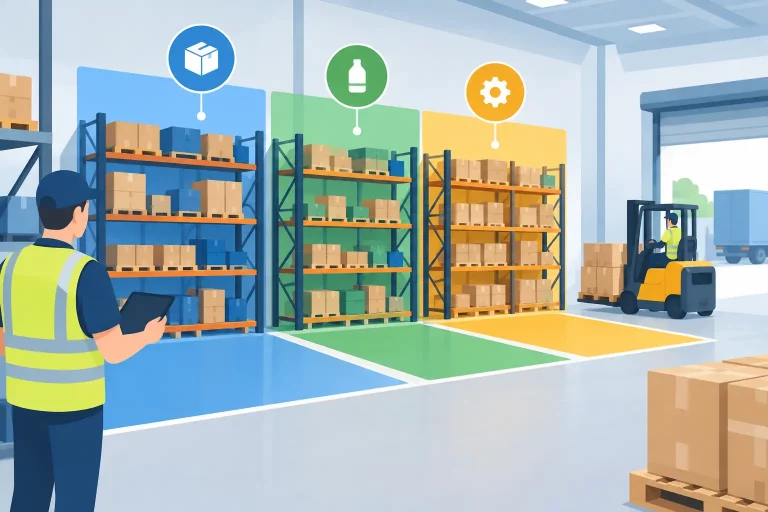
Warehouse teams can plan inbound inventory and storage capacity more effectively. If seasonal products are expected to arrive before a peak period, the team can prepare receiving space, labor, and putaway workflows instead of reacting to crowded docks and misplaced cartons.
Sales and marketplace teams gain a better view of what can be promoted. There is little value in increasing ad spend for an item with two days of sellable stock. Conversely, a slow-moving product with excess inventory may be a strong candidate for a targeted offer, bundle, or wholesale push.
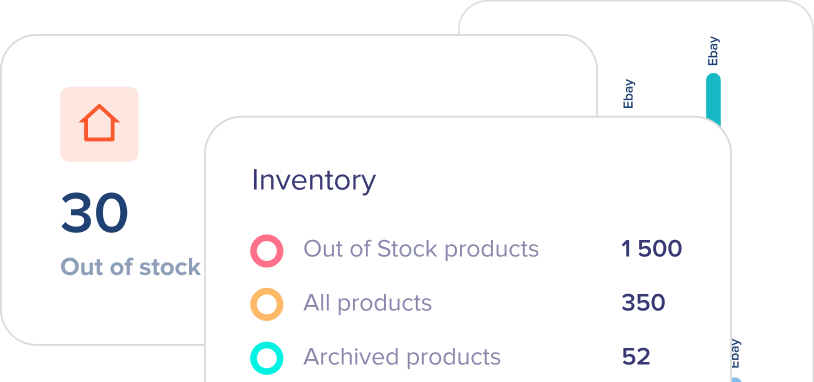
For multichannel sellers, allocation is another major benefit. Rather than allowing one high-volume marketplace to consume all available inventory, operators can reserve stock for priority channels, wholesale commitments, or high-margin orders. Forecasting supports these decisions with expected demand instead of guesswork.
AI Inventory Forecasting Needs Human Controls
Forecasting should inform decisions, not make every decision automatically. Demand models can identify patterns, but they do not always know the commercial reason behind a change.
A new competitor, a marketplace policy update, a supplier quality issue, a planned price increase, or a customer contract can materially affect demand. Operators should be able to review forecast exceptions, adjust assumptions, and document the reason for an override. The most dependable process combines automated analysis with accountable human review.
This is especially true for new products. AI has limited history to analyze when a SKU has just launched or a catalog has been expanded. In those cases, planners may need to use comparable products, supplier minimums, preorders, marketing plans, and conservative test buys. Forecast quality improves as clean sales and inventory history accumulates.
It also depends on the type of business. A merchant with thousands of repeat-purchase SKUs may prioritize automated replenishment alerts and exception management. A wholesaler with a smaller catalog and large account-specific orders may need forecast inputs that weigh sales pipeline and contract commitments more heavily. The operating model should shape the forecasting workflow.
Build a Forecasting Process That Produces Action
Start with the inventory decisions that create the biggest financial impact. For many businesses, that means high-revenue SKUs, products with long lead times, seasonal goods, and items that frequently stock out. There is no need to apply the same level of forecast complexity to every low-volume item on day one.
Then define the measures that operators will use consistently. Sell-through rate, weeks of supply, stockout rate, forecast error, inventory carrying cost, and supplier lead-time variance are useful when they lead to a specific decision. A dashboard full of metrics does not improve purchasing unless someone owns the next action.
Set an operating cadence around those decisions. Fast-moving products may need weekly or even daily review. Long-lead-time seasonal inventory may require monthly planning further in advance. Exception alerts should focus attention on items that are projected to stock out, exceed target coverage, or deviate sharply from expected demand.
A connected system reduces the manual work behind this cycle. When orders, inventory, purchasing, warehouse activity, and channel listings operate from the same data set, teams spend less time reconciling reports and more time resolving the issues that affect availability and margin. eSwap supports this kind of centralized control across multichannel inventory and fulfillment workflows.
Questions to Ask Before Trusting a Forecast
A useful forecast should be explainable enough for an operations team to challenge it. Ask whether it accounts for stockouts, open purchase orders, supplier lead times, channel-level sales, returns, and planned promotions. If the answer is unclear, treat the forecast as a directional input rather than an automatic purchasing instruction.
Also ask how quickly the forecast responds to new data. A model that only updates monthly may be too slow for a business with daily marketplace volatility. On the other hand, a forecast that reacts too aggressively to every short-term spike can create overbuying. The right balance depends on demand stability, lead times, and the cost of holding inventory.
The strongest forecasting process is one your team can act on before stock becomes a problem. Start with clean inventory data, focus on the SKUs that matter most, and give purchasing and fulfillment teams a shared view of what demand is likely to require next.