
A single oversold SKU can create a chain reaction: canceled marketplace orders, disappointed customers, rushed warehouse work, and team members trying to reconcile stock in multiple systems. This inventory sync software review focuses on what actually determines whether a platform prevents those problems or simply gives your operation another dashboard to manage.

The right system does more than copy an available quantity from one sales channel to another. It needs to maintain a reliable inventory position as orders arrive, returns are received, purchase orders are created, stock moves between warehouses, and product bundles consume component inventory. For multichannel sellers, that level of control is the difference between scaling sales and scaling operational risk.
What Inventory Sync Software Must Do Well
Inventory synchronization is often presented as a simple feature. In practice, it is a workflow that depends on product data, order timing, warehouse processes, channel rules, and the quality of each integration. A review should start with the operational outcome: Can the system maintain accurate sellable stock across every channel without manual intervention?
A capable platform centralizes stock in one source of truth, then updates connected storefronts and marketplaces as quantities change. It should account for orders from Shopify, Amazon, eBay, Walmart, wholesale customers, and other channels without requiring staff to log into each platform. The goal is not just visibility. It is controlled inventory allocation.
For example, a merchant may hold 100 units in a warehouse but reserve 20 for wholesale accounts, 10 for pending fulfillment, and 15 as a safety buffer. The quantity available for online sales is not 100. Software that only mirrors a raw on-hand count can still create overselling. Look for tools that distinguish on-hand, committed, available, damaged, inbound, and reserved inventory.
Sync Speed Is Only Useful When the Data Is Right
Fast updates matter, especially for high-volume products sold across marketplaces. But speed alone does not solve a catalog that is poorly mapped or a warehouse that confirms stock movements late. Ask how the system responds when two orders for the last unit arrive within seconds of each other, and whether it can reserve inventory as soon as an order is received.
The strongest systems also make exceptions visible. If a channel listing is disconnected, a product mapping fails, or inventory cannot be updated, your team should receive a clear alert with a practical next step. Silent sync failures are more dangerous than an obvious system error because they can continue creating inaccurate listings for hours or days.
Product Mapping Determines Whether Syncing Works
Inventory sync is only as dependable as the relationship between products across channels. A single item may have different titles, listing IDs, or SKUs on Amazon, Shopify, and eBay. A useful platform maps those listings back to one master product record so every order deducts from the same inventory pool.
This becomes more complex with variations, kits, bundles, and multipacks. If a three-pack sells, the system should deduct three individual units. If a gift bundle contains items stored in different warehouse bins, picking instructions should reflect that structure. If a product has size and color variations, each variant needs its own accurate stock position.
A basic sync tool may handle identical SKUs well but struggle when products are sold in multiple configurations. Merchants with broad catalogs should test this before committing. Import a representative group of products, including bundles and variation-heavy listings, rather than evaluating the platform with only a few simple SKUs.
Inventory Sync Software Review: Features to Compare
A meaningful inventory sync software review should assess the full operational workflow, not just the integration logos on a vendor’s website. The following capabilities have the most direct effect on inventory accuracy and fulfillment performance.
Centralized Order Management
Inventory and order management should work together. When orders flow into one dashboard, the system can reserve stock, route orders to the right warehouse, apply shipping rules, and push fulfillment updates back to the selling channel. This reduces the delays created when separate teams manage orders, stock, and shipping in disconnected tools.
Review how the platform handles cancellations, partial refunds, split shipments, and backorders. These everyday exceptions are where manual processes usually return. If employees must correct inventory in several places after every exception, the software will not deliver the expected time savings.
Multi-Warehouse Inventory Control
A seller operating from more than one warehouse needs more than a company-wide total. The system should show inventory by location, support transfers, and route orders based on stock availability, customer location, or fulfillment rules. It should also prevent a warehouse from promising stock held at another location unless that inventory can actually be moved or shipped in time.
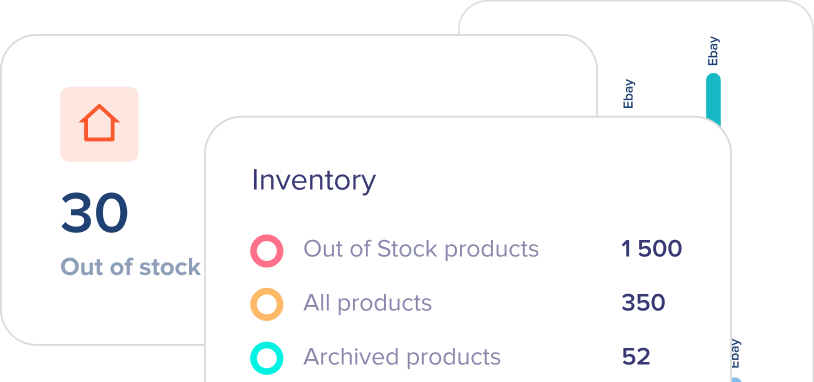
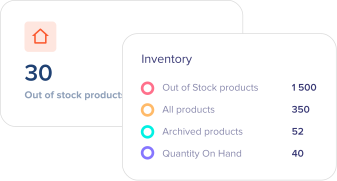
For merchants using third-party logistics providers, the integration model matters. Confirm how often the provider reports stock updates, whether adjustments are visible, and how discrepancies are resolved. Real-time inventory claims should be tested against the actual data cadence of the warehouse partner.
Purchasing and Replenishment Visibility
Inventory sync becomes more valuable when purchasing is connected to demand. Purchase orders, expected delivery dates, supplier lead times, and inbound quantities give planners a better view of future availability. Without this context, a team may see low stock but lack the information needed to decide whether to reorder, transfer inventory, or pause a listing.
Look for reporting that identifies fast-moving products, aging inventory, stockout risk, and reorder requirements. Forecasting will never be perfect, especially during promotions or seasonal shifts, but it should give operators a defensible starting point instead of relying on spreadsheets and memory.
Shipping and Fulfillment Workflow Support
Shipping is not separate from inventory control. Warehouse teams need accurate pick lists, bin locations, packing workflows, and carrier labels that correspond to the order record. When fulfillment is confirmed, inventory should update correctly and tracking information should return to the sales channel.
This is particularly important for businesses processing a high daily order volume. A platform can have excellent channel connections but still slow operations if warehouse staff cannot batch pick, scan products, or catch packing mistakes before orders leave the building.
Questions to Ask Before You Choose
A software demonstration should reflect your operation, not a generic workflow. Give the vendor real examples: an Amazon order for a bundled item, a Shopify order that needs split fulfillment, a wholesale customer with reserved inventory, and a return that must be inspected before stock becomes available again. Then ask the team to show exactly how each scenario is handled.
Pay attention to configuration effort as well. Sophisticated controls can provide better accuracy, but they require disciplined setup. Safety stock rules, warehouse locations, SKU standards, user permissions, and channel mappings need ownership inside your business. The best platform will support your process, but it cannot compensate for inconsistent product data or inventory counts that are never verified.
Also evaluate reporting access. Operations managers need quick answers to practical questions: What inventory is available right now? Which orders are delayed? Which warehouse has the stock? Which listings are at risk of overselling? If reporting requires exports and manual reconciliation, the platform may be centralizing data without creating operational control.
When a Basic Sync Tool Is Enough
Not every seller needs a full commerce operations platform. If you sell a small, stable catalog through one storefront and one marketplace, have a single fulfillment location, and process modest order volume, a lightweight inventory sync application may be enough. The priority is a reliable connection between your sales channels and a clear way to correct exceptions.
The trade-off appears as channels, warehouses, and product complexity grow. A low-cost sync tool may not support purchasing, barcode workflows, wholesale allocation, advanced shipping rules, or multi-location inventory in the way a growing operation requires. Switching systems later is possible, but migration becomes harder once product data, order history, and warehouse processes are spread across several tools.
For businesses managing retail, fulfillment, purchasing, and wholesale activity together, a platform such as eSwap can provide a broader operational foundation. Centralized inventory, orders, warehouses, shipping, catalogs, and B2B workflows allow teams to act on the same data rather than reconcile separate systems after problems occur.
The right choice is the one that matches the complexity you have now while giving you room to add channels, volume, and locations without rebuilding core workflows. Start with the stock movements that create the most errors in your business, test them in the software, and choose the system that makes those exceptions easier to control before they become customer-facing failures.