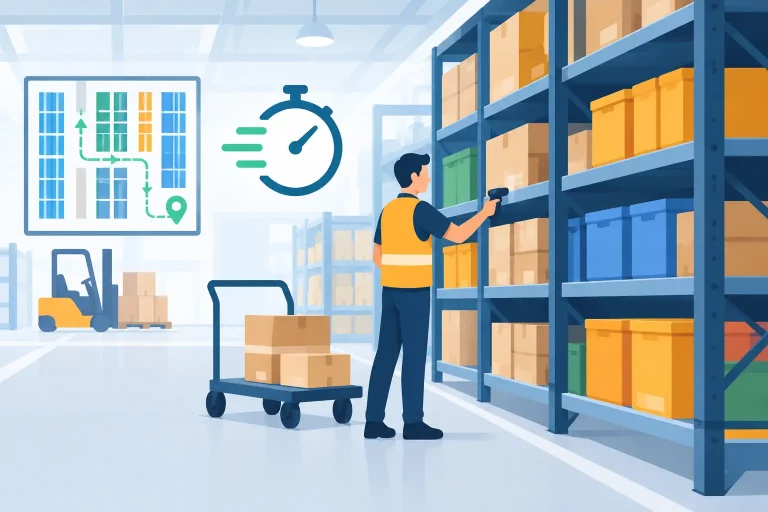
Reordering stock should not depend on someone spotting a low quantity in a spreadsheet at 6:30 p.m. Yet for many eCommerce and wholesale teams, that is still how purchasing happens. When demand is spread across Shopify, Amazon, Walmart, eBay, B2B orders, and multiple warehouses, manual buying decisions get expensive fast. Purchase order automation software gives operators a better way to control replenishment, supplier communication, and purchasing accuracy without adding more admin work.
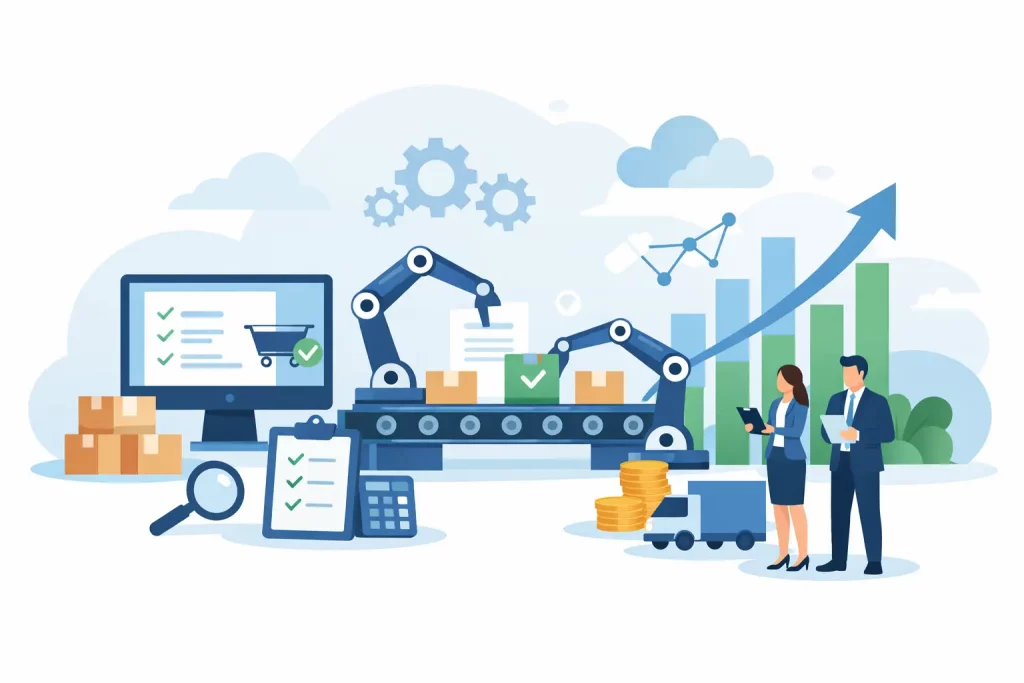
For growing merchants, the issue is not just speed. It is control. When purchasing lives in email threads, disconnected ERP exports, and separate inventory files, buyers are working from stale numbers. That leads to overbuying slow movers, underbuying top sellers, and missing the timing that keeps fulfillment on track. Automation closes those gaps by turning inventory data into usable purchasing actions.
What purchase order automation software actually does
At a basic level, purchase order automation software creates, manages, and tracks purchase orders with less manual input. But for a multichannel business, the real value goes further. The software should pull live inventory and sales data into the purchasing process, recommend reorder quantities, apply supplier rules, and keep receiving updates tied back to stock availability.
That matters because a purchase order is not an isolated document. It affects inbound inventory, warehouse planning, cash flow, supplier lead times, and future order fulfillment. If a purchasing system cannot see what is happening across sales channels and stock locations, it will always lag behind the business.
The strongest systems connect purchasing to the rest of commerce operations. That means your team is not creating POs in one tool, receiving goods in another, and fixing stock mismatches in a third. Instead, purchasing becomes part of a single operational flow.
Why manual purchasing breaks as you scale
Manual purchasing can work when a business has a small catalog, one sales channel, and a predictable supplier base. Once volume increases, the cracks show quickly.
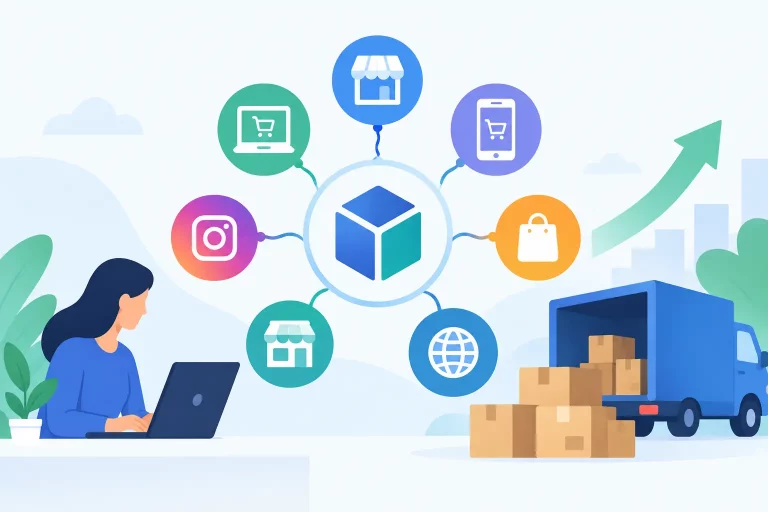
First, demand signals become harder to trust. If your Amazon sales are moving faster than your DTC store, but your purchasing team is using yesterday’s export, reorder timing slips. Second, warehouse complexity changes the equation. Stock may be available in one location but committed in another, or incoming inventory may already be allocated before it arrives. Third, supplier management gets messy when each vendor has different lead times, minimum order quantities, pack sizes, and pricing tiers.
This is where automation earns its place. It reduces dependence on tribal knowledge and manual checking. The system can apply purchasing logic consistently, even when your catalog is large and channel activity changes by the hour.
Core capabilities to look for in purchase order automation software
Not every purchasing tool is built for commerce operations. Some are fine for simple procurement workflows but weak when inventory movement, warehouse receiving, and multichannel demand all need to stay aligned.
A capable platform should support real-time stock visibility across channels and warehouses. Without that, reorder suggestions are based on partial information. It should also handle supplier records cleanly, including lead times, unit costs, case packs, and reorder constraints. Those details are what turn an automatic suggestion into a usable purchase order.
Receiving is another area where many tools fall short. Creating a PO is only the first step. When goods arrive, your team needs a clear way to receive them against the original order, account for shortages or overages, and update inventory accurately. If receiving stays manual, purchasing errors simply move downstream.
Reporting matters too. Operators need to know which suppliers are late, which SKUs are repeatedly underforecasted, and how much capital is tied up in inbound inventory. Good purchase order automation software does not just generate documents. It gives teams operational feedback they can act on.
How automation improves inventory accuracy and fulfillment
Inventory accuracy often breaks long before a stockout appears on the storefront. The problem starts when purchasing decisions are made from bad data, delayed updates, or disconnected systems.
Automation helps by keeping purchasing tied to current inventory status, not assumptions. If sales spike on one marketplace, a connected system can reflect that demand in reorder planning faster. If inbound stock is already on the way, buyers can avoid duplicate orders. If a product is stocked in more than one warehouse, the software can help purchasing teams understand total availability before sending another PO.
That has a direct effect on fulfillment performance. Better purchasing timing reduces backorders and rush decisions. More accurate receiving keeps available stock synced faster. Fewer inventory mistakes mean fewer canceled orders, fewer split shipments, and less time spent correcting preventable issues.
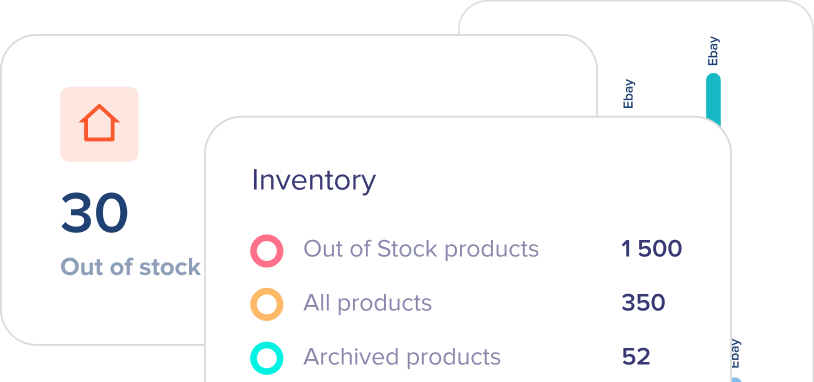
For operations leaders, that is the bigger story. Purchase order automation software is not just a finance or procurement upgrade. It supports service levels, warehouse efficiency, and customer experience.
Where ROI shows up first
Most teams expect time savings first, and they usually get them. Buyers spend less time building POs manually, checking vendor details, or chasing status updates. But the stronger return often comes from error reduction.
A missed reorder can cost revenue. An early reorder can create carrying costs and cash pressure. A duplicated PO can distort purchasing plans for weeks. Automation lowers these risks by standardizing decisions and keeping data in one place.
There is also a headcount angle. As order volume grows, many businesses assume they need more people to manage purchasing complexity. Sometimes they do. But often the issue is not staffing levels. It is process design. A connected purchasing workflow lets the same team manage more SKUs, suppliers, and warehouses without losing control.
It depends on your operating model
The right approach to purchase order automation software depends on how your business runs. A brand with long supplier lead times and seasonal buying patterns may prioritize forecasting and reorder planning. A high-volume reseller may care more about rapid PO creation and receiving speed. A wholesale business with warehouse complexity may need tighter links between purchasing, allocation, and inbound inventory control.
This is why lightweight point tools can become limiting. If they automate PO creation but do not connect to live inventory, warehouse receiving, or multichannel sales activity, the gains stay narrow. You may save a few minutes per order while still dealing with stock inaccuracies and fragmented operations.
For scaling merchants, the better fit is usually software that treats purchasing as part of the broader operational system. That is especially true when your business spans marketplaces, direct channels, wholesale accounts, and multiple inventory locations.
Choosing software that supports scale
When evaluating platforms, ask a simple question: will this tool still work when order volume doubles and supplier complexity increases? The answer depends less on flashy features and more on operational fit.
Look for a system that centralizes purchasing with inventory, orders, shipping, and warehouse workflows. That reduces handoffs and keeps each team working from the same data. Make sure the software can support multiple sales channels, multiple warehouses, and real receiving workflows, not just PO generation. And pay attention to usability. If buyers and warehouse teams cannot use the system quickly, process discipline falls apart.
This is where a platform like eSwap can make sense for merchants that need purchasing connected to the rest of the business. Instead of treating POs as a standalone task, it puts purchasing inside a larger operational environment built for multichannel inventory control, fulfillment speed, and warehouse accuracy.
Purchase order automation software is really about control
The phrase sounds narrow, but the operational impact is wide. Better purchasing affects stock health, cash use, supplier performance, and fulfillment reliability. For businesses selling across channels, that control becomes more valuable every month they grow.
If your team is still creating purchase orders from disconnected reports and manual checks, the cost is probably showing up in more places than purchasing. It shows up in delayed receiving, avoidable stockouts, inaccurate inventory, and extra work across the operation. The right software fixes that by making purchasing faster, more consistent, and tied to what the business is actually doing right now.
The best next step is not to chase more features. It is to choose a system that gives your team cleaner data, clearer workflows, and fewer chances for inventory mistakes to spread.