When a fast-selling SKU goes out of stock on one channel but still appears available on three others, the problem is not demand. It is control. The best warehouse management software helps growing sellers prevent those errors before they turn into late shipments, split orders, chargebacks, and frustrated customers.

For ecommerce and wholesale operators, warehouse software is no longer just about bin locations and pick tickets. It sits at the center of inventory accuracy, fulfillment speed, purchasing decisions, and multichannel order flow. If your business sells across marketplaces, DTC storefronts, B2B accounts, or multiple warehouses, the right system does more than track stock. It gives your team a single operating layer for warehouse activity and the data that drives it.
What the best warehouse management software actually does
A warehouse management system should make daily operations simpler, faster, and more accurate. That sounds obvious, but many businesses still end up with tools that handle one narrow function well while creating new manual work everywhere else.
The best warehouse management software supports receiving, putaway, bin tracking, picking, packing, shipping, stock transfers, cycle counts, and returns. More importantly, it connects those warehouse workflows to the rest of the business. Orders should flow in automatically. Inventory changes should update in real time. Shipping actions should feed tracking and status updates back to sales channels and customers without extra steps.
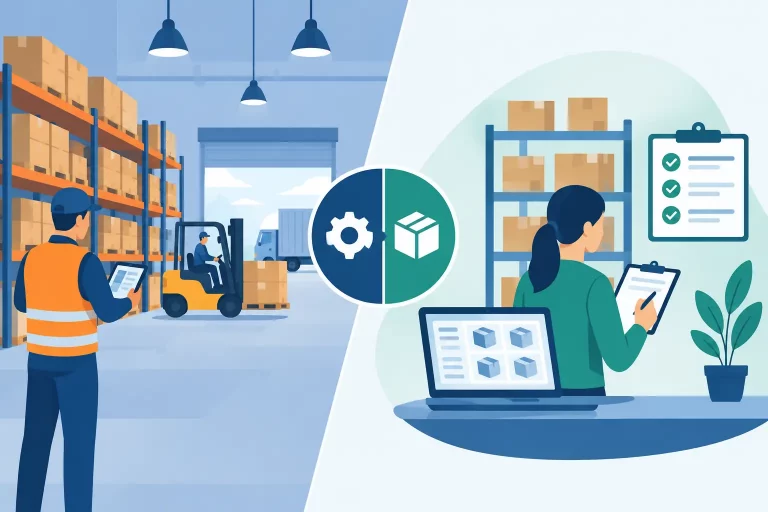
This is where many teams feel the difference between a basic warehouse tool and an operational platform. If warehouse staff are working in one system, inventory planners in spreadsheets, and marketplace orders in disconnected channel dashboards, errors multiply. The software might technically manage warehouse tasks, but it does not manage operations.
How to evaluate best warehouse management software for your business
The right choice depends on your order volume, warehouse complexity, sales channels, and how much of your workflow you want in one system. A brand shipping 50 orders a day from one location has different needs than a wholesaler moving pallets across multiple warehouses while also fulfilling DTC orders.
Still, the evaluation criteria are consistent. Start with inventory visibility. If the platform cannot give you accurate stock levels by warehouse, bin, reserved quantity, and available-to-sell status, everything downstream becomes less reliable.
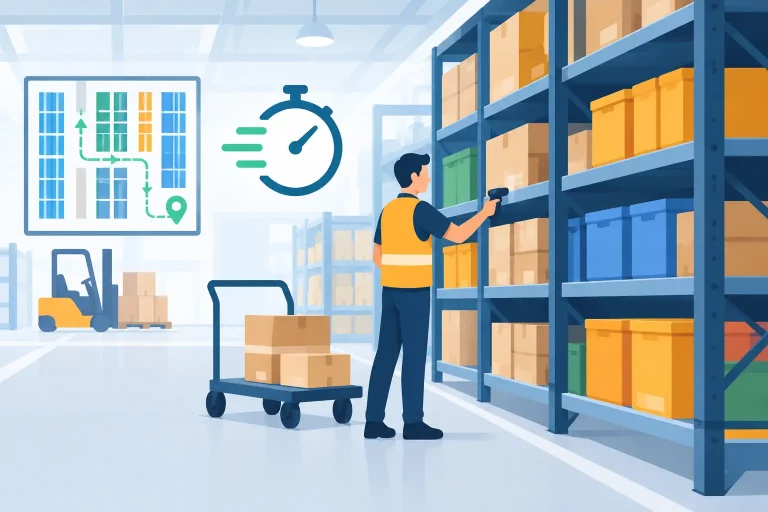
Next, look at order orchestration. The system should be able to route orders, prioritize picks, support batch and wave workflows when needed, and reduce unnecessary touches. Speed matters, but accuracy matters more. A fast process that creates mis-picks and reships is expensive.
Integration depth is another major factor. Many warehouse systems claim integrations, but the real question is whether those connections support operational control. Can your software sync with Shopify, Amazon, eBay, Walmart, shipping carriers, accounting tools, and purchasing workflows in a way that keeps data aligned? Or does your team still have to reconcile gaps manually every day?
Usability matters too. Warehouse software should help the floor move faster, not force staff through slow workarounds. If receiving takes too many clicks or pick paths are confusing, adoption drops quickly. The best systems are structured enough to enforce process but simple enough for teams to use consistently.
Finally, consider scalability. A lot of merchants outgrow lightweight tools not because order volume exploded overnight, but because operational complexity increased. More channels, more SKUs, more warehouses, more bundles, more returns, and more wholesale orders all put pressure on the same system.
The features that matter most in warehouse operations
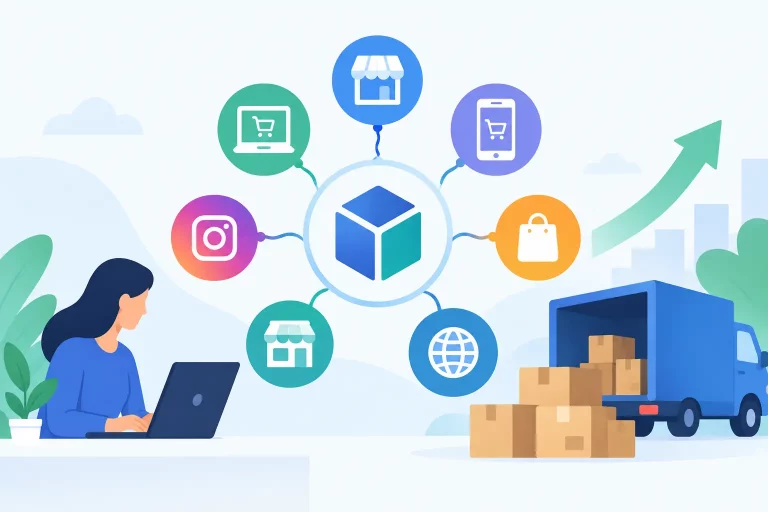
Real-time inventory synchronization is near the top of the list because stock errors spread fast in multichannel selling. If one item sells on Amazon, your Shopify store and B2B portal should reflect that change immediately. Delayed syncing leads directly to overselling and backorders.
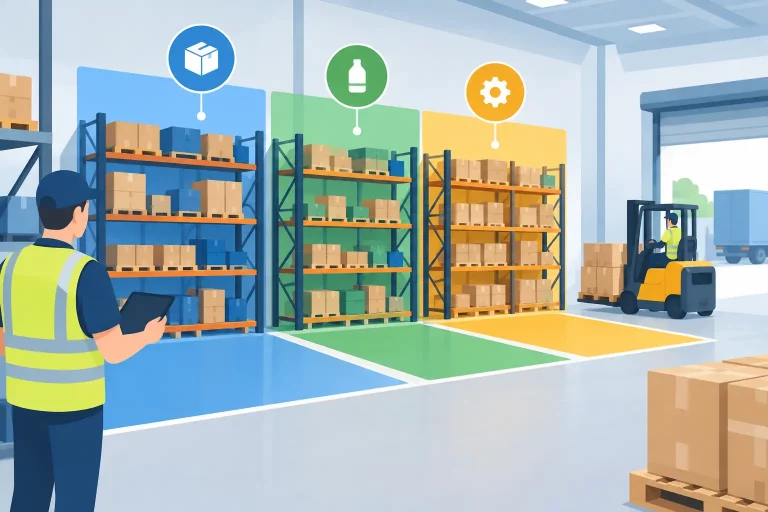
Warehouse location management is just as important. Teams need to know exactly where inventory lives, how much is in each location, and how stock should move through receiving, storage, picking, packing, and replenishment. This is especially important for businesses with high SKU counts, product variations, or multiple storage zones.
Shipping workflow is another deciding factor. Good warehouse software should support label creation, carrier selection, packing workflows, and shipment confirmation without forcing teams into separate tools. If your shipping process lives outside your warehouse system, efficiency drops and visibility breaks.
Automation also separates stronger platforms from basic ones. Rules for order routing, carrier selection, inventory allocation, reorder planning, and status updates can save hours each week while reducing human error. Automation is not about replacing warehouse teams. It is about removing repetitive decisions that slow them down.
Reporting deserves more attention than it usually gets. The best software should help you spot inventory discrepancies, slow-moving stock, fulfillment bottlenecks, and labor inefficiencies early. A warehouse system should not just record activity. It should make weak points visible.
Where many warehouse systems fall short
Some tools are strong inside the warehouse but weak outside it. They can organize bins, generate pick lists, and support barcode scanning, but they struggle when asked to manage multichannel commerce operations. That creates a familiar pattern: one system for inventory, another for channels, another for shipping, another for purchasing, and a growing amount of manual reconciliation between them.
Other platforms are easy to start with but hard to scale. They work for a single warehouse with simple order flow, then become restrictive when you add wholesale pricing, kitting, channel-specific inventory rules, or multiple fulfillment locations.
Cost is another trade-off. Enterprise-grade warehouse platforms can be powerful, but they are often heavy to implement and expensive to maintain. For many small and midsize merchants, that level of complexity is not the right fit. The better option is usually software that combines warehouse control with broader commerce operations, without requiring an enterprise IT project.
Why multichannel businesses need more than a standalone WMS
If your business only stores and ships inventory, a standalone WMS may be enough. Most modern sellers are dealing with more than that. They are syncing listings across marketplaces, managing DTC promotions, handling wholesale orders, reconciling returns, and trying to keep purchasing aligned with demand.
That is why the best warehouse management software for ecommerce businesses often includes inventory, order, shipping, purchasing, and catalog management in the same environment. When those functions share one data set, teams work faster and with fewer mistakes.
For example, inventory receiving should not stop at warehouse intake. It should update available stock, feed purchasing records, adjust channel availability, and support immediate fulfillment decisions. A return should not just go back on a shelf. It should update inventory status, trigger customer communication, and keep reporting accurate. Every warehouse action has upstream and downstream impact.
This is where an operations platform can outperform a warehouse-only tool. Systems such as eSwap are built for sellers who need warehouse execution tied directly to multichannel inventory, order flow, shipping, and wholesale activity. That matters when growth brings more moving parts, not just more packages.
How to choose without overbuying or underbuying
The safest buying decision is rarely the cheapest system or the most advanced one. It is the one that fits your actual operation with enough room to grow.
If your biggest issue is inventory accuracy, prioritize real-time stock control and channel synchronization. If fulfillment delays are hurting customer experience, focus on picking, packing, shipping workflows, and automation. If your team spends too much time reconciling systems, prioritize broader operational integration over standalone warehouse features.
Ask direct questions during evaluation. How are stock reservations handled? Can the system manage multiple warehouses without creating duplicate work? What happens when one order contains DTC items, wholesale quantities, or bundled products? How quickly does inventory update across channels? These answers tell you more than a generic feature checklist.
It also helps to look at where your business will be in 12 to 24 months. Software changes are disruptive. Choosing a platform that only solves today’s pain can create another migration when your order volume, catalog complexity, or channel count increases.
The best warehouse management software is the one that gives you tighter inventory control, faster fulfillment, and fewer operational handoffs between systems. For growing commerce businesses, that usually means looking beyond warehouse functionality alone and choosing software that brings inventory, orders, shipping, and purchasing into one controlled workflow.
A good system helps your warehouse run. The right system helps your business scale without losing accuracy along the way.