A Shopify order arrives while the last available unit is sold on Amazon. If stock is tracked separately in each channel, one customer gets a cancellation, the warehouse gets conflicting instructions, and the operations team spends time correcting a problem that software should have prevented. That is the practical answer behind the question, what software connects sales channels: it is software built to keep the operational side of multichannel selling working from one source of truth.

For a growing retailer or wholesaler, connecting channels is not just about importing orders into a dashboard. The right system coordinates inventory, product data, fulfillment, shipping, purchasing, and customer orders across every place you sell. It gives teams control as order volume, product counts, warehouses, and sales channels increase.
What software connects sales channels?
The broad category is typically called multichannel commerce operations software, omnichannel retail software, or an ecommerce operations platform. Depending on its feature set, it may also include inventory management, order management, warehouse management, shipping management, product information management, and B2B wholesale tools.
The name matters less than the operational coverage. A basic channel connector may pass orders from a marketplace to a store. A commerce operations platform is designed to manage what happens next: reserving stock, routing orders, creating pick tasks, buying replenishment inventory, printing shipping labels, updating tracking, and sending accurate inventory availability back to every sales channel.
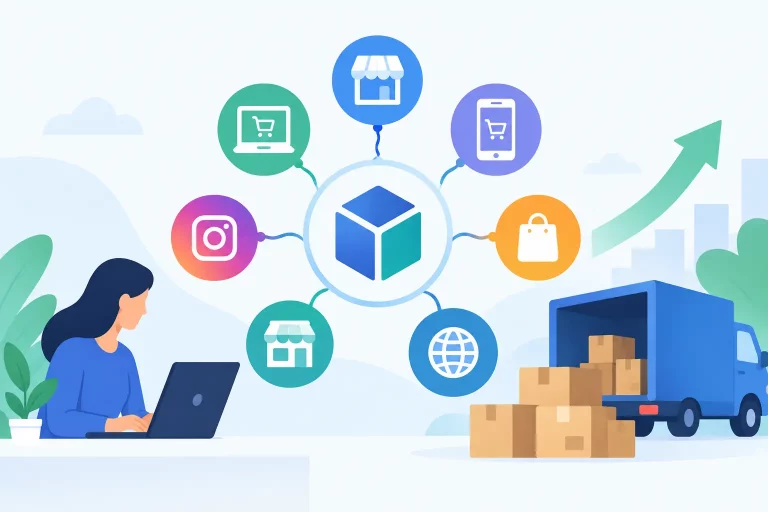
For businesses selling through Amazon, eBay, Walmart, Shopify, a branded website, wholesale accounts, and retail locations, this centralized model reduces the risk created by disconnected tools. Each channel can continue to serve its customers while the business operates from one controlled back office.
The core jobs a channel connection platform should handle
A useful system connects more than storefronts. It should coordinate the data and workflows that make a sale fulfillable and profitable.
Inventory synchronization
Inventory synchronization is the first requirement for most multichannel sellers. When stock changes because of a sale, return, transfer, adjustment, or purchase receipt, the available quantity needs to update across the relevant channels quickly and accurately.
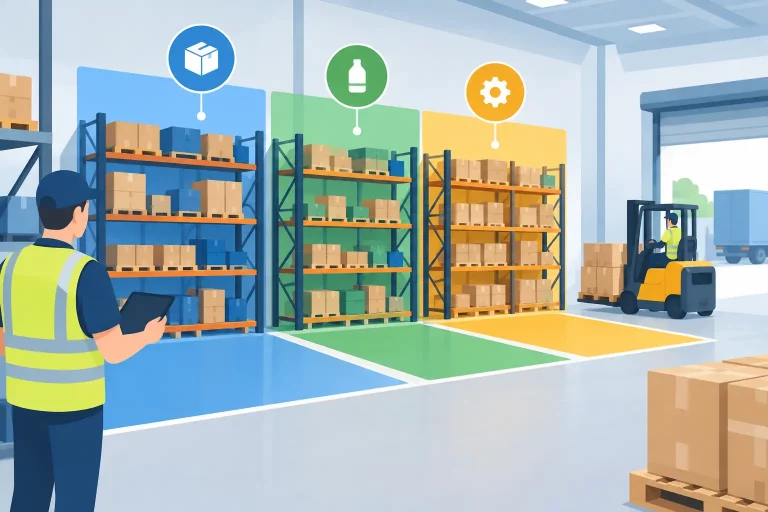
This helps prevent overselling, but it also supports better decisions. Operators can see what is available, committed to open orders, in transit from suppliers, held in a specific warehouse, or reserved for wholesale customers. Without those distinctions, a stock number can look accurate while still causing fulfillment failures.
The best approach depends on the business. A seller with one warehouse and a few hundred SKUs may need straightforward stock syncing. A merchant with multiple locations, bundles, kits, preorders, or marketplace-specific inventory buffers needs more sophisticated allocation rules.
Centralized order management
Orders should flow into one operational workspace regardless of where the customer buys. That gives fulfillment teams a single queue for reviewing orders, handling exceptions, splitting shipments, managing backorders, and applying shipping rules.
Centralized order management also makes automation practical. For example, a system can route orders from the West Coast to the nearest warehouse, hold orders with address issues, assign a preferred carrier based on service level, or prioritize orders that must ship the same day. These rules reduce repetitive work without removing operator oversight.
A connector that merely downloads orders can be useful at low volume. At scale, teams need an order workflow that supports real fulfillment decisions.
Catalog and listing control
Every marketplace has its own listing requirements, attributes, category rules, and pricing structures. Managing those records manually across channels creates duplicate work and increases the chance that product details drift out of sync.
Channel connection software can centralize product information, SKUs, barcodes, images, pricing, and variations. It should make it easier to map one internal product record to multiple channel listings while preserving channel-specific details where needed.
This is especially valuable for businesses with large catalogs or complex product structures. A bundle sold on a direct-to-consumer store may consume the same components used in separate marketplace listings. The system must understand that relationship before it publishes inventory availability.
Warehouse and shipping execution
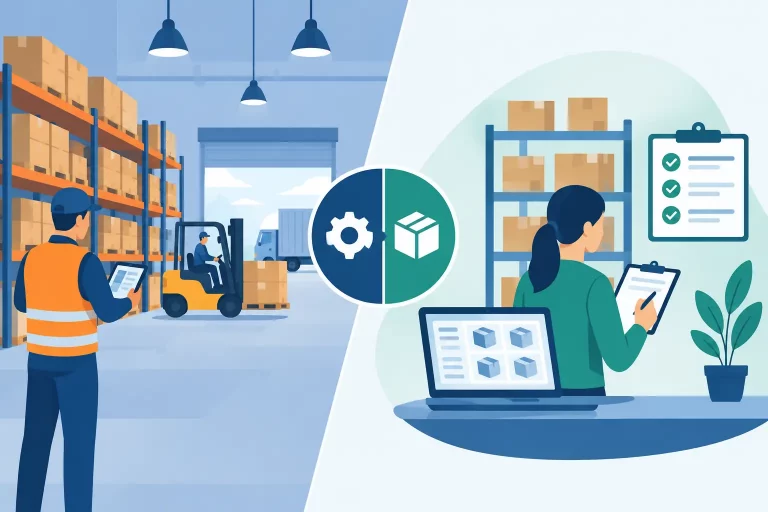
Sales channels create demand. Warehouses turn that demand into delivered orders. If the platform does not connect sales activity to warehouse execution, teams still end up working from spreadsheets, separate shipping tools, or printed order batches.
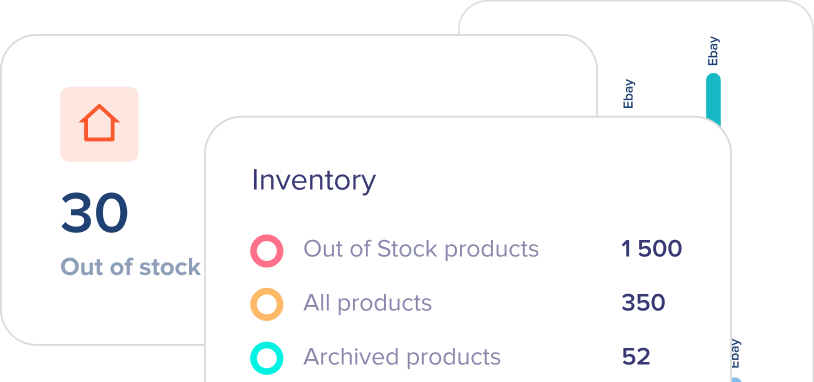
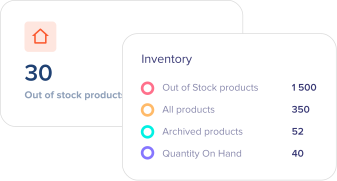
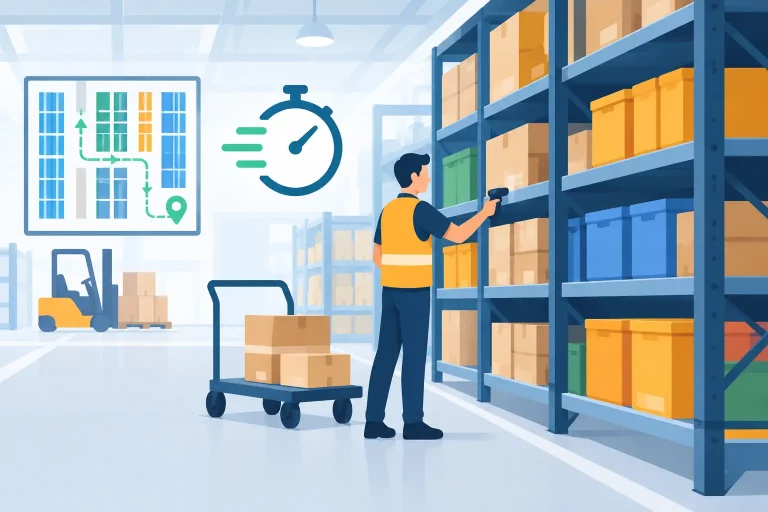
Look for capabilities such as barcode scanning, pick and pack workflows, bin locations, inventory transfers, batch fulfillment, carrier-rate selection, label printing, and tracking updates. These functions improve speed, but accuracy is the larger benefit. Every manual re-entry point is an opportunity to ship the wrong item, use the wrong service, or lose visibility into an order.
For businesses shipping from more than one location, warehouse-aware routing is essential. The system should know where inventory sits and apply rules that balance shipping cost, delivery speed, and available capacity.
Purchasing and wholesale workflows
Many multichannel systems focus heavily on marketplace orders but leave purchasing and wholesale in separate tools. That gap creates planning problems. Replenishment decisions depend on demand across all channels, while wholesale orders often have different prices, payment terms, minimums, and fulfillment requirements.
A broader operations platform brings purchase orders, supplier information, incoming stock, wholesale customer accounts, and sales orders into the same environment as ecommerce activity. This gives inventory planners a more complete view of demand and helps prevent consumer orders from consuming stock committed to a major wholesale customer.
When a simple connector is enough – and when it is not
Not every business needs a full operations platform immediately. If you sell a limited catalog through one online store and one marketplace, have low daily order volume, and fulfill from a single location, a basic integration may solve the immediate issue of bringing orders into one place.
The trade-off is that simple connectors often depend on manual exceptions. They may not support advanced inventory logic, bundles, purchase planning, warehouse workflows, or custom order routing. That can be acceptable while the business is simple. It becomes expensive when staff must build workarounds for every new channel, product type, warehouse, or shipping requirement.
A more complete platform is usually justified when any of these conditions appear: frequent oversells, multiple fulfillment locations, growing marketplace volume, a large or variant-heavy catalog, wholesale operations, recurring stock discrepancies, or a team spending too much time moving data between systems. The decision is not about buying the most features. It is about removing the operational bottlenecks that limit growth.
How to evaluate software that connects sales channels
Start with your actual workflow, not a generic integration checklist. Document where orders originate, where inventory is stored, how products are created, how replenishment is planned, and how shipments leave the warehouse. Then identify the handoffs that rely on exports, copy-and-paste work, delayed updates, or individual employee knowledge.
Integration breadth matters, but depth matters more. A platform may claim to connect to a marketplace, yet only import orders and inventory counts. Ask whether it supports listing updates, order status changes, returns, shipping confirmation, product variations, warehouse-level inventory, and error handling. A shallow connection can create a false sense of control.
Also evaluate data ownership. Your internal SKU structure, product relationships, inventory locations, and customer records should remain clear and manageable inside the platform. The software should not force the business to operate according to the limitations of one marketplace.
Implementation should be treated as an operations project. Clean product data, consistent SKUs, accurate opening inventory, defined warehouse locations, and tested automation rules matter as much as the software itself. Rushing this work can carry old data problems into a new system.
What a connected commerce operation looks like
A connected operation gives every team the information it needs without forcing each team to maintain separate records. Sales channels receive current availability. Customer service sees order status and tracking. Warehouse staff work from verified pick and pack instructions. Buyers see demand and incoming supply. Leadership sees the operational signals behind revenue, not just the revenue total.
This is where a platform such as eSwap fits: it brings multichannel orders, stock, listings, warehouse activity, shipping, purchasing, and B2B workflows into one operational environment. The purpose is not to add another dashboard. It is to replace fragmented processes with rules, visibility, and execution that can keep pace with growth.
The right software should make a busy day more predictable. When a new channel, warehouse, product line, or wholesale account is added, the team should be able to extend a controlled process rather than create another manual workaround.