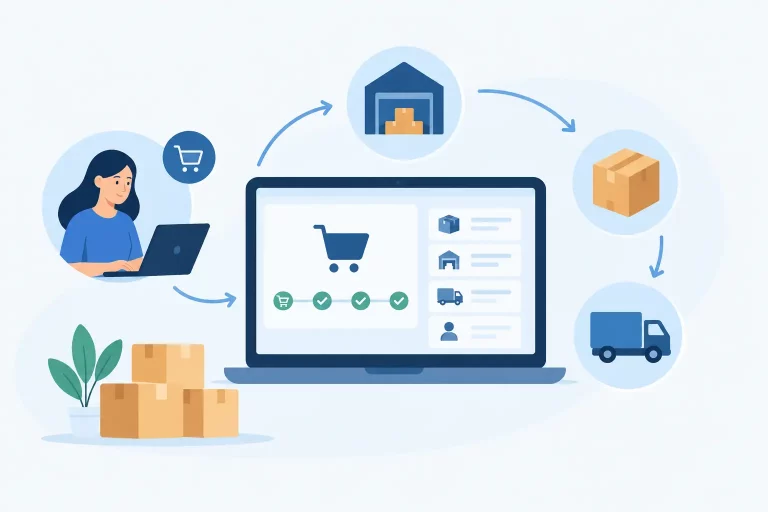
A customer buys the last available unit on your Shopify store while the same SKU is still live on Amazon and eBay. Your team discovers the conflict only after printing a shipping label. That is the operational cost of disconnected systems. Learning how to centralize ecommerce operations gives every channel, warehouse, and team a shared view of what is available, what has sold, and what needs to happen next.

Centralization is not about forcing every task into a single screen for its own sake. It is about creating one source of operational truth while allowing your sales channels, carriers, accounting tools, and payment systems to keep doing their jobs. For a growing merchant, the result is fewer manual updates, more accurate inventory, faster fulfillment, and decisions based on current data rather than spreadsheets that were already outdated when they were sent.
How to Centralize Ecommerce Operations Without Disrupting Sales
Start by identifying the systems that currently control critical data. Most multichannel businesses have separate platforms for storefronts, marketplaces, inventory, order processing, shipping, purchasing, warehouse activity, customer service, and wholesale. The problem is not that each tool exists. The problem is when two or more tools claim to own the same information.
Inventory is the clearest example. If stock quantities are adjusted independently in a warehouse system, a marketplace portal, and a storefront, discrepancies are unavoidable. Choose one commerce operations platform as the system of record for inventory, orders, product data, and fulfillment status. Connected channels should send orders into that system and receive updated availability, listings, tracking details, and status changes back.
This approach does not require replacing every business application at once. A retailer may continue using its preferred accounting software or carrier accounts. The priority is establishing a central operational layer that connects those tools and keeps the workflow moving in the right direction.
Map the Order-to-Delivery Workflow First
Before configuring software, trace the path of a typical order. Follow it from the sales channel through payment review, inventory allocation, picking, packing, carrier selection, shipment confirmation, tracking upload, and accounting reconciliation. Then trace exceptions: canceled orders, partial shipments, backorders, address changes, returns, and damaged stock.
This mapping exercise exposes the work that is often hidden in email inboxes and individual spreadsheets. If a warehouse employee has to ask whether an order was already canceled, or if an operations manager must manually check three channels before approving a purchase order, the process is not centralized yet.
Define which team owns each step and which status change triggers the next action. For example, a paid order can reserve inventory, release a pick task, and apply shipping rules automatically. A received purchase order can update available stock and publish the new quantity to eligible channels. Clear workflow ownership prevents automation from simply moving existing confusion faster.
Standardize Product and Inventory Data
A centralized operation depends on a clean catalog. Every sellable item needs a unique SKU, accurate product name, product dimensions, weight, cost, barcode where applicable, and channel-specific listing details. Bundles, kits, variations, and multipacks need equally clear rules for how they consume component inventory.
Do not treat catalog cleanup as a side project. A duplicated SKU or inconsistent unit of measure affects purchasing, warehouse picking, listing accuracy, and margin reporting. If one channel sells a case of 12 while another sells individual units, the system must understand the conversion. Otherwise, stock may appear available even when the physical inventory cannot support the order.
For businesses with multiple locations, centralization should also distinguish between total inventory and sellable inventory. Stock may be on hand but reserved for open orders, quarantined for quality review, allocated to wholesale, or in transit between warehouses. Accurate available-to-sell calculations protect customer experience without hiding operational reality.
Centralize Orders, Inventory, and Fulfillment Around Real-Time Data
Once product data is reliable, connect all selling channels to the central system. Marketplace, direct-to-consumer, retail, and B2B orders should arrive in one queue with consistent order statuses and customer information. The fulfillment team should not have to log into separate portals to determine what needs to ship.
Order centralization creates practical control. Teams can prioritize orders by service level, channel requirements, warehouse location, cutoff time, or delivery promise. They can hold orders for fraud review, combine shipments when appropriate, split orders by stock location, and apply rules for items that require special handling. Those decisions should be visible in the order record rather than buried in comments across several tools.
Inventory synchronization must be timely enough for the volume and sales velocity of the business. A seller processing a few orders per day may tolerate scheduled updates. A fast-moving marketplace seller cannot. The right setup depends on channel limits, product demand, and the consequences of overselling. For high-volume catalogs, near-real-time inventory updates and safety stock rules are often worth the additional configuration because a single stockout can lead to cancellations, penalties, and lost ranking.
Bring Warehouse Execution Into the Same Workflow
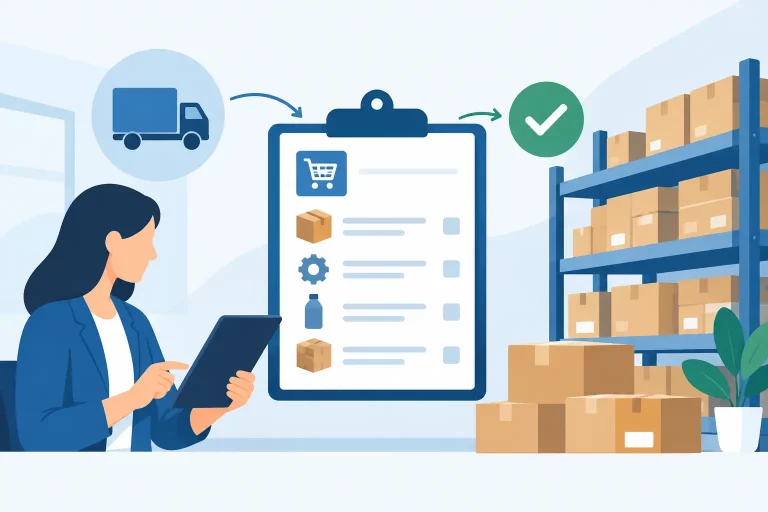
Centralization is incomplete if warehouse work remains separate from order and inventory data. Pick lists, barcode scans, bin locations, packing verification, and shipment confirmation should update the same system that manages orders and stock.
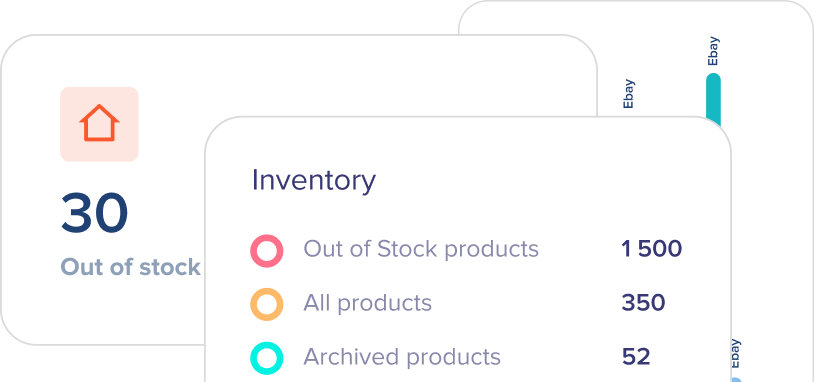

This gives operations leaders a current view of fulfillment performance. They can see which orders are unassigned, picked, packed, delayed, or ready for carrier collection. They can identify inventory variances by location and determine whether a problem started with receiving, putaway, picking, or a catalog error.
For multi-warehouse businesses, route orders based on stock availability, shipping cost, customer proximity, or warehouse capacity. The best routing rule is not always the shortest distance. A warehouse may have inventory but be operating near its daily capacity, while another location can ship on time at a lower total cost. Centralized data makes that trade-off visible before the order becomes late.
Automate Decisions, Not Just Data Transfers
Integrations move data between systems. Automation reduces the decisions your team has to repeat. Both are necessary, but they solve different problems.
Use rules to assign warehouses, choose carriers and services, flag high-risk orders, allocate stock, create purchase orders when thresholds are met, and send shipment tracking back to sales channels. Build these rules around actual operating policies, then test them against edge cases. A shipping rule that works for standard parcels may fail for oversized products, restricted destinations, or orders containing hazardous materials.
Start with the highest-volume and highest-error workflows. Automating every exception immediately can make a system difficult to manage. A better approach is to automate predictable work, retain review steps for costly exceptions, and expand automation as data quality and team confidence improve.
Build Purchasing and Wholesale Into Your Operating Model
Many merchants centralize retail orders but leave purchasing and wholesale in disconnected processes. That creates a delayed view of demand. Purchasing decisions should reflect sales velocity, committed inventory, supplier lead times, incoming stock, and reorder points in the same environment that manages daily orders.
A centralized purchasing workflow lets teams create and approve purchase orders, track expected receipts, receive inventory into the correct warehouse, and compare expected versus actual quantities. It also helps planners distinguish a temporary sales spike from a genuine change in demand. Reordering based only on total sales, without considering open orders and supplier lead time, can still create stockouts.
Wholesale requires similar control. B2B customers may have negotiated price lists, payment terms, minimum order requirements, and fulfillment priorities that differ from direct-to-consumer orders. Handling those rules in a separate process increases the risk of allocating stock twice or applying the wrong price. A shared system keeps wholesale commitments visible alongside marketplace and storefront demand.
Measure Whether Centralization Is Working
The goal is not merely fewer logins. Track operational outcomes that show whether the new model is improving control. Useful measures include inventory accuracy, oversell rate, order cycle time, same-day shipment rate, pick error rate, cancellation rate, and time spent resolving exceptions.
Review these metrics by channel, warehouse, and product category. If fulfillment is fast overall but one warehouse has recurring inventory adjustments, the issue may be location discipline rather than shipping capacity. If cancellations rise on a single marketplace, investigate listing synchronization, lead-time settings, and channel-specific inventory rules.
Give the team a controlled rollout rather than a sudden switch. Begin with a subset of channels, a warehouse, or a product group. Validate order flow, inventory updates, shipping labels, and accounting handoffs before expanding. During the transition, document exceptions and refine the workflow instead of creating new manual workarounds.
Centralized operations give a commerce business room to grow without making every new channel, product, or warehouse a new source of chaos. With one operational system coordinating inventory, orders, fulfillment, purchasing, and wholesale, teams spend less time reconciling the past and more time moving accurate work forward. Platforms such as eSwap are built to provide that level of control as multichannel operations become more complex.