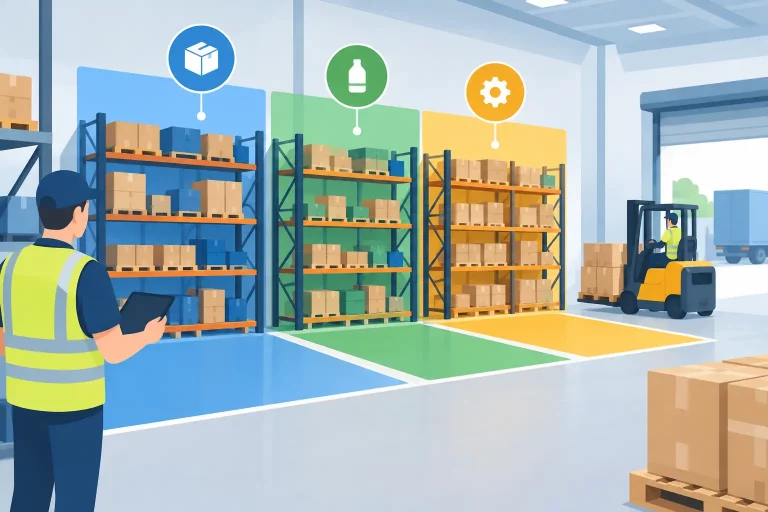
A product shows as available on your storefront, sold out in one warehouse, overcommitted in another, and delayed in fulfillment – all at the same time. That is what bad multi warehouse inventory tracking looks like in practice. For ecommerce and wholesale businesses selling across channels, the issue is not just inventory visibility. It is whether your operation can make accurate promises, route orders intelligently, and scale without adding manual work.

Multi-warehouse operations usually start for good reasons. You add a second location to reduce shipping costs, support regional demand, store overflow inventory, handle wholesale separately, or use a 3PL alongside your own facility. The complexity comes later. Stock is split across locations, orders come from multiple channels, teams work in different systems, and simple questions become hard to answer. How much inventory is actually available? Which warehouse should fulfill this order? When should you reorder, and for which location?
Why multi warehouse inventory tracking breaks down
Most inventory problems in a multi-warehouse setup are not caused by having more buildings. They come from disconnected workflows. If stock levels, sales channels, purchase orders, and fulfillment activity are not tied together in real time, every warehouse creates another chance for mismatch.
A common failure point is channel sync. A seller may update inventory in one system while marketplaces, web stores, and wholesale orders keep pulling from outdated counts. Another issue is transfer visibility. Inventory moved from Warehouse A to Warehouse B may be unavailable in one system, still sellable in another, and invisible to purchasing until someone manually reconciles it.
Returns create another layer of confusion. If returned stock is received at a different location than the original shipment, inventory accuracy depends on fast and correct reclassification. The same is true for bundles, kits, and shared components. One inaccurate warehouse count can distort availability across several SKUs.
The result is familiar – overselling, backorders, avoidable split shipments, delayed picks, and purchasing decisions based on partial data. None of those problems stay isolated in the warehouse. They affect customer experience, margin, and team productivity.
What good multi warehouse inventory tracking should do
Effective multi warehouse inventory tracking is not just a stock report with location columns. It should support the actual decisions your operation makes every day.
First, it needs to show real-time inventory by warehouse, not static snapshots that are already outdated by the time a team acts on them. Available stock, committed stock, incoming stock, and transferred stock should all be visible at the SKU and location level.
Second, it needs to connect inventory to order routing. If an item is available in three locations, the system should help determine the best fulfillment point based on stock rules, channel requirements, shipping speed, or geography. Otherwise, your team is still making fulfillment decisions manually, which limits scale and introduces inconsistency.
Third, the system should account for all inventory movements, not just sales. Purchase order receipts, internal transfers, returns, damaged stock, and manual adjustments all change the truth of what is available. If those actions happen outside the same operational system, your counts drift fast.
Finally, good tracking supports forecasting and replenishment by location. A total inventory number is not enough if one warehouse is constantly short while another carries slow-moving stock. The goal is not only to know what you have. It is to place the right stock in the right warehouse before it becomes a service issue.
Multi warehouse inventory tracking for multichannel sellers
The challenge gets sharper when you sell across Amazon, Shopify, Walmart, eBay, wholesale, and other channels at the same time. In that environment, inventory is not simply stored. It is actively reserved, allocated, picked, packed, and promised through different workflows.
That means your tracking system has to do more than store counts. It has to synchronize channel inventory, reflect order commitments immediately, and prevent one channel from selling stock already allocated elsewhere. If your marketplaces and storefronts are each reading from different versions of inventory data, growth creates more errors, not more control.
This is why multichannel merchants usually outgrow spreadsheets, disconnected apps, or warehouse-specific tools. Those systems may work when order volume is low or fulfillment is centralized. Once inventory is distributed, every delay in sync becomes expensive. You pay for it through canceled orders, customer service tickets, rushed transfers, and labor spent fixing preventable mistakes.
A centralized operations platform changes that equation. When inventory, order management, warehouse activity, and purchasing are connected, every part of the operation works from the same stock position. That is where accuracy becomes practical, not theoretical.
The workflows that matter most
In most growing operations, the value of a tracking system comes down to a handful of core workflows.
Receiving is one of the biggest. When purchase orders are received into the correct warehouse with accurate quantities, your sellable inventory updates immediately. That sounds basic, but many businesses still receive inventory in one system and update channels in another. That lag creates avoidable stockouts and delayed listings.
Transfers are just as critical. Moving inventory between warehouses should create a clear record of what left, what is in transit, and what has been received. Without that visibility, teams often treat transferred inventory as available too early or lose track of stock entirely during handoff.
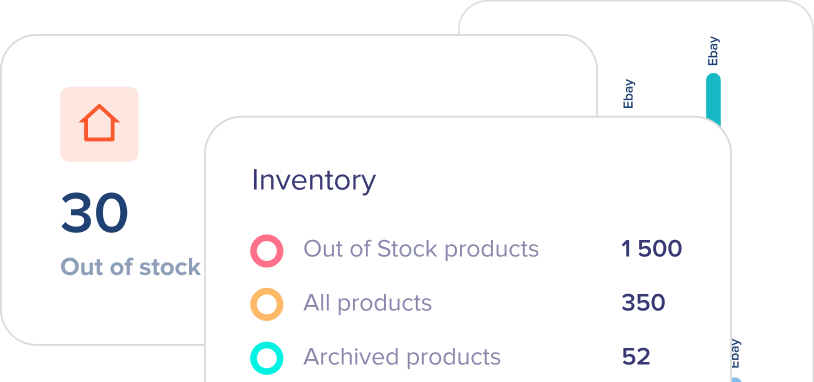
Order allocation is another major pressure point. If your system cannot assign orders to the best warehouse based on rules, teams compensate with manual review. That can work for 20 orders a day. It breaks at 200.
Cycle counts and adjustments also matter more in a multi-location setup. Small discrepancies spread fast when inventory is shared across channels. A disciplined tracking system makes those corrections visible and accountable instead of burying them in warehouse-specific spreadsheets.
What to look for in a system
If you are evaluating software for multi warehouse inventory tracking, focus on operational control rather than surface-level dashboards. A tool can look organized and still leave your team doing the hard work manually.
The first requirement is centralized inventory visibility across all warehouses and sales channels. You should be able to see on-hand, available, committed, incoming, and transferred inventory in one place.
The second is warehouse-aware order management. Orders should route according to your logic, whether that means prioritizing the nearest warehouse, protecting stock for wholesale, or keeping certain SKUs in specific locations.
The third is integrated purchasing and receiving. Replenishment decisions need to reflect warehouse-level demand and current stock positions, not just company-wide totals.
The fourth is reliable channel synchronization. Inventory changes must update quickly enough to prevent overselling, especially during high-volume periods or promotion windows.
And the fifth is auditability. When stock changes, your team should be able to see why. That traceability is what helps operations leaders solve recurring errors instead of reacting to them one order at a time.
For businesses managing both retail and wholesale, it also helps to work from a platform that connects those functions rather than treating them as separate inventory pools unless you explicitly choose that setup. eSwap is built for that kind of centralized control, where warehouse activity, stock availability, orders, shipping, and purchasing work together instead of competing for accuracy.
The trade-offs to plan for
Not every business needs the same warehouse logic. A brand with identical stock in two US warehouses has a different requirement than a distributor handling reserve inventory, B2B allocations, and seasonal overflow. The right setup depends on order volume, SKU complexity, service-level targets, and how much fulfillment flexibility you actually need.
More warehouse options can improve delivery speed and reduce shipping cost, but they can also increase transfer activity and forecasting complexity. Location-level accuracy becomes more valuable as your network grows, but it also requires stronger process discipline. Software helps, but it does not replace clear receiving, picking, transfer, and adjustment procedures.
That is why the best implementations usually start with a simple question: what decisions should the system make automatically, and what decisions should your team still control? Once that is clear, your inventory tracking setup becomes easier to design and maintain.
Better tracking leads to better growth
Businesses do not invest in multi warehouse inventory tracking because they want better stock reports. They invest because inventory accuracy affects every part of commerce operations. It influences how confidently you can sell, how fast you can ship, how well you can buy, and how much manual work your team has to absorb as order volume grows.
When warehouse data is current, connected, and actionable, your operation gets faster without getting messier. Orders route with less friction. Replenishment gets more precise. Teams spend less time reconciling errors and more time moving inventory where it creates value.
If your business is adding channels, warehouses, or fulfillment partners, this is one of the systems worth getting right early. The longer inventory control stays fragmented, the more expensive growth becomes. The upside is just as real – when stock visibility matches operational reality, expansion starts to feel manageable again.