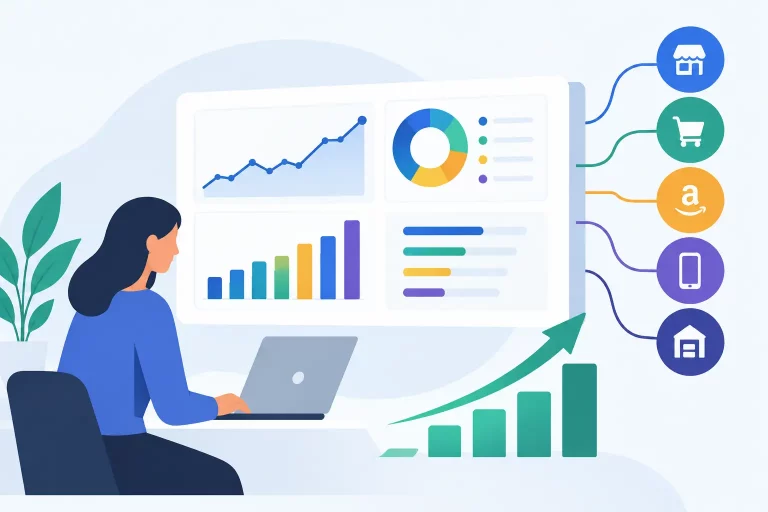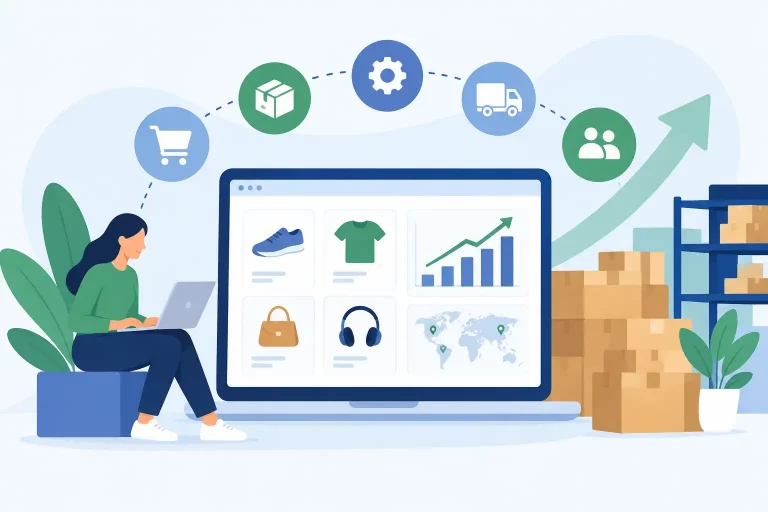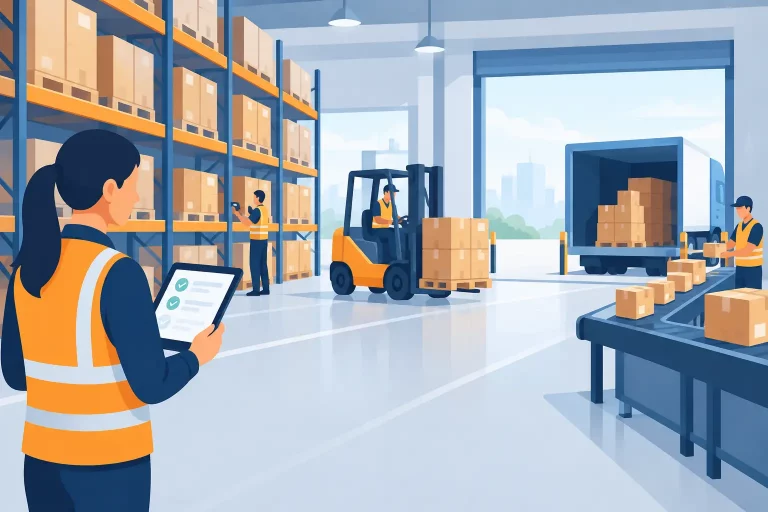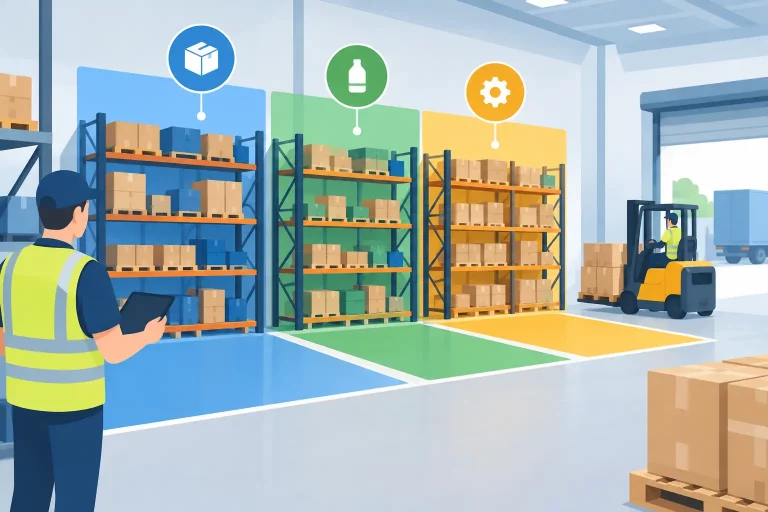
A growing seller can process hundreds of orders without needing an ERP. That can change quickly when the same SKU is live on Shopify, Amazon, Walmart, eBay, and a wholesale price list, while stock is split across warehouses and purchase orders are still tracked in spreadsheets. The ERP vs ecommerce platform decision is not really about choosing one category over the other. It is about identifying which system can control the workflows creating risk in your operation.

An ecommerce platform helps you sell. An ERP helps run the wider business. For multichannel merchants, the gap between those jobs matters because inventory, fulfillment, purchasing, and accounting do not stop at the online storefront.
ERP vs Ecommerce Platform: The Core Difference
An ecommerce platform is built around the customer buying experience. It manages product pages, shopping carts, checkout, payments, promotions, and customer-facing order activity. Shopify, BigCommerce, and similar platforms are designed to help merchants launch and operate a direct-to-consumer store efficiently.
An ERP, or enterprise resource planning system, is built around internal business management. It typically connects finance, purchasing, inventory, suppliers, operations, and sometimes manufacturing or human resources. Its purpose is to create a shared operational and financial record across the company.
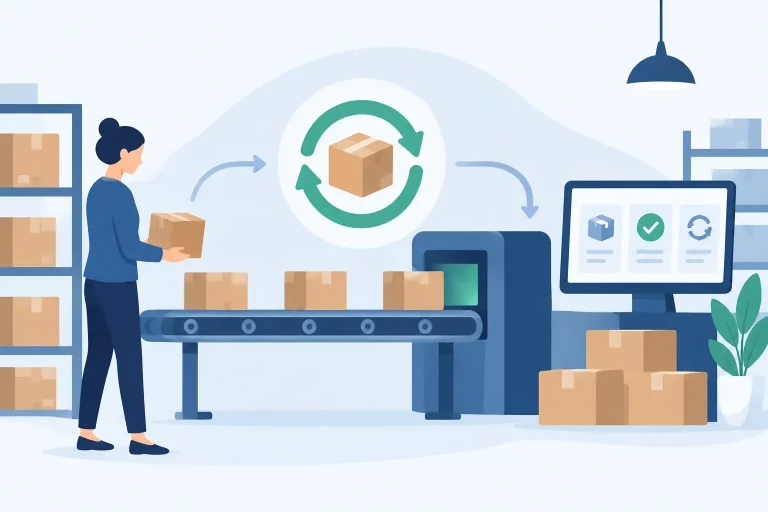
The distinction becomes clearer when an order arrives. An ecommerce platform captures the sale and tells the customer that the order was placed. An ERP can record the financial transaction, allocate inventory, update cost data, and support purchasing decisions. But neither category automatically guarantees efficient warehouse execution or reliable multichannel inventory control.
That is where many merchants run into a practical problem: their storefront works, their accounting system works, and their marketplace accounts work, but the operating process between them is fragmented.
What an Ecommerce Platform Does Well
For a brand selling primarily through one online store, an ecommerce platform is often the right starting point. It makes it possible to build a branded storefront, manage online merchandising, accept payments, and market to customers without building custom commerce infrastructure.
Its strengths are front-end commerce and conversion. Merchants can create collections, manage product content, run discounts, configure checkout, and track customer behavior. These functions are essential, but they do not replace operational systems once order volume and channel count increase.
For example, a Shopify store can show available inventory and pass orders to an app or fulfillment team. If the business also sells the same items on Amazon and through wholesale accounts, inventory accuracy depends on how quickly each system receives updates. A delay of even a few minutes can create oversells during a promotion or a busy sales period.
Ecommerce platforms can extend through apps and integrations. That flexibility is valuable, but adding a separate tool for each problem can create a stack that is difficult to manage. Inventory may live in one application, shipping in another, purchasing in a spreadsheet, warehouse receiving in a third system, and accounting in a fourth. Each connection adds a potential point of failure.
What an ERP Does Well
An ERP is strongest when the business needs broader control over money, resources, and planning. It can provide a structured foundation for financial reporting, general ledger management, accounts payable, accounts receivable, procurement, and enterprise-wide inventory data.
This matters for businesses with more complex requirements. A distributor managing supplier terms, multiple legal entities, detailed cost accounting, manufacturing processes, or strict compliance requirements may need the depth of a traditional ERP. Finance teams often rely on ERP data to close books, analyze margins, and maintain audit-ready records.
However, an ERP is not automatically a commerce operations system. Many ERP implementations require substantial configuration, consulting resources, training, and custom integrations before they support marketplace listings, carrier rules, pick-pack workflows, or real-time stock updates effectively.
A traditional ERP may also be more system than a growing merchant needs. If the immediate problem is late shipments, inaccurate available-to-sell quantities, or manual order routing, a long ERP deployment can delay operational improvements that need to happen now.
Where Both Systems Can Fall Short
The ERP vs ecommerce platform comparison often suggests a simple upgrade path: start with a storefront, then move to an ERP. Real commerce operations are more complicated.
A storefront alone rarely gives a multichannel retailer enough visibility into inventory across marketplaces, warehouses, fulfillment partners, and wholesale commitments. It may show stock on the website correctly while marketplace quantities remain out of sync.
An ERP alone may centralize financial records but still leave fulfillment teams switching among carrier portals, marketplace dashboards, and warehouse documents. It may hold inventory balances without providing the practical controls needed to receive goods, organize bin locations, batch orders, print labels, process returns, and update every sales channel in real time.
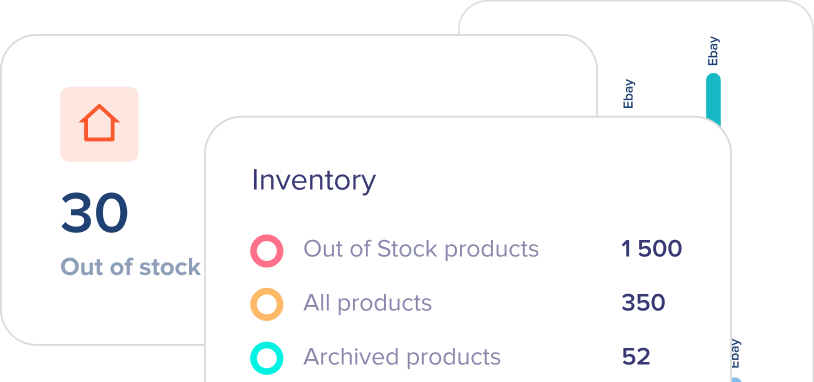
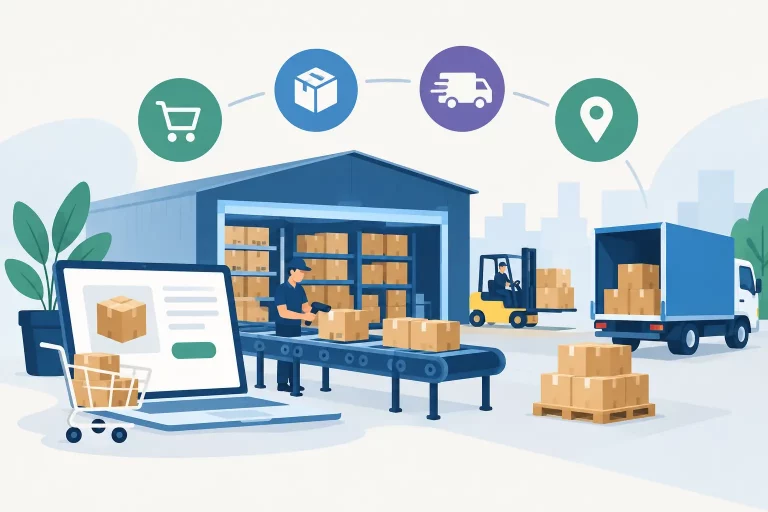
The operational need is often a system that sits between customer-facing commerce and financial management: a commerce operations platform designed to orchestrate inventory, orders, warehouse activity, shipping, purchasing, catalog data, and B2B workflows.
The Questions That Should Drive Your Decision
Instead of asking whether an ERP is better than an ecommerce platform, assess where your current process breaks. The right answer depends on business complexity, not just revenue or order volume.
Start with inventory. If you sell the same products across several channels, can you see available stock by warehouse, committed quantity, incoming purchase order, and sales channel? Can the system reserve stock correctly when a wholesale order and a marketplace order arrive at nearly the same time? If not, inventory control should be the priority.
Then examine order flow. A reliable operation should bring orders from every channel into one queue, apply routing rules, and give the fulfillment team a clear process for picking, packing, and shipping. Staff should not need to copy addresses, check separate dashboards, or manually decide which warehouse should fulfill every order.
Purchasing is another deciding factor. Merchants that regularly reorder from suppliers need visibility into sales velocity, stock levels, lead times, and open purchase orders. An ecommerce platform may report what sold. It usually does not provide enough operational context to help purchasing teams prevent stockouts without additional systems.
Finally, consider financial requirements. If you need advanced accounting controls, multi-entity consolidation, manufacturing accounting, or complex compliance reporting, an ERP may be necessary. If accounting is adequately covered by a connected accounting platform, the immediate value may come from improving the accuracy of the operational data sent to it.
A Better Architecture for Multichannel Commerce
Many growing merchants do not need to replace their ecommerce platform or force every workflow into an ERP. They need a connected architecture with clear roles.
The ecommerce platform remains the customer-facing sales engine. The ERP, when required, remains the financial and enterprise planning system. A commerce operations platform becomes the control center for the activity that turns sales into accurate, profitable fulfillment.
This approach gives operations teams one place to manage product data, synchronize listings, track inventory, route orders, create shipping labels, receive purchase orders, and run warehouse workflows. It also allows finance and storefront systems to receive cleaner, more reliable data rather than asking each team to work from disconnected records.
For example, eSwap centralizes multichannel orders, inventory, shipping, warehouse management, purchasing, catalog workflows, and B2B operations in one operational dashboard. That helps merchants keep their existing storefronts and connected business systems while reducing the manual work between them.
Signs You Need More Than an Ecommerce Platform
The trigger is usually operational friction, not a single sales milestone. You likely need a stronger commerce operations layer when overselling becomes recurring, staff manually update inventory, shipping is handled through multiple carrier portals, or warehouse teams lack a consistent pick-and-pack process.
Other warning signs include marketplace listings that are difficult to maintain, purchase orders managed outside the system, stock that cannot be traced by location, and wholesale orders that follow a completely separate process from retail orders. These issues consume time, but they also affect customer experience, marketplace performance, and margin.
An ERP may be the next step if financial complexity is the primary constraint. A commerce operations platform may be the better first move if the daily constraint is controlling orders, inventory, shipping, and warehouse execution across channels. In many cases, the most effective setup uses both, with integrations that keep each system focused on the work it does best.
Choose the system based on the handoffs that slow your team down. When inventory updates, order routing, purchasing, and fulfillment work from the same operational record, growth adds volume instead of adding chaos.