
A product with five sizes and four colors does not look complicated until it starts selling on three marketplaces, a Shopify store, and a wholesale portal at the same time. Then one parent item turns into 20 sellable combinations, each with its own stock level, barcode, image set, reorder pattern, and fulfillment risk. That is why learning how to manage product variants is not just a catalog task. It is an operations task that affects inventory accuracy, listing quality, purchasing, and shipping speed.

Why product variants become an operations problem
Variants are easy to underestimate because customers see them as simple option selectors. Your team does not. Your team has to decide whether each variation should have its own SKU, where it will be stocked, how it will sync across sales channels, and what happens when inventory changes in real time.
The more channels you add, the more expensive weak variant management becomes. A listing mismatch can create customer confusion. A bad SKU structure can slow receiving and picking. Shared inventory errors can lead to overselling on one channel while stock sits stranded for another. In many businesses, product variants become the point where catalog management and warehouse execution collide.
That is also where trade-offs show up. The most detailed variant setup gives you better reporting and control, but it takes more discipline to maintain. A simpler setup reduces admin work, but it can hide demand patterns and create fulfillment mistakes. The right model depends on your product mix, order volume, and how many systems need to stay aligned.
How to manage product variants without creating chaos
The goal is not to build the most complex catalog possible. The goal is to create a variant structure that supports accurate selling, fast fulfillment, and clean replenishment.
Start with a clear parent-child structure
Most multichannel sellers need a parent-child relationship for variant products. The parent groups related items together, while each child SKU represents a specific sellable version, such as black medium or blue large. This matters because inventory is not held at the parent level. It is held at the child level, where orders are actually placed and fulfilled.
If you skip this structure, reporting gets muddy and stock control gets weaker. If you overcomplicate it, maintenance becomes slow. A practical rule is simple: if a variation can be ordered, picked, counted, or replenished separately, it needs its own child SKU.
That includes more than size and color. Material, pack size, region-specific packaging, and channel-specific bundles can all require separate variants if they affect stock, cost, or fulfillment handling.
Build SKUs that work in the warehouse
A variant SKU should help your team identify the item quickly. It should not require guesswork, and it should not rely on a marketplace listing title to explain what the item is. Strong SKU logic saves time in receiving, cycle counts, picking, and returns.
Many sellers make the mistake of using manufacturer codes that are technically accurate but operationally weak. Others create long, inconsistent SKU strings that break workflows. A good SKU format is short, readable, and standardized. It should reflect the attributes that matter most in daily operations, such as style, color, and size.
There is no universal SKU formula. A fashion seller may prioritize color and size. A wholesale parts business may need compatibility or pack count first. What matters is consistency. Once you define a format, apply it everywhere.
Standardize your attributes before you scale
Variant management starts falling apart when the same attribute is labeled three different ways across systems. If one channel uses Gray, another uses Grey, and your warehouse system uses Charcoal, you are creating avoidable friction.
Standardized attributes give you cleaner listings, better reporting, and fewer sync errors. They also make automation easier because the system is not trying to interpret inconsistent values. This is especially important when multiple teams touch the catalog, including merchandising, operations, warehouse, and purchasing.
Keep the attribute set focused. Not every product detail needs to become a variant. If a field does not change inventory handling, pricing, customer selection, or fulfillment, it may be better stored as product information rather than a sellable variation.
Inventory control is where variant management succeeds or fails
Most product variant problems are really inventory problems wearing a catalog mask. If stock is not tracked accurately at the variant level, every connected workflow starts to drift.
Track stock at the sellable variant level
Each variant needs its own inventory record. That sounds obvious, but many businesses still manage variants with shared stock assumptions, spreadsheet overrides, or manual adjustments by channel. That approach may hold for low volume, but it breaks fast once orders increase.
Variant-level inventory tracking gives you a clear view of what is actually available to sell. It also supports better purchasing decisions because you can see which combinations are moving and which are not. A parent product may look healthy overall while one critical size or color is constantly out of stock.
Sync inventory across every channel in real time
The risk with variants increases when the same child SKU is listed on multiple channels. If stock updates lag, you create oversells. If listings are disconnected, you create false availability. Both lead to customer service issues and fulfillment pressure.
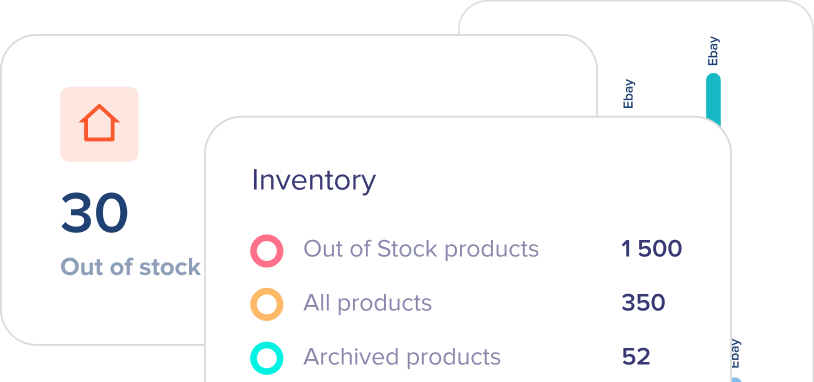
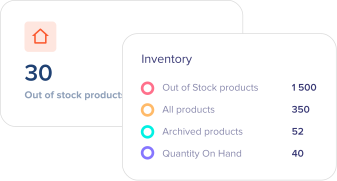
This is why centralized control matters. A connected operations platform can maintain one inventory source of truth for each variant, then push availability updates across channels as orders, receipts, and warehouse movements happen. That reduces manual reconciliation and gives operators faster confidence in what they can actually sell.
For growing sellers, this is often the difference between manageable scale and constant exception handling.
Separate available, allocated, and incoming stock
On-hand quantity alone is not enough for variant planning. You also need to know what is already committed to orders, what is inbound on purchase orders, and what is available to promise right now. This is especially important for high-velocity variants that sell out unevenly.
A medium black shirt and a large black shirt may belong to the same product family, but they behave differently in demand. If your system cannot distinguish available stock from allocated or incoming units at the variant level, purchasing becomes reactive and customer promises become less reliable.
Listings, fulfillment, and purchasing all need the same variant logic
Variant management breaks when each team works from a different structure. Catalog, warehouse, and purchasing processes need to describe the product the same way.
Keep channel listings mapped to the same core SKU records
Every marketplace has its own listing rules. Some handle parent-child variation relationships well. Some are stricter. Some make edits messy after the listing is live. Even so, your internal product structure should stay consistent.
Do not let channel-specific workarounds become your master product logic. They create duplicate records, disconnected stock pools, and reporting gaps. Instead, maintain one internal variant record and map channel listings back to it. That gives you cleaner control over inventory, order routing, and replenishment.
Make fulfillment variant-aware
A variant is not just a front-end choice. It affects picking accuracy, barcode scanning, storage location logic, and returns handling. If your warehouse team cannot quickly distinguish similar child SKUs, mistakes rise.
This is where barcode discipline, clear bin locations, and scan-based workflows matter. The closer your physical warehouse process aligns with your digital variant structure, the fewer errors you carry into shipping. That is especially important for products that differ only slightly in packaging or appearance.
Use variant data to buy smarter
Purchasing at the parent level can hide stock risk. You may know a product family is selling well, but that does not tell you which exact variants need replenishment first. Buyers need visibility into demand and stock coverage by child SKU.
That does not mean every purchasing decision must be made one variant at a time. In some categories, parent-level trends are useful for planning. But replenishment should still account for the variants driving sales and the ones tying up cash. Clean variant data gives you better reorder timing, better vendor communication, and less dead stock.
Common mistakes to avoid when managing product variants
The biggest mistake is treating variants as a listing convenience instead of an operational asset. Once that happens, sellers start making short-term fixes that create long-term complexity.
One common issue is duplicate SKUs for the same variant across channels or warehouses. Another is inconsistent naming that breaks reporting. A third is using manual stock updates to patch over system gaps. These methods can keep orders moving for a while, but they increase labor, slow decision-making, and make scale more expensive.
Another mistake is creating too many variants. If every minor product detail becomes a separate sellable SKU, your catalog gets bloated and your team spends time maintaining records that do not improve sales or control. The right level of variation is the one that supports accurate selling and fulfillment without creating unnecessary admin work.
For businesses selling across retail and wholesale, the challenge can be even more layered. The same core product may need different pack configurations, pricing structures, or channel presentation. In those cases, a centralized system such as eSwap helps by keeping inventory, listings, warehouse activity, and purchasing tied back to the same operational record instead of scattering them across disconnected tools.
How to know your variant setup is working
A good variant structure should make daily work easier, not heavier. Your team should be able to answer simple questions quickly: what is in stock, what is committed, what is selling fastest, what needs to be reordered, and where fulfillment errors are happening.
If those answers require spreadsheet cleanup, channel-by-channel checking, or manual warehouse confirmation, your variant setup is not doing enough. When the structure is right, catalog control improves, inventory stays more accurate, and fulfillment teams spend less time fixing preventable mistakes.
Product variants do not need to create operational drag. With a clear SKU structure, standardized attributes, centralized inventory control, and channel mapping built around one source of truth, they become easier to scale. The best test is simple: when sales volume increases, your system should stay calm even if your variant count does not.