
If your team is still updating product titles, images, pricing, and channel-specific attributes in multiple systems, the catalog is already costing more than it should. Product catalog management software gives growing merchants one place to control product data, reduce listing errors, and keep every sales channel aligned without relying on spreadsheets and repeated manual edits.

For multichannel sellers, catalog problems rarely stay isolated. A missing SKU mapping can delay fulfillment. An outdated variation can trigger marketplace errors. A product detail mismatch between your web store and wholesale line sheet can create returns, support tickets, and lost trust. What looks like a simple content issue often turns into an operations issue.
What product catalog management software actually does
At a basic level, product catalog management software centralizes product information. That includes SKUs, titles, descriptions, images, dimensions, pricing fields, barcodes, variants, bundles, and channel-specific attributes. But for businesses selling across marketplaces, DTC stores, and wholesale channels, the real value is control.
A strong system gives your team a single operational source for product data. Instead of managing duplicate records across disconnected tools, you maintain the catalog once and push accurate information where it needs to go. That reduces rework and lowers the risk of channel drift, where product data slowly becomes inconsistent from one platform to the next.
This matters even more when the catalog is tied to inventory, ordering, fulfillment, and purchasing. Product data should not live in a silo. If a product record changes, that change can affect pick accuracy, replenishment logic, shipping rules, and channel availability. The better your catalog system connects to the rest of the business, the fewer downstream mistakes your team has to clean up.
Why catalog complexity increases as you grow
A small seller with 50 products can often get by with lightweight tools and manual fixes. A business with thousands of SKUs, multiple warehouses, marketplace listings, kits, bundles, and wholesale pricing cannot. Growth adds layers of complexity that basic systems are not built to handle.
Variations are a common example. A single product may have size, color, material, region-specific compliance details, and different imagery by channel. Then add marketplace attribute requirements, warehouse dimensions, reorder settings, and B2B pricing tiers. What used to be one product record becomes a network of dependencies.
The same goes for channel expansion. Each sales channel has its own formatting rules, listing requirements, and sync behavior. If your team is maintaining all of that manually, speed drops and errors rise. New channels become harder to launch, and routine updates become risky because no one is fully confident about where product data is being used.
That is why product catalog management software is not just a content tool. For scaling operators, it becomes part of the infrastructure that keeps sales, inventory, and fulfillment moving in sync.
The operational problems the right system solves
The most immediate benefit is accuracy. When product records are centralized, teams spend less time correcting listing mistakes, updating duplicate entries, or troubleshooting mismatched data between systems. Accuracy improves because there is a defined place to manage the truth.
The second benefit is speed. Launching a new product, updating a bundle, changing dimensions, or revising channel content should not require work in five different dashboards. A centralized workflow shortens the path from update to execution. That is especially valuable during seasonal launches, promotional cycles, or rapid assortment changes.
The third benefit is visibility. Operations teams need to know what is active, what is incomplete, what is mapped correctly, and what is failing at the channel level. Without that visibility, catalog management becomes reactive. Teams only find issues after listings break or orders fail.
There is also a labor impact. Many growing businesses try to solve catalog complexity by adding more people to maintain listings and fix exceptions. That can work for a while, but it does not create operational leverage. A better system lets the existing team manage more SKUs, more channels, and more change without creating more manual work.
What to look for in product catalog management software
Not every platform is built for the same job. Some tools are focused mainly on product content syndication. Others are designed for broader commerce operations. The right choice depends on where your current bottlenecks are.
If your biggest issue is content consistency, look closely at centralized product data management, attribute control, image handling, and channel publishing. If your bigger challenge is operational coordination, then the catalog needs to work alongside inventory, ordering, warehouse logic, shipping workflows, and purchasing.
For many multichannel merchants, the second case is the real one. A catalog is not useful if it stays accurate in theory but disconnected in practice. Product data needs to inform how stock is tracked, how orders are routed, how listings are synchronized, and how replenishment decisions are made.
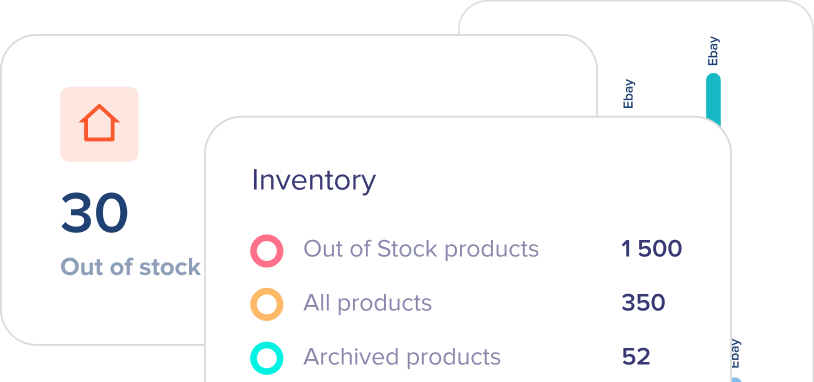
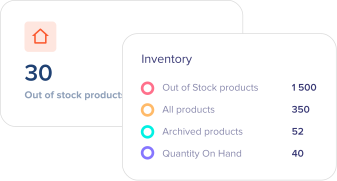
A few capabilities matter more than others.
Centralized SKU management
Every product should have a clear system of record. That includes parent-child relationships, variant structures, bundle definitions, and channel mappings. If your business sells the same item under different listing formats across channels, clean SKU control is essential.
Channel synchronization
Publishing product updates once and pushing them across channels saves time, but the real value is consistency. Good synchronization reduces listing drift and helps teams maintain control as the number of channels increases.
Inventory and warehouse connection
This is where many catalog tools fall short. If the catalog is disconnected from warehouse and inventory operations, product changes can still create fulfillment errors. When catalog data and stock logic work together, operators get a more reliable picture of what can actually be sold and shipped.
Automation and exception handling
Manual work should be reserved for actual decisions, not repetitive updates. Automation rules, status controls, and error visibility help teams move faster while still catching the issues that need attention.
Support for wholesale and multichannel pricing
Retail and wholesale often require different product presentations, pricing structures, and order workflows. If your business serves both, the catalog system should support that complexity without forcing separate processes for each sales model.
Why integration matters more than feature count
It is easy to compare systems by checking feature lists. In practice, integration depth is often more important than the number of catalog fields on paper. A platform that connects product data with marketplaces, web stores, shipping tools, accounting systems, warehouses, and purchasing workflows creates more operational value than a standalone catalog tool with a long list of isolated features.
That is because catalog issues usually show up somewhere else first. A wrong weight creates a shipping cost problem. A missing product identifier creates a marketplace sync issue. A bad bundle setup creates an inventory problem. If your software stack is fragmented, every issue becomes a cross-system investigation.
Connected systems reduce that friction. They also make automation more useful. A catalog update can trigger broader workflow changes when the software sees the product as part of a live operating environment, not just a static record.
When a lightweight tool is enough – and when it is not
There are cases where basic catalog software is enough. A single-channel brand with a limited SKU count and simple fulfillment model may not need a larger operations platform. If updates are infrequent and warehouse complexity is low, a lighter tool can be a practical fit.
But that changes when your business adds marketplaces, multiple fulfillment locations, wholesale operations, or a fast-changing assortment. At that point, catalog management starts affecting inventory allocation, order routing, shipping accuracy, and replenishment planning. The software needs to support those dependencies.
This is where businesses often outgrow point solutions. They started with a tool that handled listings, then added separate systems for inventory, shipping, warehouse processes, and purchasing. Over time, the stack becomes harder to manage than the products themselves. Bringing catalog control into a broader commerce operations platform can remove that fragmentation and give teams faster, more reliable execution.
For sellers operating across retail and wholesale channels, that kind of control is not optional. It is what keeps product data accurate, stock aligned, and fulfillment moving without constant intervention. Platforms like eSwap are built for that operational reality, where catalog management needs to work as part of a connected system rather than as a standalone task.
The best product catalog management software does more than organize product records. It helps you sell with fewer errors, launch faster, and keep growing without letting catalog complexity slow the business down. If your team is spending too much time fixing listings, reconciling product data, or working around disconnected tools, the next improvement is not another spreadsheet. It is better operational control.