
One marketplace order comes in, then another, then a Shopify sale hits for the same SKU. If your stock counts are delayed by even a few minutes, you are already in damage-control mode. That is why learning how to prevent overselling online is not just an inventory task. It is a core operational requirement for any business selling across multiple channels.
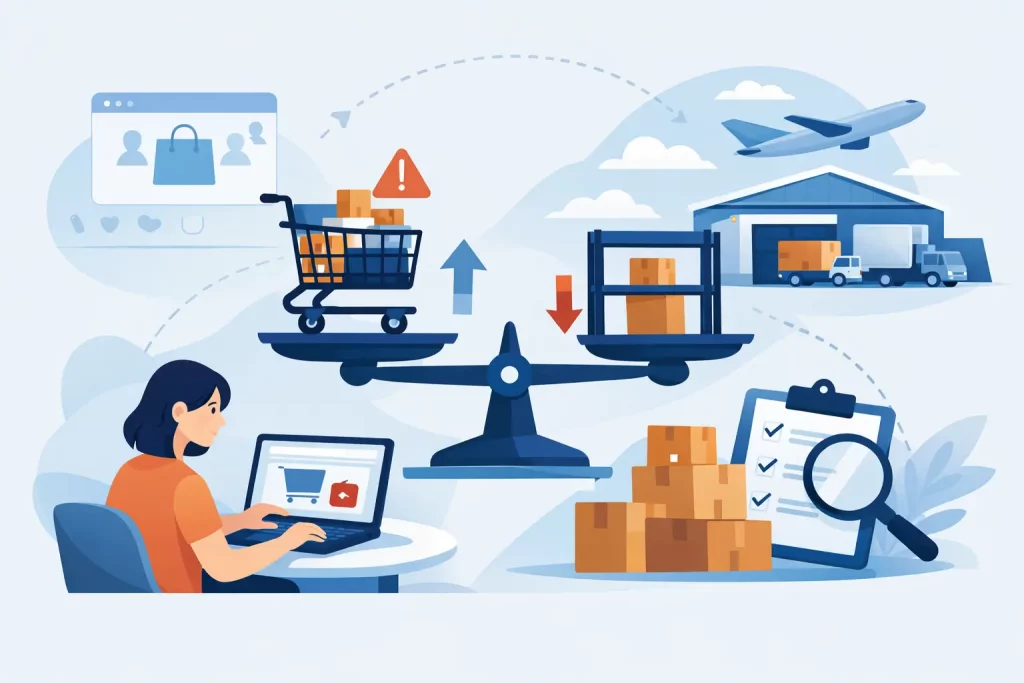
Overselling creates more than canceled orders. It drives marketplace penalties, customer service volume, refund processing, warehouse confusion, and damaged seller metrics. For growing merchants, it also exposes a bigger problem: the business is running on disconnected systems that cannot keep up with real order flow.
The fix is not a single setting or a one-time stock cleanup. Preventing overselling requires tighter control over inventory movement, order timing, listing logic, and warehouse execution. The businesses that solve it best usually do the same thing – they centralize operations and remove manual lag between channels.
Why overselling happens in the first place
Most overselling problems start with visibility gaps. A merchant may be selling on Amazon, eBay, Walmart, Shopify, and wholesale channels, but each platform only sees part of the picture. If inventory updates are delayed, imported in batches, or adjusted manually, stock levels drift almost immediately.
The risk gets worse when businesses rely on separate tools for listings, shipping, accounting, and warehouse management. Every handoff introduces timing issues. A product may be sold on one channel, picked in the warehouse later, and deducted from another system even later than that. During that delay, the same unit can still appear available elsewhere.
Catalog complexity adds another layer. Bundles, kits, product variants, and duplicate listings often create stock errors because one physical item is represented in multiple ways. If that relationship is not mapped correctly, available inventory becomes inflated without anyone noticing until orders collide.
There is also a trade-off that many sellers underestimate. Expanding to more channels increases revenue opportunity, but it also increases synchronization pressure. The more places you sell, the less margin for manual control.
How to prevent overselling online with centralized inventory control
If you want to know how to prevent overselling online consistently, start with one source of truth for inventory. That means your channels should not each manage stock independently. Inventory should be controlled from a central operations system that updates quantity across all sales channels in real time or as close to real time as possible.
This matters because inventory is not just a number. It is a live operational status that changes with every sale, return, warehouse transfer, purchase order, and manual adjustment. When that data sits in separate platforms, your business is making promises to customers based on outdated information.
Centralized inventory control gives you one usable stock position for each SKU. That position can then feed Amazon, eBay, Shopify, Walmart, and other channels from the same record. When an order is placed anywhere, available stock is reduced everywhere. That is the foundation.
For merchants with multiple warehouses, centralized control becomes even more important. You need to know not only how many units exist, but where they are, whether they are sellable, and whether they are already committed to open orders. Without that level of visibility, overselling can happen even when total stock looks healthy.
Real-time sync is only part of the answer
A lot of sellers assume faster inventory syncing will solve the problem by itself. It helps, but it does not cover every cause of overselling.
You also need channel-specific stock rules. Some businesses protect themselves by setting buffer inventory, so a channel never shows the last one or two units available. That can reduce risk on high-velocity SKUs where orders hit from multiple sources within seconds. The trade-off is that buffers can suppress revenue if they are too conservative, so they need to be applied selectively.
Order routing matters too. If an order is accepted on one channel but not immediately allocated in your central system, another order may still consume the same stock. Fast synchronization has to be paired with fast reservation logic.
Then there is listing discipline. If the same item is listed under different SKUs, sold as part of a bundle, or duplicated across channels with inconsistent identifiers, sync speed will not save you. Your catalog has to be structured correctly so every sale affects the right inventory record.
Clean up your catalog before you scale it
Many overselling issues are really catalog management issues. Operators usually see the symptom in inventory, but the root cause lives in how products were created and connected.
A practical fix is to standardize SKU structure and remove duplicate product records. Every sellable item should map to one clear inventory source. If you sell packs, bundles, or multipacks, those relationships need to deduct stock from the same underlying components. If you sell variants, make sure parent and child listings are not creating conflicting counts.
This is especially important for wholesale and B2B operations, where the same product may be sold in eaches, cases, or custom quantities. If those selling units are not tied back to shared stock logic, available inventory can be overstated very quickly.
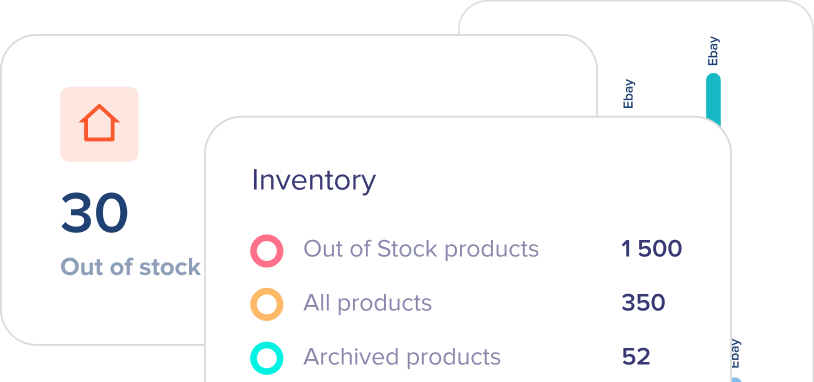
Catalog cleanup is not glamorous work, but it has direct financial impact. Better SKU governance reduces overselling, lowers fulfillment mistakes, and makes purchasing decisions more accurate.
Warehouse workflows can either prevent or create oversells
Inventory accuracy does not stop at the channel level. Your warehouse processes determine whether the stock in your system matches the stock on the shelf.
If receiving is delayed, your system may show inbound units that are not actually available to ship. If picks are not confirmed properly, reserved inventory may remain sellable. If damaged, misplaced, or returned items are not processed quickly, your available quantities become unreliable.
This is where operational software matters. Businesses need warehouse workflows that track stock movement in real time, from receiving to putaway to picking and packing. The goal is simple: every physical movement should create an immediate system movement.
The closer your warehouse and inventory tools are connected, the less chance there is for ghost stock. That means your sales channels are showing quantities based on actual operational status, not assumptions.
Purchasing and forecasting help prevent stockouts before they become oversells
Some overselling problems are caused by bad synchronization. Others are caused by weak replenishment planning.
If you consistently run too lean on high-demand SKUs, even a well-connected system will struggle during sales spikes, seasonality, or marketplace promotion events. You may not technically oversell due to sync failure, but you will still face backorders, delays, and cancellations.
A stronger approach is to connect inventory control with purchasing workflows. When businesses can see sales velocity, open purchase orders, committed stock, and warehouse availability in one place, they make better replenishment decisions. That reduces the pressure on the last few units and gives channels more stable stock positions.
There is no perfect forecast, especially for businesses selling across retail and wholesale demand streams at the same time. But better forecasting narrows the gap between what customers can buy and what you can actually fulfill.
How to prevent overselling online as your channel count grows
The operational model that works for two channels usually breaks at five. Once volume grows, manual updates, spreadsheet checks, and isolated marketplace dashboards stop being reliable.
At that stage, the priority is automation. Inventory sync, order import, stock reservations, shipping workflows, and warehouse updates all need to happen inside a connected system. The more your team depends on manual correction, the more overselling becomes a recurring cost rather than an occasional error.
This is where platforms built for multichannel operations make a measurable difference. A system like eSwap helps merchants centralize inventory, orders, warehouse activity, shipping, catalog management, and purchasing so stock is controlled from one operational dashboard instead of scattered across disconnected tools.
That kind of control supports growth without adding chaos. It also gives operators a clearer way to diagnose issues when they do happen, whether the problem comes from a listing error, a warehouse delay, or a purchasing shortfall.
The goal is not just fewer cancellations
Preventing overselling protects revenue, but the bigger benefit is control. When inventory is accurate and operations are connected, your team moves faster, fulfillment is cleaner, and expansion becomes less risky.
That changes how the business runs day to day. Customer service deals with fewer exceptions. warehouse teams work from better data. Buyers reorder with more confidence. Marketplace performance improves because orders are shipped, not apologized for.
If overselling keeps showing up in your business, treat it as an operations signal. It usually means your systems are out of sync with the speed and complexity of your sales. Fix that foundation, and the gains show up far beyond inventory accuracy.