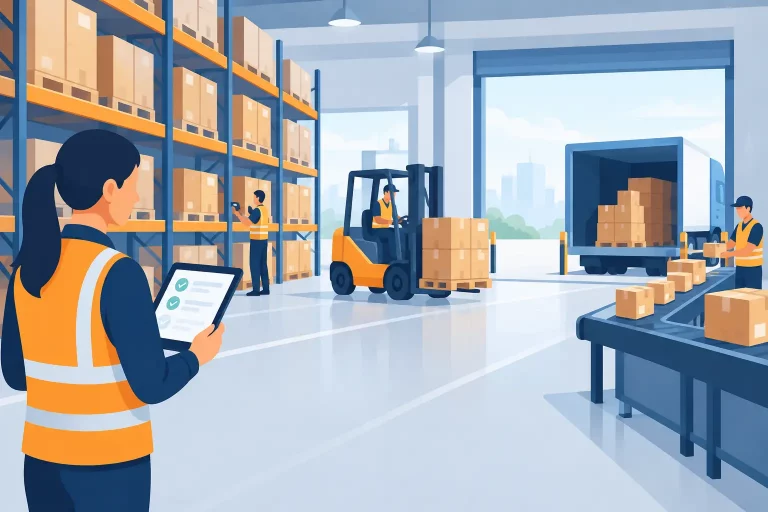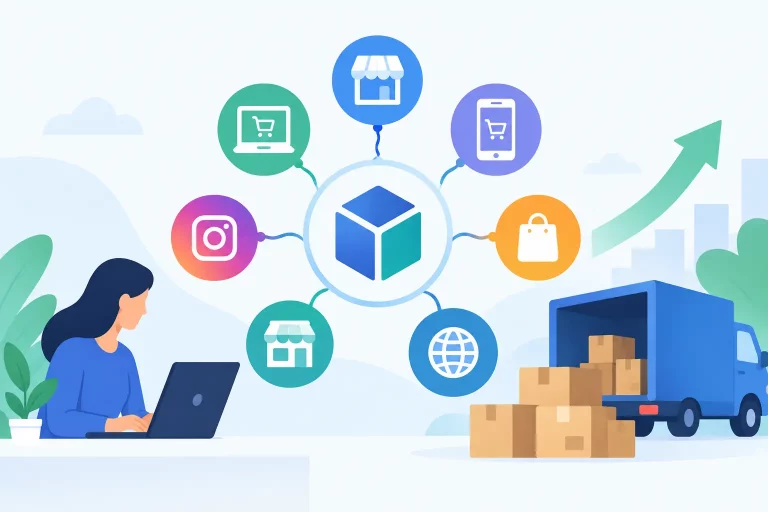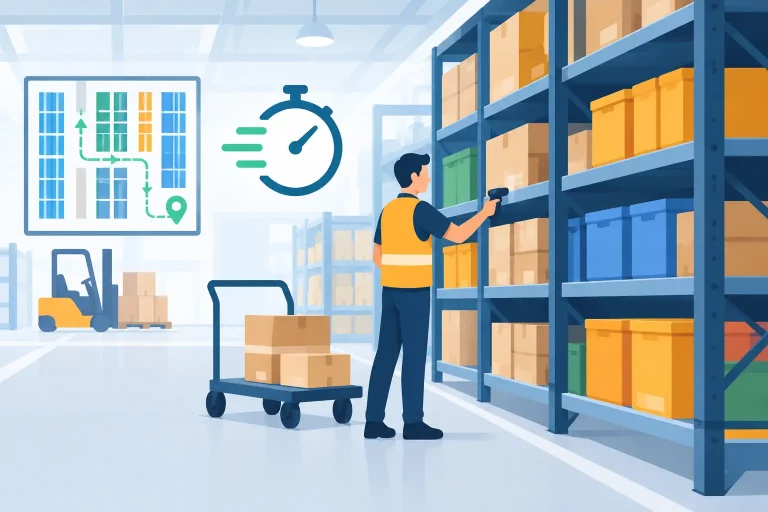
A brand can sell on Amazon, Shopify, eBay, Walmart, and wholesale portals at the same time and still struggle to grow. That is why omnichannel vs multichannel ecommerce is not just a marketing distinction. It is an operations decision that affects inventory accuracy, order flow, fulfillment speed, customer experience, and how much manual work your team absorbs every day.
For growing merchants, the difference becomes obvious the moment volume increases. If each channel runs like its own island, small problems stack fast. Stock gets out of sync. Orders need manual review. Catalog updates lag behind. Warehouse teams work from incomplete information. What looked manageable at ten orders a day becomes expensive at one hundred.
Omnichannel vs multichannel ecommerce: the real difference
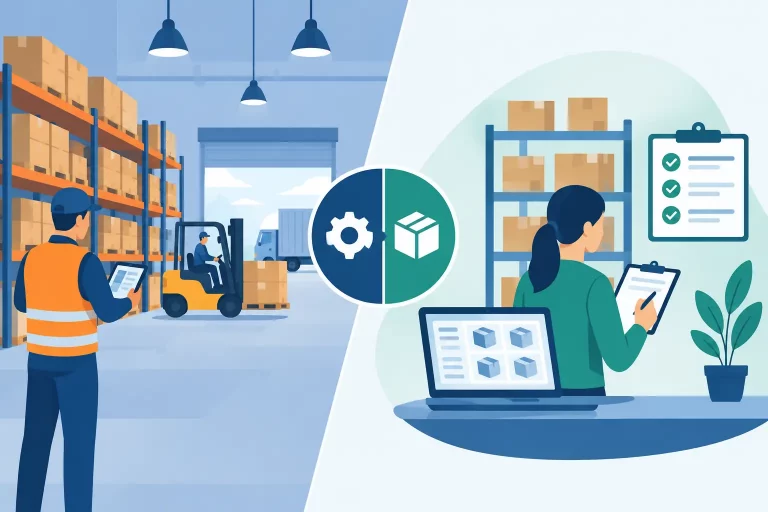
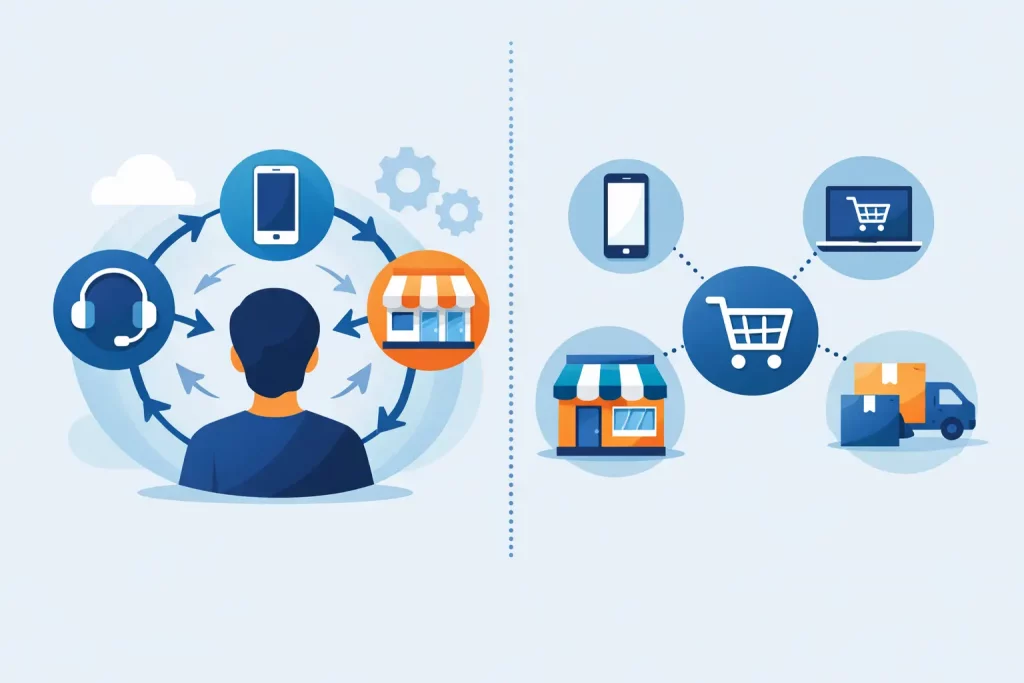
Multichannel ecommerce means you sell through more than one sales channel. That can include your online store, marketplaces, social commerce, retail, and wholesale. The goal is reach. You meet buyers where they already shop and create more revenue opportunities.
Omnichannel ecommerce goes further. It connects those channels into a coordinated customer and operational experience. The goal is not just presence across channels. The goal is consistency across inventory, orders, product data, fulfillment rules, and customer interactions.
That distinction matters because many businesses think they are running an omnichannel model when they are actually operating a multichannel business with disconnected systems. Selling in five places does not automatically create a unified operation. It often creates five versions of the truth unless your back office is tightly controlled.
Multichannel ecommerce is often the starting point
For many merchants, multichannel is the practical first step. You launch a Shopify store, add Amazon for demand, list on eBay to move more products, and maybe open a wholesale channel for larger accounts. That approach makes sense. It expands market access and spreads risk across platforms.
There is nothing inherently wrong with multichannel. In fact, for many businesses it is the right model. The problem starts when channel growth outpaces operational control. Each sales channel may have different listing requirements, shipping expectations, pricing rules, and order workflows. Without central coordination, the team starts patching together spreadsheets, manual updates, and channel-specific workarounds.
At that point, multichannel is still generating revenue, but it is also generating friction. Your business may be selling more while becoming harder to run.
Omnichannel ecommerce is about system coordination
Omnichannel is often discussed as a customer experience strategy, but operationally it is really a coordination strategy. It means your systems share accurate, timely data so the business can act as one operation instead of several disconnected channel teams.
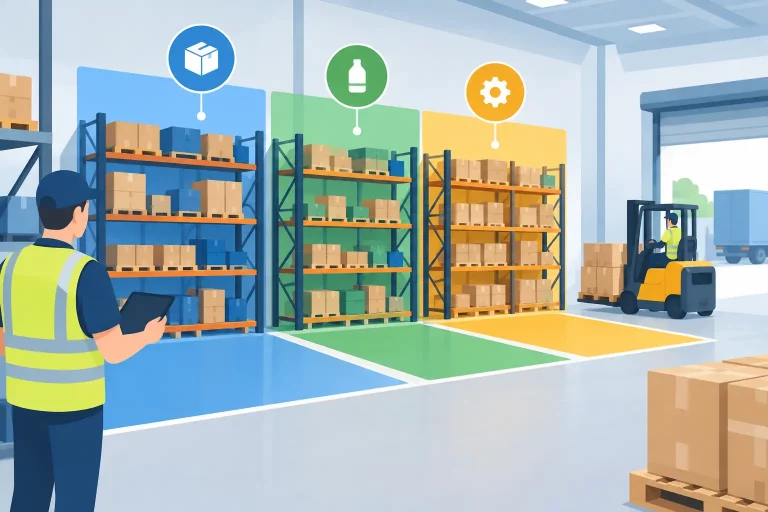
If inventory changes in one place, every connected channel should reflect that change quickly. If a customer order comes in through a marketplace, the warehouse should see it through the same workflow used for other orders. If you update product content or pricing, that change should be controlled centrally instead of being recreated by hand across multiple endpoints.
This is where the gap between theory and execution matters. Omnichannel sounds attractive, but it requires stronger infrastructure than many businesses expect. Data standards need to be cleaner. Inventory tracking needs to be more disciplined. Fulfillment and purchasing workflows need to be structured enough to support automation.
The biggest operational trade-offs
The debate around omnichannel vs multichannel ecommerce is not about which model sounds more advanced. It is about what your business can support, what complexity you are already managing, and where your bottlenecks are coming from.
Multichannel is usually faster to launch. You can add channels one by one, test demand, and keep moving without redesigning the business around centralized workflows. That speed is valuable, especially for smaller teams proving product-market fit or expanding into new marketplaces.
But multichannel can become expensive behind the scenes. Manual inventory syncing creates overselling risk. Separate order management processes slow fulfillment. Channel-specific product data creates catalog inconsistency. Teams spend time reconciling problems that should have been prevented upstream.
Omnichannel usually requires more operational discipline early on, but it pays off in control. Centralized inventory logic reduces stock errors. Unified order routing improves speed. Shared product data improves consistency. Teams spend less time fixing exceptions and more time scaling repeatable workflows.
The trade-off is that omnichannel is not a shortcut. If your systems are fragmented, your warehouse processes are loose, or your product data is messy, a connected model will expose those weaknesses quickly. That is not a reason to avoid it. It is a reason to approach it as an operations strategy, not a branding exercise.
Where multichannel breaks first
Most sellers do not feel the strain of multichannel at the same time. The first crack usually shows up in inventory.
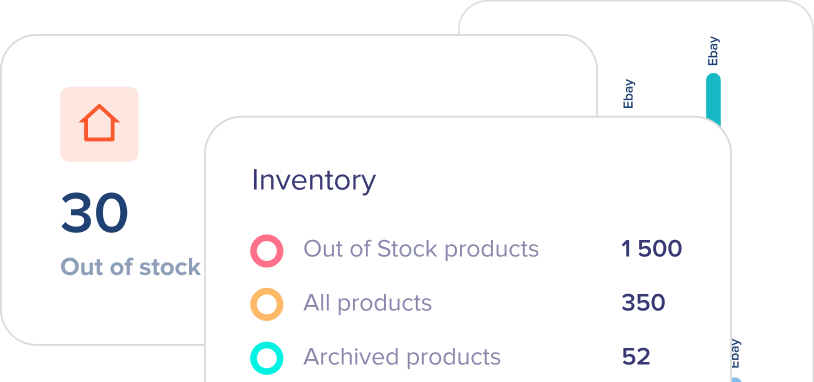
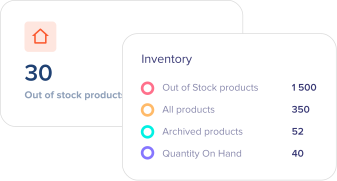
If stock is updated on one channel before another, you get avoidable oversells and backorders. If bundled products, kits, or shared component inventory are involved, the problem gets worse. Even a short delay between channels can create fulfillment issues during peaks, promotions, or marketplace surges.
The next pressure point is order management. When orders flow in from different systems with different shipping methods, service levels, and exception rules, teams start triaging instead of processing. That slows pick, pack, and ship performance. It also makes labor planning harder because volume is spread across disconnected dashboards.
Then comes reporting. Revenue may look healthy, but if inventory availability, purchasing signals, and fulfillment costs are fragmented by channel, decision-making gets slower and less accurate. Operators cannot plan with confidence if they do not trust the underlying numbers.
When omnichannel makes business sense
Omnichannel is usually the better fit when your business depends on shared inventory, centralized fulfillment, or coordinated wholesale and retail operations. It also becomes more valuable when channel volume is rising faster than headcount.
For example, if the same stock pool feeds Amazon, Shopify, Walmart, and B2B orders, channel isolation creates risk. If one warehouse supports multiple order types, separate systems create delays. If purchasing decisions rely on total demand across all channels, fragmented data creates blind spots.
That does not mean every business needs a fully mature omnichannel model on day one. It means the more your revenue depends on coordinated stock, shared warehouse execution, and real-time visibility, the more costly disconnected multichannel operations become.
What growing sellers should evaluate
If you are deciding between omnichannel and multichannel, start with the operation, not the label. Ask where your team is losing time and where errors are created.
If channel expansion is your main goal and your order volume is still manageable, multichannel may be enough for now. But if your team is manually updating stock, re-entering order data, managing separate shipping workflows, or struggling to maintain catalog consistency, you are already paying the cost of weak coordination.
The practical question is not whether omnichannel is more sophisticated. The practical question is whether your current setup gives you accurate inventory, fast fulfillment, clean product data, and clear visibility across the business.
That is why many scaling merchants invest in centralized commerce operations software before they add more channels. A system that connects inventory, orders, warehousing, shipping, purchasing, and wholesale workflows creates the control layer that multichannel growth often lacks. eSwap is built for exactly that problem: giving sellers one place to manage complex commerce activity without losing speed or accuracy.
Omnichannel vs multichannel ecommerce is really a control question
Businesses often frame this as a channel strategy decision, but day to day it is a control question. Can your team trust inventory numbers across every sales source? Can orders move through a single fulfillment process without manual cleanup? Can product and purchasing decisions be made from complete data instead of channel fragments?
If the answer is no, the issue is not just channel count. The issue is operational fragmentation.
Multichannel can absolutely drive growth. For many businesses, it should. But if each new channel adds manual work, delays, and error risk, growth starts to punish the operation. Omnichannel becomes valuable when coordination is what protects margin, service levels, and scalability.
The right model depends on your stage, systems, and complexity. But the strongest commerce businesses tend to reach the same point eventually: more sales channels only help if the business can control what happens after the order comes in.
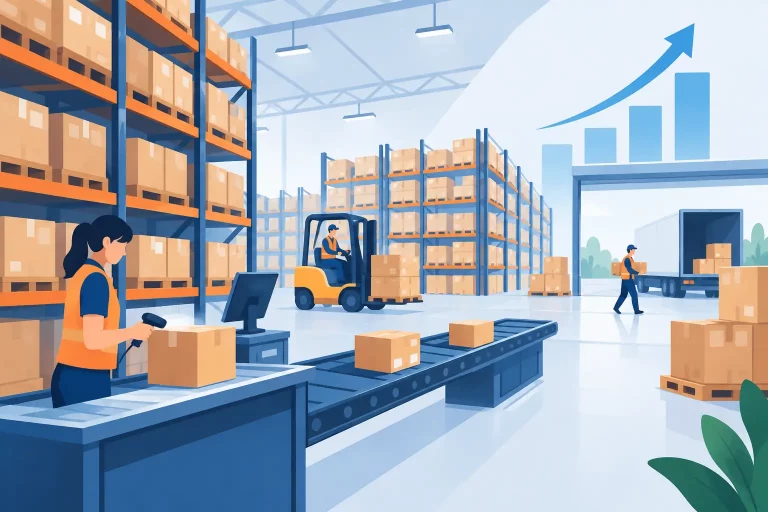
The smartest next step is not chasing more channel presence for its own sake. It is building an operation that stays accurate when volume rises, warehouses get busier, and customers expect faster fulfillment with fewer mistakes.