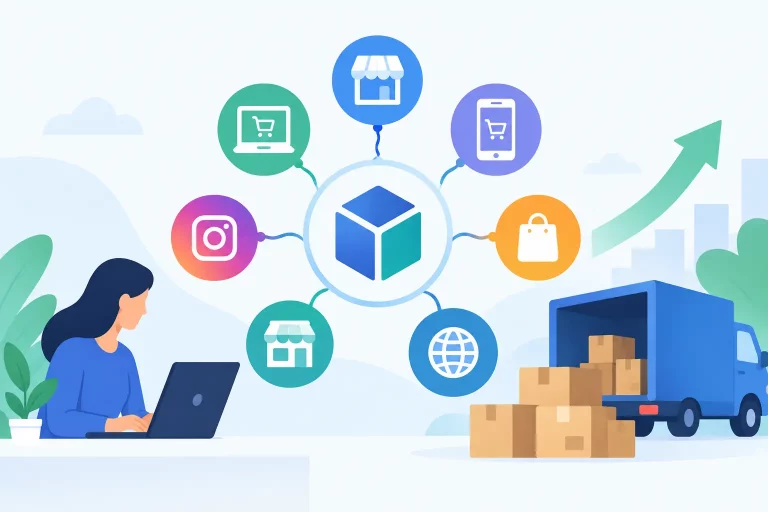
When the same SKU sells on Amazon, Shopify, eBay, Walmart, and wholesale at the same time, small process gaps turn into expensive problems fast. Multichannel order management software exists to stop that chain reaction – by bringing orders, inventory, fulfillment, and channel activity into one operational system that can keep up with real sales volume.

For growing merchants, the issue is rarely a lack of sales channels. The issue is control. Orders come in from different places, inventory updates lag, warehouse teams work from partial information, and customer service ends up chasing preventable mistakes. What looks manageable at 50 orders a day becomes fragile at 500. That is usually the point where spreadsheets, disconnected apps, and channel-native tools start costing more than they save.
What multichannel order management software actually does
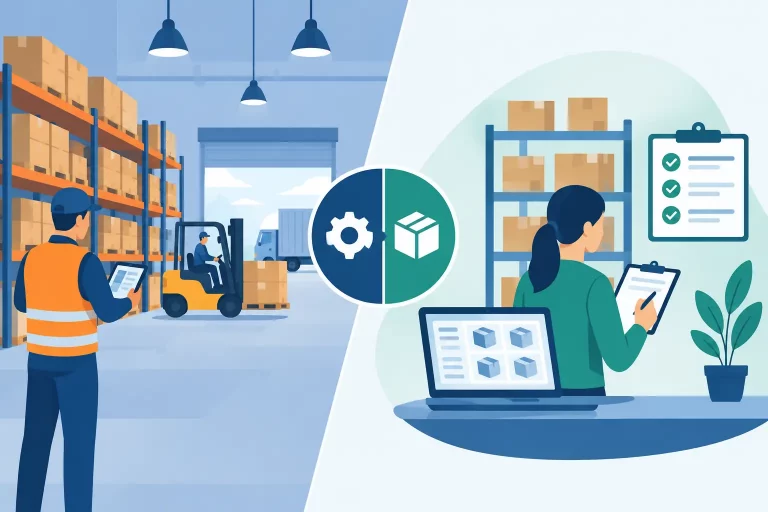
At a basic level, multichannel order management software centralizes incoming orders from every selling channel and gives your team one place to process them. But in practice, that definition is too narrow. A serious system does more than collect orders. It coordinates the workflows that happen before and after the sale.
That includes syncing inventory across channels, routing orders to the right warehouse, generating shipping workflows, updating order statuses, and helping teams avoid duplicate effort. In stronger platforms, catalog management, purchasing, returns, wholesale, and reporting are part of the same operating layer.
That distinction matters. If your software only aggregates orders but leaves inventory planning, warehouse execution, and shipping in separate silos, you still have the same operational risk. You just have one more dashboard to check.
Why multichannel order management software matters more as you grow
The biggest operational problem in multichannel commerce is not volume by itself. It is complexity multiplied by speed. Every new channel, warehouse, carrier, marketplace rule, and product variant creates more opportunities for mismatch.
A delayed inventory sync can cause overselling. A disconnected shipping workflow can delay dispatch. A poor catalog structure can lead to listing errors across marketplaces. If your B2C and wholesale operations run in separate systems, stock allocation gets harder and replenishment planning gets less accurate.
This is why many businesses hit a scaling wall before they hit a demand wall. They have buyers, but the back office cannot support the next stage of growth without adding manual work, more headcount, or both. The right software changes that equation by replacing reaction-based operations with structured control.
The core capabilities to look for
Not every platform that claims to manage multichannel orders is built for operational depth. Some tools are fine for early-stage sellers with limited SKU counts and one warehouse. Others are designed for businesses that need tighter control across retail and wholesale activity.
Inventory synchronization is the first requirement. Stock levels need to update quickly and accurately across every connected channel, or the rest of the system breaks down. This is the foundation for reducing overselling and maintaining confidence in available inventory.
Order centralization is equally important, but centralization alone is not enough. Your team needs usable workflows around those orders. That includes status management, exception handling, fulfillment prioritization, and order routing logic that reflects how your business actually ships.
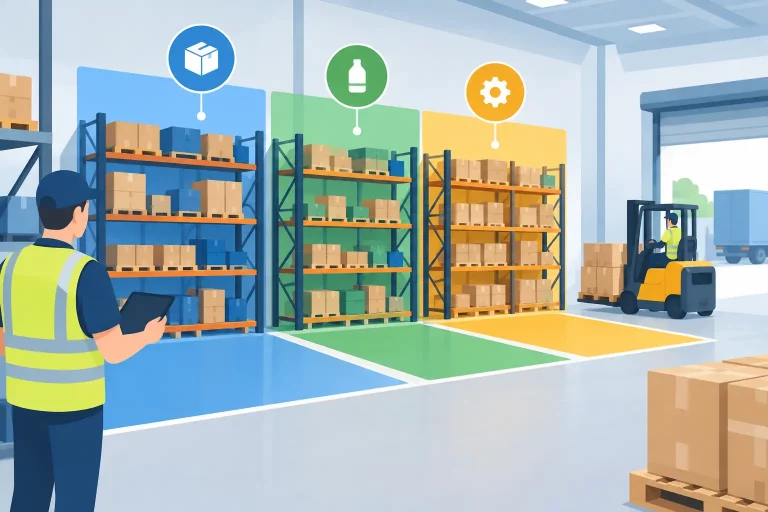
Warehouse functionality is where many businesses outgrow lighter tools. If you hold stock in multiple locations, use bins, split shipments, or need better pick and pack control, warehouse operations cannot sit outside the order system. They need to be part of it.
Shipping integration also deserves more attention than it usually gets. A platform should not just import orders and stop there. It should support label generation, carrier workflows, tracking updates, and efficient dispatch processes inside the same operational flow.
For many sellers, catalog control is another deciding factor. Product data often gets messy as channel count grows. A reliable system helps organize listings, variants, and channel-specific product information without making every update a manual project.
And if you sell both direct-to-consumer and wholesale, built-in B2B workflow support can remove a major source of friction. Managing wholesale orders, pricing structures, and account-specific processes in the same system as retail operations gives you a much cleaner view of inventory and demand.
Common signs your current setup is failing
Most businesses do not start searching for multichannel order management software because they suddenly love back-office systems. They start looking because the cracks are already visible.
One of the clearest signs is inventory distrust. If your team constantly double-checks stock before releasing orders, the system is not giving them reliable answers. That hesitation slows fulfillment and creates unnecessary internal work.
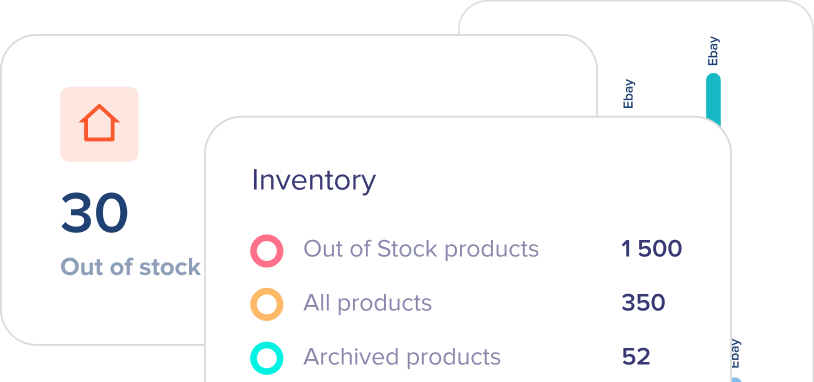
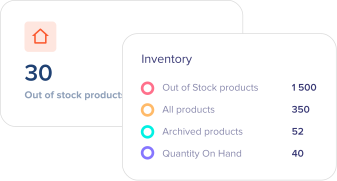
Another sign is channel-by-channel firefighting. If staff have to log into each marketplace or store to understand what sold, what shipped, or what failed, operations are fragmented. That fragmentation often leads to missed orders, delayed updates, and poor response times.
A third sign is headcount rising faster than order volume. Some labor growth is normal, but if every increase in sales requires more manual admin, your process stack is limiting margin. Software should absorb operational complexity, not pass it straight to payroll.
There is also the reporting problem. When inventory, shipping, and order data live in separate tools, decision-making becomes slower and less accurate. You end up planning replenishment and fulfillment based on stale or partial information.
What implementation should improve in the first 90 days
Good software should produce visible operational gains early, especially in businesses already feeling pressure from multichannel complexity. The first improvement is usually order visibility. Teams spend less time hunting for order data because they are working from one system instead of several disconnected ones.
The second improvement is inventory accuracy. Not perfect in every case, because receiving issues, warehouse errors, and listing problems can still happen, but significantly better than manual syncing or patchwork app connections. Better inventory accuracy has a direct impact on overselling, cancellation rates, and customer trust.
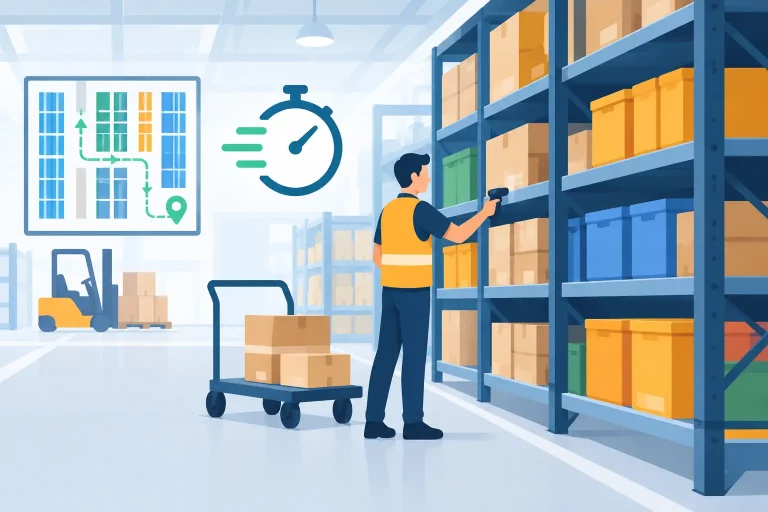
Fulfillment speed often improves next. When orders, stock data, and shipping workflows are connected, warehouse teams can process work with fewer delays and fewer handoffs. That does not just help same-day shipping targets. It reduces operational drag across the entire team.
Purchasing and replenishment decisions also get stronger when inventory and order data are connected. You can see what is moving, what is tied up, and what needs action without pulling reports from multiple systems and reconciling them manually.
Choosing the right multichannel order management software
The best fit depends on how your operation actually runs. A smaller seller with one warehouse and a limited catalog may not need advanced routing or wholesale capability yet. A business selling across major marketplaces, operating multiple stock locations, and managing fast-moving SKUs usually does.
This is where feature depth matters more than surface simplicity. A clean interface is useful, but it should not come at the expense of warehouse logic, inventory control, or meaningful automation. If a platform looks easy because it excludes the hard parts of commerce operations, that simplicity will not hold up as volume grows.
Integration coverage should also be evaluated carefully. It is not enough for a system to connect to your channels in theory. The real question is whether it supports the workflows that matter inside those connections – inventory sync, order import, shipping updates, accounting flow, and channel-specific operational needs.
You should also look at how well the platform handles mixed business models. Many growing sellers are not purely marketplace, purely DTC, or purely wholesale. They operate across all three. A system that can manage that reality in one environment creates much better control than one assembled from separate point solutions.
For businesses that need that level of operational control, platforms like eSwap are built to centralize inventory, orders, shipping, warehouse, catalog, purchasing, and wholesale workflows in one place. That matters because scaling commerce is rarely about adding more tools. It is about reducing the gaps between them.
The real value is operational confidence
Software in this category should do more than save clicks. Its real value is giving your business a dependable operating model. When inventory is accurate, orders are centralized, and fulfillment workflows are connected, teams make faster decisions with less guesswork.
That confidence shows up everywhere – fewer stock mistakes, better shipping performance, cleaner purchasing decisions, and a business that can add channels without adding chaos. If your operation is growing faster than your current systems can support, the right multichannel order management software is not just an efficiency upgrade. It is the system that lets growth keep happening without breaking the business underneath it.