Shipping problems usually show up after growth starts. Orders increase, channels multiply, and what used to be manageable with carrier portals, spreadsheets, and manual label creation starts eating hours every day. That is why choosing the best shipping software for small business is less about printing labels faster and more about building an operation that can keep up without adding avoidable errors.

For a small business selling on one storefront, almost any basic shipping tool can look good at first. The real test comes when order volume spikes, inventory sits in more than one location, or the team needs to ship across marketplaces, wholesale accounts, and direct orders without losing control. At that point, shipping software stops being a simple utility and becomes part of your operating system.
What the best shipping software for small business actually needs to do
The biggest mistake small merchants make is evaluating shipping software as a rate-shopping tool only. Rates matter, but they are only one part of fulfillment performance. If the system does not connect orders, inventory, warehouse workflows, and carrier selection, the business still pays for inefficiency somewhere else.
The best shipping software for small business should reduce manual handling from the moment an order is created to the moment it is marked delivered. That means pulling in orders automatically, organizing fulfillment queues, applying shipping rules, generating accurate labels, updating tracking, and syncing status back to every sales channel. If any of those steps still depend on copying data between systems, the software is solving only part of the problem.
For growing merchants, inventory visibility also matters. A shipping platform that prints labels well but does not reflect real stock levels can create a different kind of bottleneck. Teams ship late because inventory is misplaced, backorders rise because channel data is out of sync, and customer service spends time fixing preventable issues.
Start with your operation, not the feature list
Before comparing vendors, look at how your business actually ships. A brand sending twenty parcels a day from one location has different needs than a seller managing marketplace orders, split shipments, and wholesale cartons from multiple warehouses. Both are small businesses, but they should not buy the same tool for the same reasons.
If your shipping process is simple and likely to stay simple, lightweight software may be enough. You may only need label creation, basic automation, and access to discounted carrier rates. But if your business is already selling across Shopify, Amazon, eBay, Walmart, wholesale, or other channels, software that only handles labels will become restrictive quickly.
This is where many companies outgrow point solutions. They start with a shipping app, then add a separate inventory tool, then a marketplace connector, then warehouse workarounds. The result is fragmented operations and poor visibility. In practice, the best choice is often the system that handles shipping as part of a broader commerce workflow.
The selection criteria that matter most
Carrier support is an obvious first filter, but it should not be the only one. Your software must support the carriers and services you use now, yet it also needs to support the next stage of growth. If expansion means adding international shipping, freight workflows, or additional domestic services, the system should not force a platform change later.
Automation is where the return usually shows up fastest. Good shipping software lets you build rules based on SKU, order value, destination, package type, channel, or service level. That reduces decision-making at the packing station and keeps fulfillment consistent. Manual shipping decisions are slow, and they introduce variability that hurts margins and delivery performance.
Order consolidation is another overlooked area. If a customer places multiple orders, or if items need to ship from different locations, the software should help the team process that intelligently. Without this, labor costs increase and parcel spend becomes harder to control.
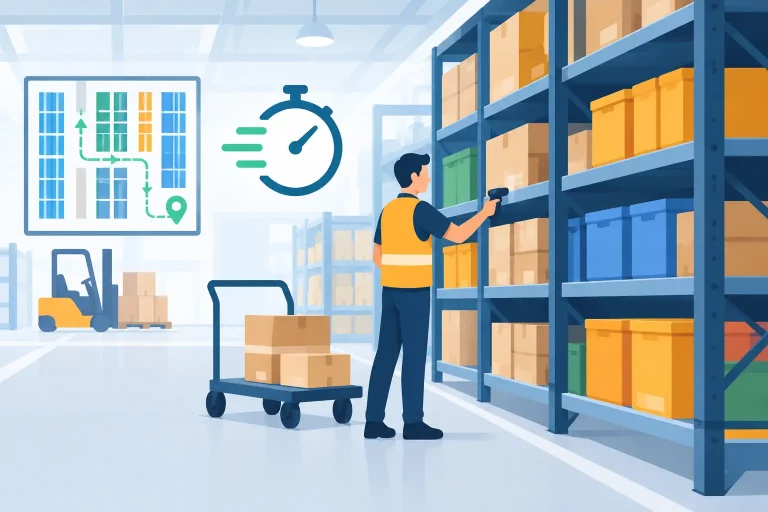
Warehouse usability matters too. A system may look strong in a demo but fail on the floor if pick, pack, and ship steps are clumsy. For small businesses with lean teams, software needs to be straightforward enough for daily use while still giving managers control over exceptions, priorities, and throughput.
Finally, reporting should not be an afterthought. You need to see carrier spend, delivery performance, shipping method usage, and exception trends clearly. Otherwise, it is hard to improve anything beyond the label-printing step.
Shipping software vs. operations software
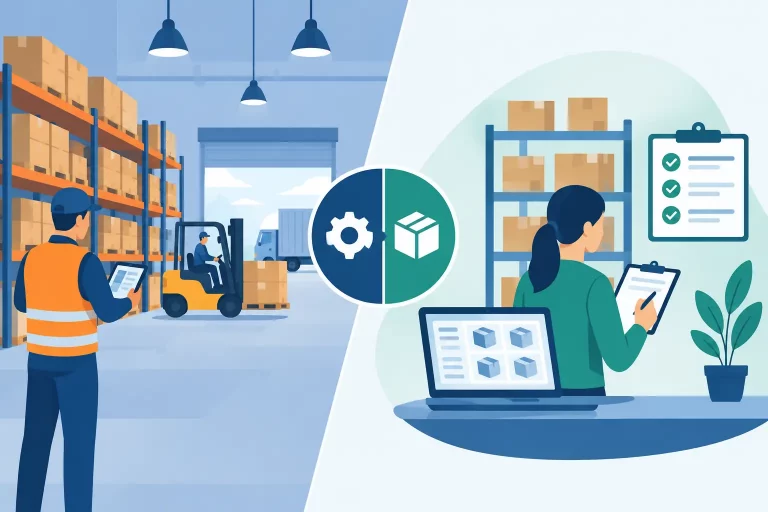
There is a practical difference between shipping software and shipping-enabled operations software. Basic shipping software focuses on labels, carrier connectivity, and tracking. It is useful, but narrow. Operations software connects shipping to inventory, orders, warehouses, purchasing, and channel management.
For many small businesses, the difference comes down to where the pain sits. If your only issue is buying postage faster, a simple shipping tool may be enough. If your issues include overselling, delayed fulfillment, disconnected stock, or poor visibility across channels, then shipping is only one symptom. In that case, software that centralizes operations usually delivers more value than another standalone app.
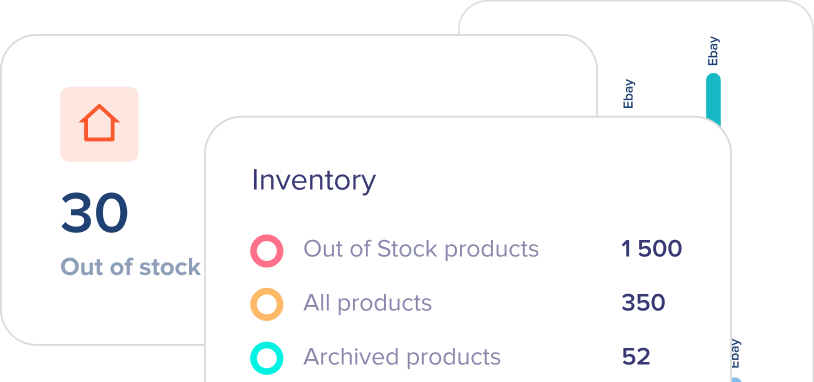
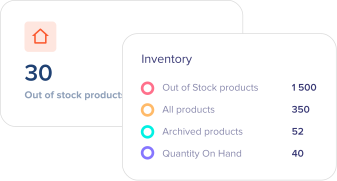
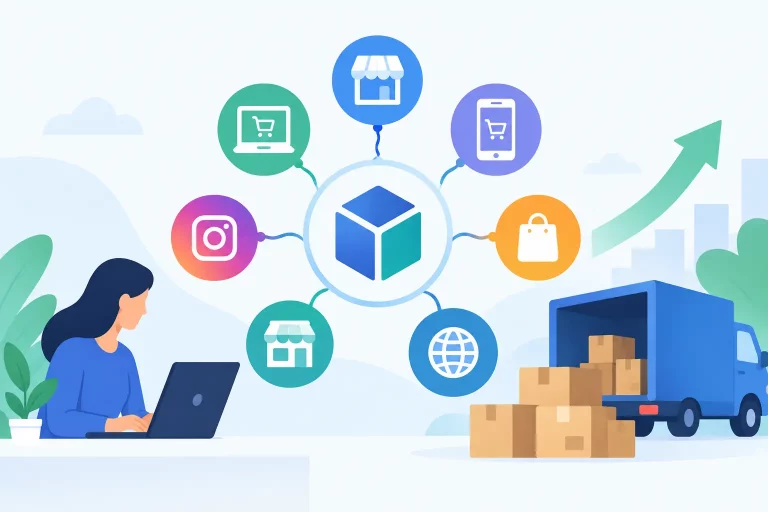
This is especially true for multichannel sellers. When orders are coming from different storefronts and marketplaces, shipping performance depends on clean order flow and accurate stock data upstream. The best system is the one that keeps those functions connected, so the shipping team is working from reliable information instead of correcting errors at the last minute.
Where small businesses often outgrow basic tools
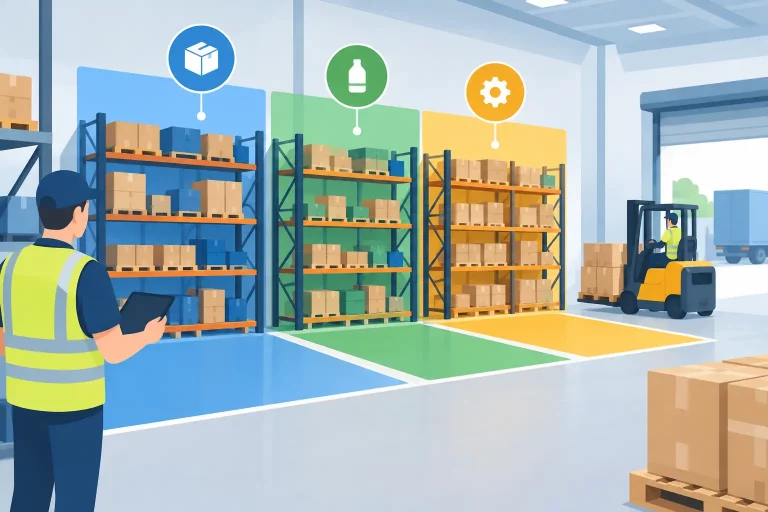
The first breaking point is usually order volume. A process that works at ten orders a day may become chaotic at one hundred. The second is channel complexity. Once a business sells in more than one place, manual reconciliation becomes expensive. The third is warehouse complexity, even if it is only one warehouse with bins, staging areas, and different handling rules.
At that stage, teams start needing batch shipping, barcode workflows, automation by order type, inventory reservations, and clearer allocation logic. They also need tighter synchronization between what was sold, what is available, and what can ship now.
This is why many operators stop asking, “Which app has the cheapest labels?” and start asking, “Which system gives us control?” That shift usually leads to better software decisions.
How to judge whether a platform will scale with you
Ask simple operational questions. Can the system manage orders from all your sales channels in one place? Can it apply shipping rules automatically without constant editing? Can it support multiple warehouses or at least prepare for that move? Can your inventory, catalog, and shipping workflows stay synchronized as volume grows?
Also consider implementation reality. The best platform on paper can still fail if setup is too heavy for your team. Look for software that fits your process today but has enough depth for tomorrow. There is always a trade-off here. Simpler tools are easier to launch, while broader systems take more planning but reduce future rework.
For businesses that expect continued growth, it is often smarter to choose a platform that covers shipping within a wider operational framework. That lowers the odds of another migration six months later.
What strong shipping software should improve in the first 90 days
You should see fewer manual steps, faster label generation, clearer fulfillment queues, and better tracking accuracy almost immediately. After that, the deeper gains should appear in reduced shipping errors, better labor efficiency, and more consistent service selection.
If the platform also connects inventory and order management, you should see improvements beyond the shipping station. Teams spend less time checking stock manually, reconciling orders across channels, or fixing preventable backorders. That is where shipping software starts contributing to margin protection, not just operational convenience.
For merchants with multichannel complexity, a connected platform such as eSwap can make that impact more significant because shipping does not sit in isolation. It works alongside inventory control, order management, warehouse workflows, and channel synchronization in one operational environment.
Choosing the right fit
The best shipping software for small business depends on what kind of business you are building. If you need a lightweight tool for basic parcel processing, keep the decision simple. If you need stronger control over inventory, channels, warehouses, and fulfillment speed, treat shipping software as part of a larger infrastructure decision.
The right platform should save time, cut errors, and give your team clearer control over how orders move from checkout to delivery. If it only prints labels, it may solve today’s problem. If it strengthens the whole operation, it gives you room to grow without creating more operational drag.
Good shipping software should make the business feel smaller on the back end, even as sales get bigger on the front end.