The moment a fast-selling SKU goes out of sync across Amazon, Shopify, and your warehouse shelves, the problem stops being “inventory” and becomes lost revenue, delayed orders, and customer service cleanup. That is why a warehouse inventory management system ecommerce businesses can rely on is not a nice-to-have. It is operating infrastructure.
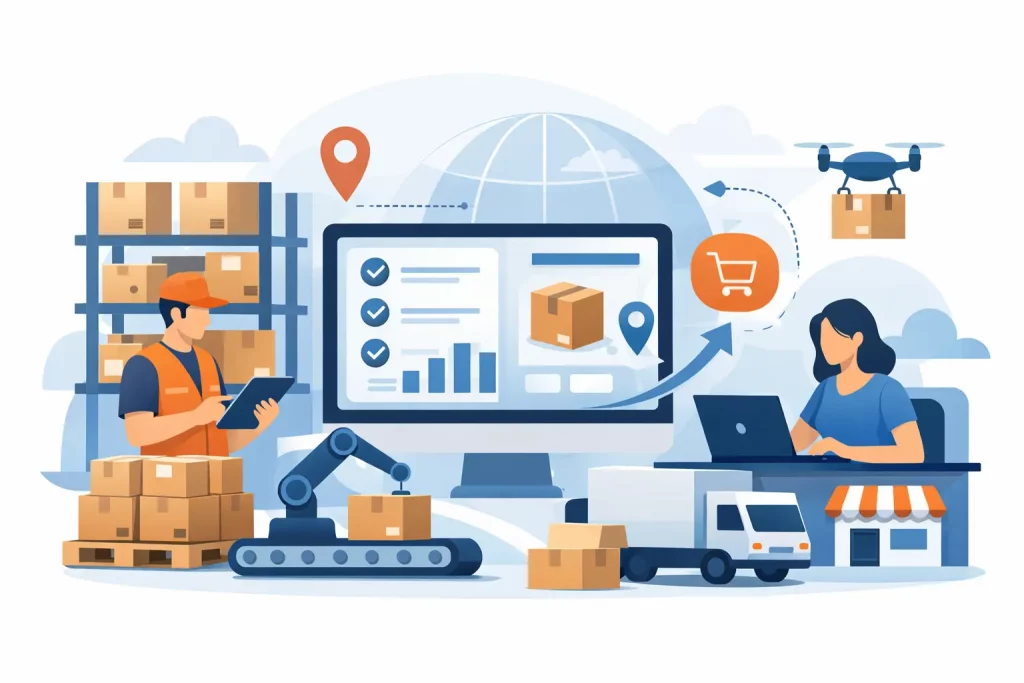
For growing merchants, the real challenge is not just counting stock. It is keeping product availability accurate while orders move in from multiple channels, transfers happen between locations, purchase orders are in flight, and fulfillment teams need clear pick-and-pack workflows. If your systems are disconnected, every sale creates more risk. If your warehouse, catalog, orders, and shipping all work from the same data, the business gets faster and more predictable.
What a warehouse inventory management system for ecommerce actually does
A warehouse inventory management system for ecommerce gives you control over how stock is received, stored, allocated, picked, packed, adjusted, and replenished. The best systems do more than show an inventory number on a screen. They connect warehouse activity to the rest of commerce operations so your inventory position reflects what is happening right now, not what happened hours ago.
That distinction matters. Many businesses start with basic inventory tools inside a shopping cart or marketplace account. Those tools can be enough when order volume is low and everything ships from one room. But once you add more sales channels, more SKUs, bundle products, multiple warehouses, or wholesale orders, basic tools start breaking down. They are not designed to coordinate inventory movement across the entire business.
A true warehouse inventory system for ecommerce should track stock by location, sync quantities across channels, support barcode-based workflows, manage inbound receiving, and connect directly to order fulfillment and shipping. It should also help purchasing teams understand what to reorder and when, based on real demand and current availability.
Why ecommerce brands outgrow basic inventory tools
The biggest warning sign is manual reconciliation. If your team is exporting spreadsheets, correcting quantities by hand, or updating stock in more than one place, your process is already costing you money. Manual work slows fulfillment, increases the chance of overselling, and makes it harder to trust your own numbers.
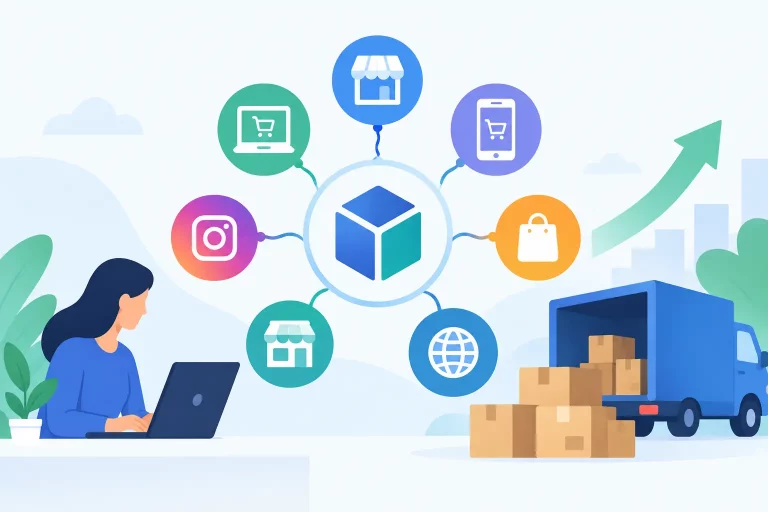
The second sign is channel complexity. Selling on one storefront is straightforward. Selling across Shopify, Amazon, eBay, Walmart, and wholesale accounts is not. Each channel creates inventory pressure, and each one expects accurate availability. Without centralized control, one delayed sync or one warehouse error can ripple through every channel.
The third sign is warehouse friction. Pickers cannot move quickly if locations are unclear. Receivers cannot process incoming stock efficiently if there is no structured receiving workflow. Managers cannot make good decisions if they cannot see reserved stock, incoming inventory, or what is actually available to sell.
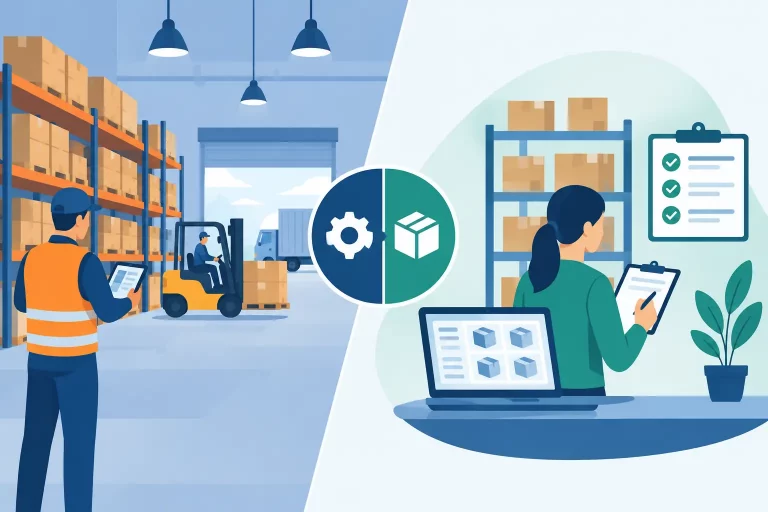
This is where an operational platform changes the equation. Instead of treating inventory as a static count, it treats it as a live system connected to sales, shipping, purchasing, and warehouse execution.
The core capabilities that matter most
Not every business needs the same level of warehouse control on day one. A merchant shipping 50 orders a day has different needs than a seller running multiple warehouses and B2B accounts. Even so, the core capabilities are consistent.
Real-time multichannel syncing is the foundation. If inventory changes after a sale, return, transfer, or stock receipt, that change should flow everywhere quickly. Delayed updates create overselling risk and force teams into reactive problem-solving.
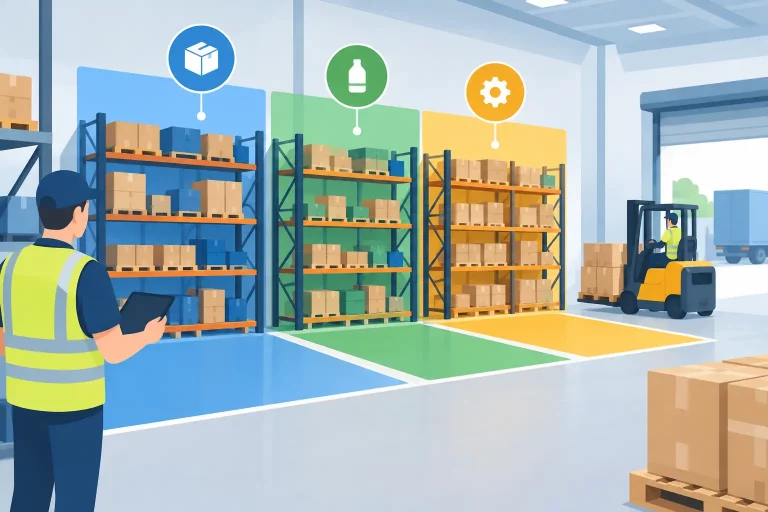
Location-based inventory is just as important. Knowing you have 200 units means very little if you do not know where those units are, which ones are committed, and which warehouse should fulfill the next order. Accurate location data improves picking speed and reduces fulfillment mistakes.
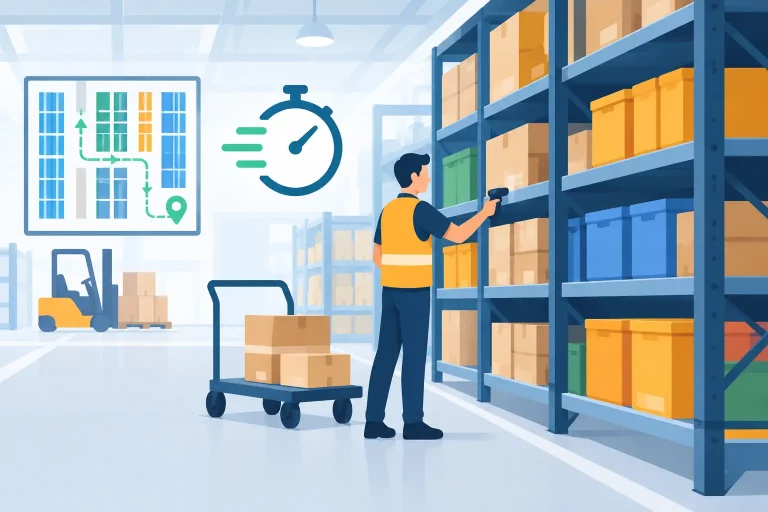
Barcode-driven warehouse workflows help standardize execution. Receiving, putaway, picking, packing, cycle counting, and adjustments all become more consistent when the system guides the process instead of relying on memory.
Order allocation rules matter once you operate more than one fulfillment location. The system should help route orders based on stock availability, warehouse priority, shipping logic, or channel requirements. That reduces split shipments and shortens fulfillment time.
Purchasing visibility closes the loop. A warehouse inventory management system ecommerce teams trust should not only tell them what they have. It should help them understand what they need next. Reorder points, supplier purchase orders, inbound tracking, and demand awareness all support healthier stock levels.
How better warehouse inventory control improves margins
Inventory accuracy is often discussed as a service issue, but it is also a margin issue. Every mismatch between system stock and physical stock creates cost. You may pay for expedited shipping to recover from a warehouse mistake. You may lose marketplace ranking after canceling out-of-stock orders. You may tie up cash in excess inventory because demand planning is based on unreliable data.
Better control improves margins in quieter ways too. Warehouse teams spend less time searching for products. Customer service handles fewer order exceptions. Purchasing teams avoid panic reorders. Managers can make faster decisions because they trust the numbers in front of them.
There is also a staffing advantage. Businesses often try to solve operational chaos by adding headcount. Sometimes that is necessary, but often the real issue is system fragmentation. When inventory, orders, warehouse tasks, and shipping all live in separate tools, every employee spends time bridging gaps between systems. A centralized platform reduces that drag.
What to look for in a warehouse inventory management system ecommerce businesses can scale with
The best fit depends on your operating model. A DTC brand with one warehouse may prioritize picking speed and carrier integrations. A multichannel merchant may care most about inventory syncing and listing control. A wholesale seller may need B2B pricing, purchasing workflows, and larger order handling. Still, a few criteria deserve close attention.
First, check how deeply the system connects inventory to your sales channels and shipping operations. Integrations should not stop at importing orders. They should support real operational control, including inventory updates, status syncing, and fulfillment visibility.
Second, look at how the system handles warehouse structure. Can it manage multiple warehouses, bins, and transfers? Can it support barcode scanning and warehouse-specific workflows? If your operation is likely to grow, these details matter early.
Third, evaluate whether purchasing and inventory planning are built in or left to outside tools. When replenishment data lives separately from warehouse and sales data, planning gets slower and less reliable.
Fourth, consider catalog complexity. Variants, bundles, kits, and channel-specific listings create inventory complications quickly. Your system should manage those relationships without forcing manual workarounds.
Finally, think about operational visibility. You should be able to see available stock, committed stock, incoming inventory, order status, and warehouse performance without assembling reports from multiple systems.
Where many implementations go wrong
Buying software does not fix bad process by itself. If product data is inconsistent, warehouse locations are poorly maintained, or receiving is informal, the system will expose those issues rather than hide them. That is a good thing, but teams should expect an adjustment period.
Another common mistake is choosing a tool that only solves the current pain point. A business may buy a lightweight inventory app to stop overselling, then discover six months later that it cannot support multi-warehouse fulfillment or wholesale workflows. Replacing systems twice is expensive and disruptive.
It also helps to be realistic about complexity. More controls can improve accuracy, but they can also slow teams down if the setup is overly rigid. The right system balances discipline with usability. It should standardize critical workflows without turning every warehouse task into an administrative event.
Why centralized operations matter more than isolated warehouse software
Warehouse execution does not happen in isolation. Inventory decisions affect listing availability, shipping speed, customer communication, and purchasing cash flow. That is why many ecommerce businesses eventually move beyond point solutions and look for a system that centralizes commerce operations.
When inventory, orders, shipping, warehouse activity, catalog management, and purchasing work inside one platform, teams spend less time chasing information and more time moving product. That is especially valuable for sellers operating across marketplaces and direct channels, where timing errors create immediate consequences.
Platforms built for this model can reduce overselling, shorten fulfillment cycles, and give managers a clearer view of stock movement across the business. For merchants scaling across multiple channels and warehouses, that operational control matters more than a long feature list. eSwap is built around exactly that need.
The real goal is confidence
A strong warehouse inventory management system ecommerce operators can depend on gives the business something every growing merchant needs more of: confidence. Confidence that available stock is actually available. Confidence that orders will route correctly. Confidence that the warehouse can keep pace without constant manual intervention.
Growth gets much easier when your team is not second-guessing inventory numbers all day. The best systems do not just help you store products and ship orders. They give you a cleaner, faster way to run the business behind every sale.
If your warehouse is still being managed through disconnected apps, spreadsheets, and manual fixes, the next stage of growth will feel harder than it should. The right system changes that by putting control back where it belongs – inside your operation.