
A product can show 24 units available in your ecommerce store, 21 in a marketplace listing, and 18 on the warehouse shelf. That three-unit gap may look minor, but it can trigger an oversold order, a delayed shipment, an unnecessary purchase order, or a customer service issue that costs more than the item itself. For multichannel sellers, knowing how to reconcile inventory discrepancies is a core operating discipline, not an occasional bookkeeping task.

The goal is not simply to make a system count match a physical count. Effective reconciliation identifies why the counts separated, corrects the right record, and prevents the same error from entering the workflow again. This requires a clear source of truth, traceable stock movements, and a process that connects warehouse activity with sales, returns, purchasing, and every selling channel.
What an Inventory Discrepancy Actually Means
An inventory discrepancy exists when the quantity recorded in one system does not match the quantity physically available or the quantity shown in another connected system. The difference may involve on-hand inventory, committed stock, available-to-sell units, damaged goods, returns, or inventory in transit.
Not every mismatch is a counting failure. A warehouse count may be accurate while a marketplace listing is delayed. A product may be physically present but unavailable for sale because it is allocated to open orders, held for quality inspection, or assigned to a wholesale customer. Before changing quantities, establish which inventory status is being compared.
For example, 100 units on hand does not necessarily mean 100 units available to sell. If 15 are committed to unfulfilled orders, five are damaged, and 10 are in a pending transfer, only 70 may be sellable. Treating every status as interchangeable creates new discrepancies while trying to fix old ones.
How to Reconcile Inventory Discrepancies Step by Step
Start with a defined reconciliation window. Choose a date and time, pause nonessential inventory adjustments if possible, and document all activity that occurs during the count. If receiving, picking, returns, and transfers continue without controls, your team may be comparing a moving physical number to a static system number.
1. Identify the exact SKU, location, and inventory status
Do not begin with a broad adjustment to a product family or a total warehouse quantity. Reconcile at the SKU level, then narrow further by warehouse, bin, lot, condition, and channel allocation where applicable.
Confirm that the product identifier is consistent across systems. A variation parent, child SKU, bundle component, and supplier part number can all refer to related merchandise while representing different inventory logic. Many apparent discrepancies are catalog-mapping issues, especially when products were added manually to one marketplace or duplicated during a migration.
2. Compare the physical count with the system ledger
Count the item in its assigned bin first, then inspect nearby bins, staging areas, receiving zones, return shelves, damage locations, and packing stations. Inventory often goes missing from the expected location before it goes missing from the building.
Next, review the inventory ledger or adjustment history. Look for each movement since the last verified count: receipts, sales orders, shipment confirmations, return receipts, transfers, write-offs, assembly activity, and manual adjustments. The ledger should explain how the system arrived at its current number.
If the ledger says 40 units should be present and the physical count is 37, resist the urge to adjust the system immediately. First determine whether three units were shipped but not confirmed, received but not posted, moved to another bin, or placed in a quarantine area. A fast adjustment may restore a matching number, but it also erases evidence of the operational failure.
3. Trace the discrepancy to a transaction type
Most recurring inventory variances come from a limited set of transaction failures. Common sources include late order imports, duplicate orders, shipment confirmation failures, incorrect receiving quantities, unrecorded damages, returns placed back into available stock too early, and transfers completed in one location but not the other.
Bundles and kits need added scrutiny. If a bundle sells but its component inventory is not decremented correctly, the parent listing can look healthy while the individual components quietly run out. The reverse can happen when component sales do not update the bundle’s available quantity.
Marketplace timing also matters. An order may be created in a channel before it reaches the central inventory system, or a stock update may be queued before it reaches a marketplace. These are integration timing exceptions, not necessarily warehouse errors. Distinguish between a temporary sync delay and a failed sync that needs intervention.
4. Correct the source record, then update connected channels
Once the cause is confirmed, make the correction in the inventory system designated as your source of truth. Avoid making independent quantity changes in Shopify, Amazon, eBay, a warehouse spreadsheet, and an accounting system. That approach may create a short-term match while leaving every channel vulnerable to the next order or sync event.
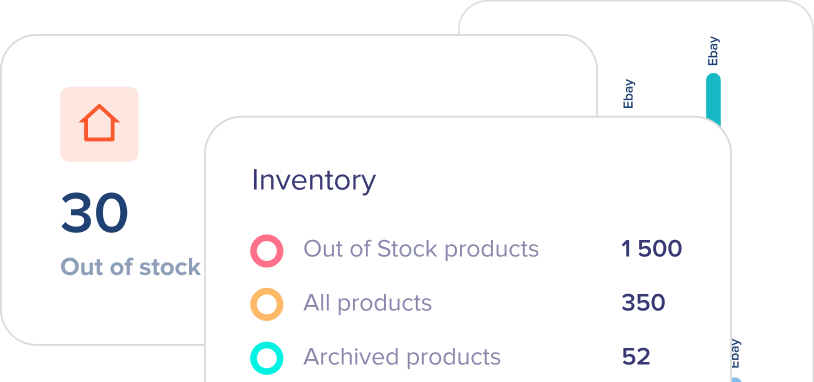
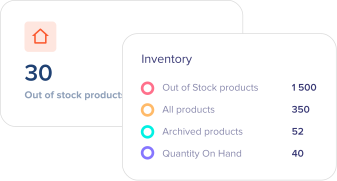
A centralized operations platform such as eSwap helps teams manage inventory, orders, shipping, and warehouse movements from one operational record. The value is not just a consolidated dashboard. It is the ability to make a controlled inventory correction and distribute accurate available stock across connected channels without relying on repeated manual updates.
Record the adjustment reason, the user who made it, the affected location, and the supporting evidence. A clear audit trail protects inventory accuracy and gives operations leaders data they can use to spot process weaknesses.
5. Verify the result after synchronization
Reconciliation is not complete when the adjustment is saved. Confirm that the corrected quantity appears in the central record, that the relevant channel listings receive the update, and that available-to-sell stock reflects open order allocations.
For high-volume SKUs, verify again after the next order cycle. If the same SKU continues to drift, the issue is likely process-based rather than a one-time counting error. Repeated variance in one item may point to poor bin discipline, confusing packaging, an inaccurate bill of materials, or a receiving workflow that needs redesign.
Build a Reconciliation Schedule Around Risk
A full physical count once a year is rarely enough for businesses selling across multiple channels. The right cadence depends on order volume, SKU velocity, warehouse complexity, and the financial impact of stockouts or oversells.
Cycle counting is usually more practical than shutting down operations for a complete count. Count fast-moving, high-value, and frequently adjusted SKUs weekly. Count medium-risk products monthly, while lower-volume stable products may be counted quarterly. Items with frequent returns, bundles, multiple warehouse locations, or recent supplier issues deserve more frequent review.
Use variance thresholds to focus attention. A one-unit discrepancy on inexpensive accessories may require a routine adjustment. A one-unit discrepancy on a high-value item, a controlled product, or a top-selling SKU requires immediate investigation. The objective is proportional control, not equal effort on every item.
Prevent the Next Inventory Variance
Inventory accuracy improves when warehouse actions create system records at the moment work happens. Receiving should be verified against purchase orders before goods become sellable. Picks should be scanned or confirmed before shipment. Returns should move into a separate status until inspected. Damage, samples, internal use, and supplier claims should have dedicated adjustment reasons rather than being buried in generic write-offs.
Clear ownership also matters. If the warehouse team owns physical counts, customer service owns returns, and finance owns adjustments without a shared workflow, discrepancies will remain difficult to explain. Assign responsibility for investigating exceptions and set a deadline for resolving them.
Automation reduces manual error, but it does not replace operational rules. Inventory syncs, low-stock alerts, allocation logic, and purchase recommendations are only as accurate as the transactions feeding them. Review integration exceptions daily, especially after system changes, new marketplace connections, or catalog updates.
When a Manual Adjustment Is the Right Answer
There are cases where the cause cannot be fully reconstructed. A damaged item may have been discarded without documentation, or an old receiving error may surface months later. In those situations, a controlled manual adjustment is appropriate.
Use it as a documented exception, not a default fix. Include the quantity, reason code, date, approver when needed, and any follow-up action. If manual adjustments become routine, that pattern is the real issue to reconcile.
Accurate inventory is built through repeatable control: one trusted record, disciplined stock movements, prompt exception handling, and counts focused where risk is highest. When your team can explain every variance instead of merely correcting it, inventory becomes a dependable foundation for faster fulfillment and confident multichannel growth.