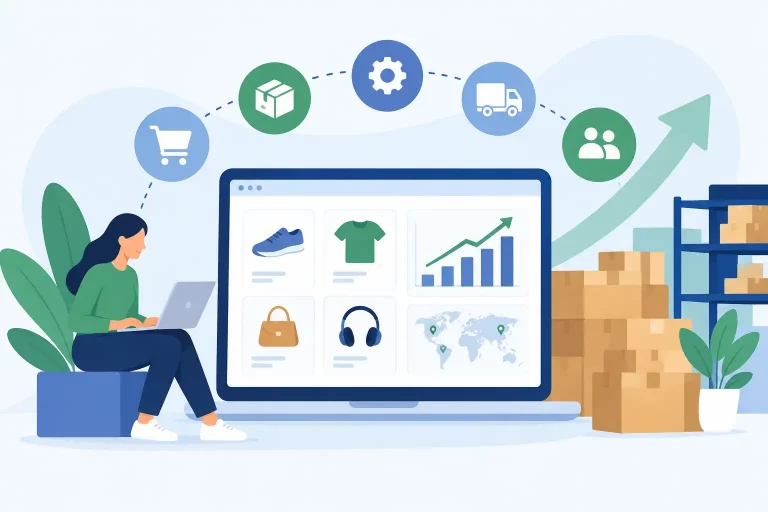
When stock is shown as available on Amazon, Shopify, and a wholesale portal at the same time, a delayed update is not a small systems issue. It can create an oversell, a canceled order, an upset customer, and a warehouse team scrambling to find inventory that is no longer there. An ecommerce ERP gives growing merchants one operating system for the work that happens after the sale and before the package reaches the customer.

For multichannel sellers, the goal is not simply to connect more apps. It is to create dependable control over inventory, orders, fulfillment, purchasing, catalog data, and the financial records that explain what is actually happening in the business. The right system replaces spreadsheet handoffs and disconnected dashboards with workflows that stay accurate as order volume, sales channels, and warehouse complexity increase.
What an ecommerce ERP does for commerce operations
Traditional ERP software was built to manage broad business resources, often for large enterprises with long implementation cycles. An ecommerce ERP applies that discipline to the operational realities of online retail and wholesale: fast-moving inventory, marketplace orders, product variations, shipping deadlines, returns, and frequent changes across sales channels.
At its core, the system should maintain a shared record of products, available stock, customer orders, purchase orders, supplier activity, and fulfillment status. When an order arrives from a marketplace or storefront, it should move into the same operational queue as every other order. When warehouse staff pick and ship it, inventory and order status should update accordingly. When replenishment is required, purchasing teams should see the demand signal before a stockout becomes a lost-sales problem.
That central record matters because commerce teams make decisions all day from operational data. If the data is late, duplicated, or stored in separate systems, teams spend their time reconciling information instead of acting on it.
The operational controls that matter most
Not every business needs the same ERP configuration. A brand shipping a few hundred direct-to-consumer orders per month has different priorities than a distributor serving retail accounts from multiple warehouses. Still, several controls have a direct impact on accuracy, speed, and margin.
Inventory visibility across every channel
Available inventory must reflect what can actually be sold, not just what exists in a warehouse. That means accounting for committed stock, safety stock, goods in transit, damaged items, returns, bundles, and inventory held at different locations.
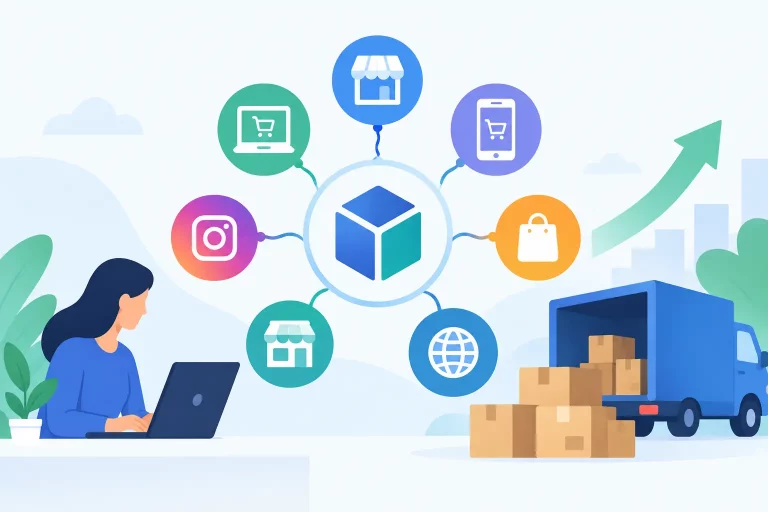
A capable system syncs inventory across channels as orders are placed and fulfilled. This reduces the risk of selling the same unit twice while helping merchants avoid the opposite problem: hiding stock that could still be sold. For businesses with multiple warehouses, it should also identify where inventory sits and support fulfillment rules based on location, shipping cost, or service level.
One order workflow, not five separate queues
Orders from marketplaces, direct storefronts, B2B portals, and manual sales channels should enter one central workflow. Operations teams need to see exceptions quickly: payment holds, address issues, split shipments, backorders, priority orders, and orders that need special handling.
Centralization does not mean every order must follow the same path. A wholesale order may require approval and allocation before release, while a standard Shopify order can move directly to picking. The benefit is that each path is visible and managed in the same system, rather than being buried in channel-specific admin panels.
Warehouse execution that keeps pace with demand
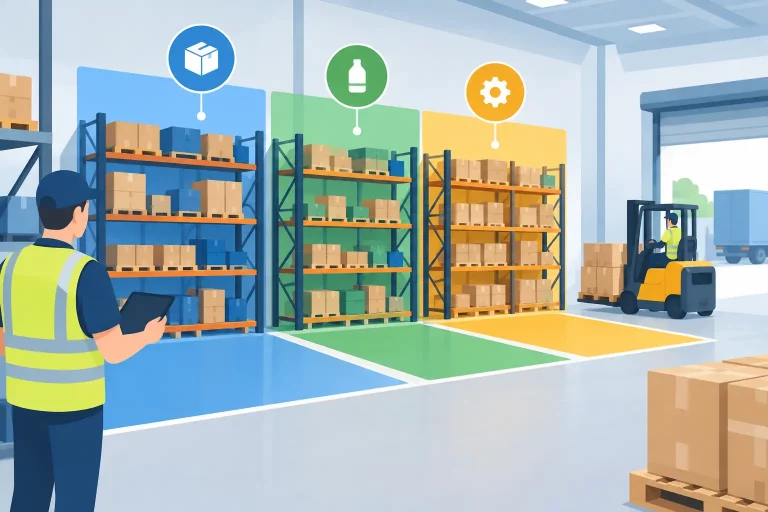
Warehouse teams need more than an order export. They need organized pick lists, barcode-supported scanning, packing controls, shipping labels, and clear status updates. These steps protect fulfillment accuracy when volume rises or temporary staff joins the operation.
The right workflow depends on the warehouse. A small team may prioritize simple batch picking and integrated carrier labels. A larger operation may need zone picking, multi-location bin management, wave planning, and detailed user permissions. An ERP should support the level of process control required without forcing a complex warehouse model on a business that does not need one.
Purchasing based on demand and stock movement
Purchasing is where inventory accuracy becomes commercial planning. Teams need to know which SKUs are moving, which are nearing reorder points, what is already on order, and how long suppliers take to deliver. Without this view, buyers often react to stockouts instead of preventing them.
An ecommerce ERP should bring purchase orders, supplier information, inbound inventory, and receiving activity into the same environment as sales and warehouse data. That makes replenishment more defensible. It also exposes problems that spreadsheets can hide, such as a supplier delay, a receiving discrepancy, or a product that is selling faster on one marketplace than forecast.
Catalog control for products that sell everywhere
Product information becomes difficult to manage when one catalog must support marketplace listings, online stores, wholesale price lists, kits, and product variations. Small differences in SKU mapping, units of measure, pricing, or attributes can create fulfillment errors and misleading inventory counts.
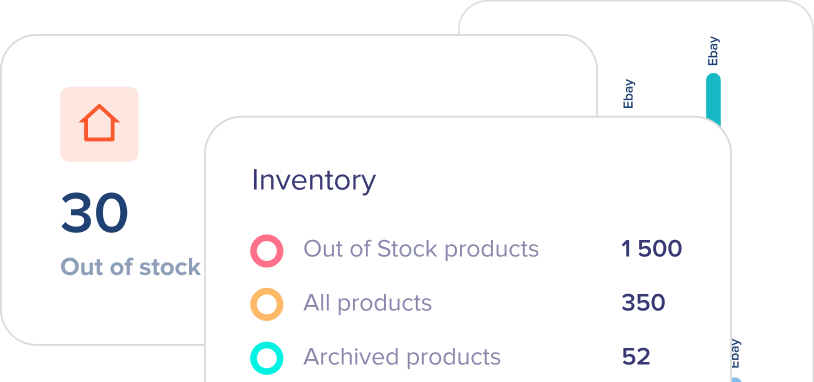
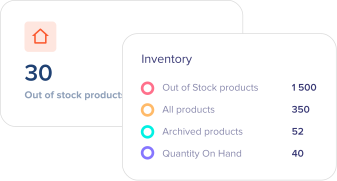
Central catalog management helps establish a reliable product record and distribute the right data to each channel. It is particularly valuable for merchants selling bundles or multipacks. A system should be able to translate a sellable bundle into its component inventory so available stock remains accurate after every sale.
Where disconnected tools begin to fail
Point solutions can work well during early growth. A storefront platform processes orders, a shipping tool prints labels, an accounting system tracks revenue, and spreadsheets fill the gaps. The problem appears when the same operational event must be entered, checked, or corrected in several places.
A typical failure pattern is easy to recognize. Inventory is updated in one system after a delay. Marketplace orders are downloaded manually. Warehouse staff work from a separate pick list. Purchase orders are tracked in a spreadsheet. Finance receives incomplete data after the month has ended. Each tool may function properly on its own, but the business lacks a dependable operating picture.
The cost is not limited to wasted time. Disconnected workflows create preventable oversells, duplicate data entry, delayed shipments, poor purchasing decisions, and reporting that operators do not fully trust. Adding headcount may temporarily absorb the work, but it does not fix the process.
How to evaluate an ecommerce ERP
The best choice depends on channel mix, order volume, warehouse needs, wholesale requirements, and the systems already in use. Merchants should focus less on an impressive feature checklist and more on whether the platform can run their actual daily workflows.
Start with integrations. The system must reliably connect the storefronts, marketplaces, carriers, accounting tools, payment systems, and sales channels that drive the business. A connector is only useful if inventory, orders, tracking, cancellations, and relevant financial data move in the direction and frequency the operation requires.
Then examine the inventory model. Ask how the platform handles multiple warehouses, reserved quantities, bundles, returns, stock transfers, inbound purchase orders, and channel-specific allocation rules. These are the details that determine whether inventory numbers can be trusted during busy periods.
Warehouse functionality should be tested with real scenarios, not generic demonstrations. Can the team pick orders in batches? Can it scan items to prevent packing mistakes? Can it rate shop and print labels through preferred carriers? Can an operations manager see why an order has not shipped? The answer should reflect the way the warehouse works now and the processes it will need next year.
Finally, consider implementation ownership. Data migration, SKU cleanup, channel mapping, user training, and workflow design all affect results. A platform cannot create operational control if the product catalog is inconsistent or teams continue to rely on shadow spreadsheets. The implementation should define a clear source of truth and practical rules for maintaining it.
Building a system that scales without operational chaos
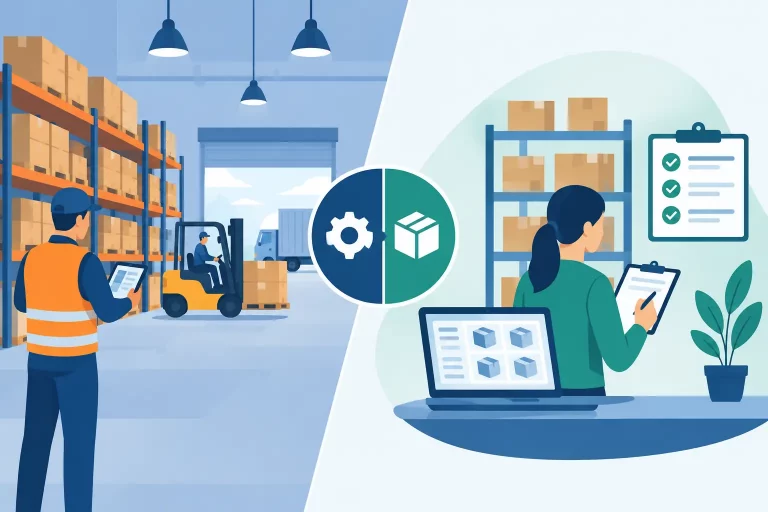
An ecommerce ERP is most valuable when it becomes the control center for routine decisions. Inventory planners use it to protect availability. Warehouse teams use it to fulfill accurately. Buyers use it to plan replenishment. Managers use it to spot exceptions before they become customer problems.
Platforms such as eSwap are built around this operating model, bringing multichannel inventory, order management, warehouse execution, shipping, purchasing, catalog management, and B2B workflows into one environment. That approach helps commerce businesses replace fragmented handoffs with processes that are easier to measure, improve, and scale.
Growth creates more orders, more SKUs, more channels, and more chances for operational errors. The practical next step is to map the workflows that currently depend on manual updates, then decide which one must become accurate first. For many merchants, that single improvement becomes the foundation for faster fulfillment, stronger inventory control, and more confident growth.