A product can be profitable on paper and still create a costly operational problem. When inventory data is delayed, demand shifts are missed, or replenishment decisions rely on disconnected spreadsheets, sellers lose sales through stockouts and lose margin through excess stock. The inventory planning trends shaping multichannel commerce are focused on preventing those failures with faster data, better forecasting, and more disciplined execution.

For ecommerce operators, the goal is not simply to hold less inventory. It is to place the right inventory in the right location, make it available on the right channel, and replenish it before fulfillment performance suffers. That requires planning processes that connect sales, purchasing, warehouse activity, and product data instead of treating each function as a separate operation.
Inventory Planning Trends Moving Beyond Spreadsheets
Spreadsheets still have a role in analysis, especially for exception planning and scenario modeling. They become a problem when they are the primary record of available stock, supplier orders, transfer activity, and marketplace demand. By the time a team updates a worksheet, inventory may have already been sold through another channel.
The strongest trend is toward centralized, real-time inventory data. Multichannel sellers need one dependable view of on-hand, committed, available, inbound, and damaged stock. Those quantities answer different operational questions. A warehouse may physically hold 500 units, for example, while 120 are allocated to open orders and 200 are promised through purchase orders. Planning based only on the physical count creates false confidence.
Centralized visibility also makes channel allocation more deliberate. A business can reserve inventory for wholesale customers, protect stock for a higher-margin storefront, or limit marketplace availability during a demand spike. This is particularly important when Amazon, Walmart, eBay, Shopify, B2B orders, and retail accounts draw from the same inventory pool.
Available-to-sell accuracy is becoming a growth requirement
Accurate available-to-sell inventory protects revenue in two ways. It prevents overselling, which leads to cancellations, late shipments, and marketplace performance issues. It also prevents unnecessary stock buffers caused by a lack of confidence in the numbers.
Many operators respond to unreliable inventory by carrying more safety stock. That can reduce immediate stockout risk, but it ties up cash and increases the likelihood of aged inventory. Better inventory accuracy lets planners set safety stock based on actual lead-time variability and demand risk rather than guesswork.
Demand Forecasting Is Becoming More Practical
Forecasting is often presented as a sophisticated statistical exercise. For most growing merchants, the practical value comes from combining historical sales with the operational context that historical data cannot explain on its own.
A forecast should account for seasonality, promotions, marketplace events, product launches, returns, supplier lead times, and channel-specific demand patterns. A product that sells steadily through a direct-to-consumer store may move in large, irregular quantities through wholesale. Treating those signals as one demand stream can produce poor replenishment decisions.
The trend is not toward blindly trusting an automated forecast. It is toward using automation to identify the baseline, then allowing experienced planners to adjust for known changes. If a supplier has warned of a longer lead time or a marketing team is scheduling a major campaign, those inputs matter as much as last year’s sales curve.
Forecast at the level where decisions are made
Forecasting every SKU at every location can be useful, but it is not always necessary. The right level depends on product velocity, network complexity, and the cost of an error.
Fast-moving products with variable demand deserve frequent review at the SKU and warehouse level. Slow-moving items may be planned by category or reviewed less often. A high-value seasonal product needs tighter controls than a low-cost replenishable accessory. The purpose is not to create more reports. It is to focus planning effort where a stockout, overbuy, or misplaced unit has the largest financial impact.
Replenishment Is Shifting From Calendar Tasks to Trigger-Based Workflows
Monthly purchasing cycles are often too slow for multichannel businesses. A seller may discover a stockout risk weeks after the right supplier order should have been placed. More teams are moving to reorder points, stock coverage targets, and exception alerts that surface action before inventory becomes critical.
A useful replenishment process considers current available stock, open sales orders, inbound purchase orders, expected demand during lead time, and the desired safety stock level. The result should be a clear answer: order this quantity, from this supplier, by this date.
Automation helps, but reorder rules need maintenance. Using a fixed reorder point for a product with highly seasonal demand will create poor results. The same is true when supplier lead times change or a marketplace listing starts growing rapidly. Effective automation reduces repetitive work while making assumptions visible for review.
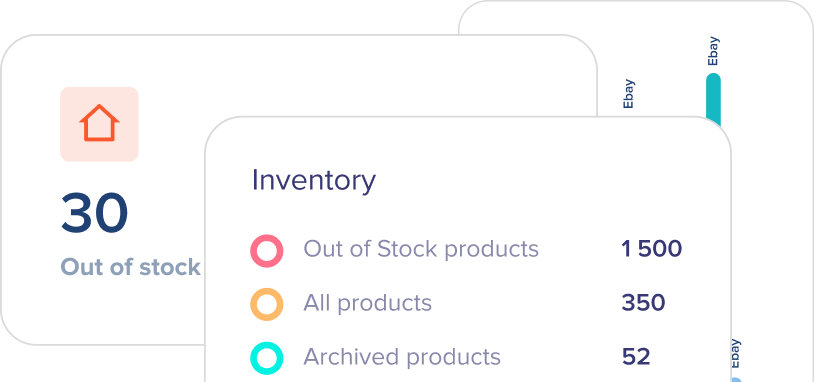

For businesses managing several warehouses, replenishment also includes transfers. Sometimes the right response is not a new purchase order but moving stock from a location with slow demand to one that is at risk. Transfer planning becomes more valuable when inventory, orders, and warehouse movements are managed in the same operational system.
Multi-Location Inventory Is Driving Smarter Fulfillment Decisions
Inventory planning is increasingly tied to fulfillment strategy. As merchants add warehouses, 3PL partners, retail locations, or fulfillment programs, they must decide where stock should sit before orders arrive.
The lowest-cost warehouse is not always the best inventory location. A product positioned closer to its primary demand region can reduce shipping costs and delivery time. On the other hand, splitting small quantities across too many locations raises handling complexity and increases the chance of stranded inventory.
The right network depends on order volume, customer geography, product dimensions, service promises, and warehouse capacity. Operations teams should review these factors together rather than assigning inventory based only on available shelf space. Inventory planners need visibility into fulfillment performance because a decision that improves stock coverage can still hurt the customer experience if it creates slower or more expensive shipping.
Product Data Is Becoming Part of Inventory Control
Poor catalog data creates inventory problems that forecasting alone cannot solve. Duplicate SKUs, inconsistent units of measure, missing bundle components, and unclear product relationships make stock counts and purchasing decisions less reliable.
Bundles are a common example. If a gift set contains two sellable components, the system needs to account for component availability when the bundle sells. Otherwise, the business can oversell a component while the bundle appears in stock. Similar logic applies to multipacks, kits, variants, and products sold under different channel-specific listings.
Clean product data also supports better purchasing. Supplier costs, case-pack quantities, minimum order quantities, lead times, and preferred vendors should be available where planners create and approve purchase orders. When these details live in email threads or individual team members’ memory, replenishment slows down and errors become more likely.
Inventory Planning Trends Need Operational Execution
The value of inventory planning is determined by what happens after the plan is created. A strong forecast cannot compensate for delayed receiving, unprocessed purchase orders, inaccurate cycle counts, or warehouse staff picking from the wrong location.
That is why commerce businesses are connecting planning with daily operations. Receiving should update stock promptly. Orders should reserve inventory automatically. Returns should move through a defined inspection and disposition process. Cycle counts should correct discrepancies before they spread across channels. Each workflow improves the quality of the data used for the next planning decision.
A centralized platform such as eSwap can support this operating model by bringing inventory, purchasing, orders, warehouses, shipping, and multichannel listings into one workflow. The benefit is not merely fewer systems to log into. It is faster decisions based on the same stock and order data used by the teams receiving, selling, and fulfilling products.
What to Prioritize First
Most businesses do not need to redesign every planning process at once. Start by identifying the failure with the clearest cost. If overselling is the issue, prioritize real-time channel synchronization and available-to-sell rules. If cash is tied up in excess stock, improve demand visibility, reorder parameters, and purchasing controls. If orders are shipping slowly, examine where inventory sits and how warehouse allocation is working.
Measure progress with operational metrics, not just forecast accuracy. Track stockout rates, excess inventory, inventory turnover, order cancellation rates, fill rate, days of supply, and supplier lead-time performance. These measures reveal whether planning is improving service and cash flow or simply producing more detailed reports.
The most useful inventory planning trend is not a forecasting model or a new dashboard. It is the shift toward connected decisions: sales activity informs replenishment, purchasing reflects demand and lead times, and warehouse execution keeps the inventory record trustworthy. When those decisions operate from one source of truth, growth becomes easier to control rather than harder to manage.