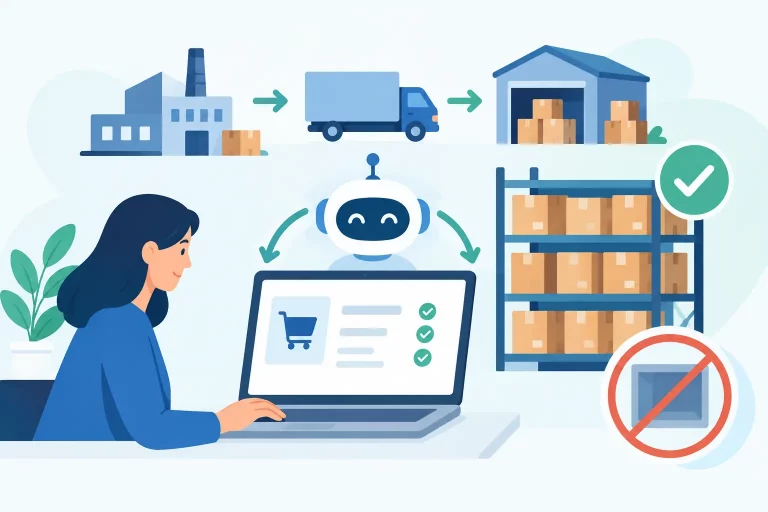
A marketplace order can arrive seconds after a shopper buys the last unit through your Shopify store. If inventory is updated in separate systems, the result is familiar: an oversold item, a customer service ticket, and a fulfillment team working around another avoidable exception. Retail automation trends are increasingly focused on preventing these operational failures before they reach the customer.
For multichannel merchants, automation is no longer limited to sending shipping confirmations or printing labels faster. The real value is connecting inventory, orders, warehouses, purchasing, catalogs, and fulfillment rules so each action updates the next process automatically. The businesses gaining control are not simply adding more apps. They are replacing disconnected handoffs with reliable operational workflows.
Retail Automation Trends Moving Beyond Simple Tasks
The most useful automation is built around decisions that teams make repeatedly. Which warehouse should fulfill an order? When should a purchase order be raised? Which orders need expedited handling? Which listing should be paused because stock is running low? Automating these decisions reduces manual work, but more importantly, it gives every channel the same operational logic.
Centralized inventory is becoming the foundation
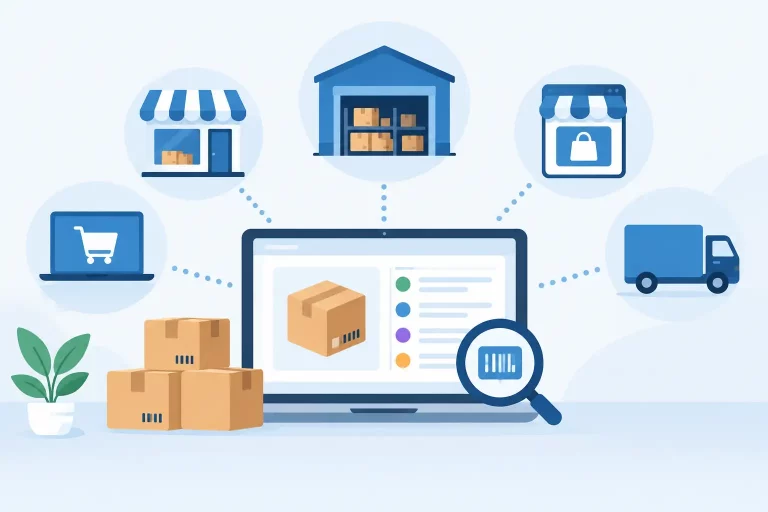
Inventory automation starts with a single source of truth. When stock changes through a sale, return, warehouse transfer, purchase receipt, or manual adjustment, available quantity must update quickly across relevant sales channels. Without this foundation, automating other processes only moves inaccurate data faster.
For retailers selling on Amazon, eBay, Walmart, Shopify, and wholesale channels, centralized inventory also needs to account for channel-specific rules. A merchant may reserve units for B2B customers, maintain safety stock for a high-volume marketplace, or prevent an item from being listed in a channel that cannot support its fulfillment requirements. These are operational policies, not just stock counts.
The trade-off is that centralization requires discipline. Product identifiers, bundle components, units of measure, and warehouse locations must be organized before automated inventory sync can be trusted. Businesses that skip this cleanup often mistake bad product data for a software problem.
Order routing is becoming more rule-driven
Manual order allocation works when volume is low and fulfillment is simple. It becomes a bottleneck when orders must be shipped from multiple facilities, stores, third-party logistics providers, or supplier locations. Modern order routing automation assigns orders using predefined conditions such as available inventory, destination, shipping method, warehouse workload, product restrictions, or promised delivery date.
This matters because the closest warehouse is not always the best fulfillment location. A facility may have the item but lack capacity, face a carrier cutoff, or hold stock allocated to another channel. Effective routing rules reflect the realities of the operation rather than applying one simplistic rule to every order.
Operators should begin with the exceptions that consume the most time. For one business, that may be split shipments. For another, it may be orders containing hazmat items, oversized products, or wholesale case packs. Automate the common path first, then create an exception queue that gives staff clear visibility into orders needing review.
Warehouse automation is prioritizing accuracy before speed
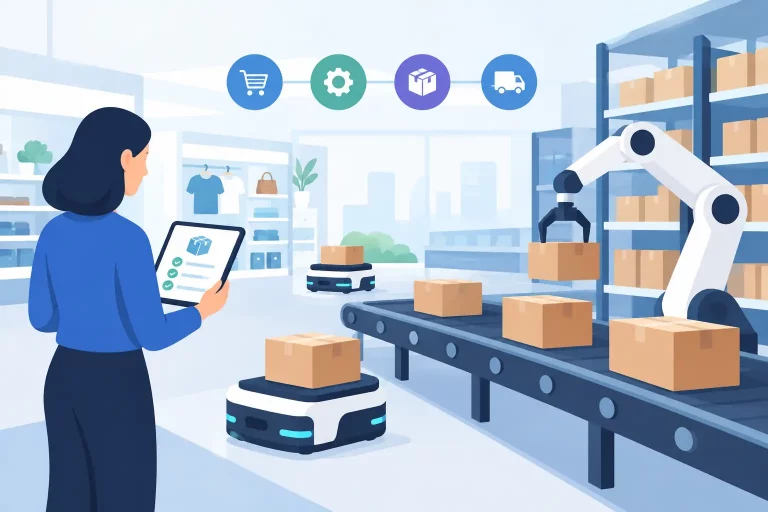
Warehouse automation is often associated with scanners, conveyor systems, robotics, and high-volume fulfillment centers. Those tools have a place, but many growing retailers see immediate gains by improving the software workflow around receiving, putaway, picking, packing, and shipping.
Barcode-based receiving can verify that purchase orders match physical deliveries. Directed putaway can help teams store goods in the right location. Pick lists can be grouped by carrier, order priority, zone, or batch. At packing, automation can validate that the correct products are being shipped and select the appropriate shipping service based on rules.
These workflows reduce dependence on tribal knowledge. When a warehouse process exists only in the memory of an experienced employee, growth creates risk. Standardized steps make training faster and make fulfillment performance more consistent across shifts and locations.
Where AI Fits in Retail Operations
AI is appearing across commerce operations, but its strongest use cases are practical. It can help classify catalog data, identify likely duplicates, flag unusual demand patterns, suggest reorder quantities, and surface orders that may require attention. It can also reduce the time required to create product descriptions or normalize attributes across large catalogs.
Still, AI does not replace the need for clean operating data. Forecasting cannot compensate for missing purchase lead times, unreliable supplier information, or stock records that do not match warehouse reality. AI-assisted recommendations should be reviewed against business rules, margin requirements, seasonality, and known promotional activity.

A useful standard is simple: use AI to reduce research and administrative work, but keep people accountable for decisions that affect inventory commitments, customer promises, and cash flow. Demand planning, for example, benefits from automated signals, yet a planner may know about an upcoming retailer promotion or supplier delay that historical data cannot see.
Purchasing Automation Connects Demand to Supply
Inventory visibility becomes more valuable when it drives action. Retailers are automating reorder points, low-stock alerts, purchase order creation, supplier communication, and inbound receiving so replenishment is not dependent on someone remembering to check a spreadsheet.
The right reorder model depends on the business. Fast-moving, predictable items may work well with automated reorder thresholds. Seasonal products, slow-moving items, and products with volatile supplier lead times need closer review. An automated purchase order should be a controlled starting point, not a blind commitment to buy.
Better purchasing automation also considers inventory already on the way. If a supplier shipment has been confirmed but not received, the system should distinguish incoming stock from available stock. This prevents teams from overbuying while still protecting against overselling. The goal is not merely to carry less inventory. It is to hold the right inventory, in the right place, with a clear view of when more will arrive.
Automation Must Connect the Full Commerce Stack
Point solutions can automate isolated tasks, but disconnected automation creates new reconciliation work. An order management tool that does not share accurate data with inventory, shipping, accounting, and warehouse processes forces employees to investigate mismatches after the fact.
The strongest retail automation trends center on connected workflows. A new order updates stock availability. The order is routed to the proper fulfillment location. Shipping labels are produced with the correct service rules. Tracking is sent to the sales channel. Returns update inventory based on inspection outcomes. Purchasing data reflects demand and replenishment needs. Each step should pass accurate information to the next one.
That connected approach is particularly valuable for businesses operating both direct-to-consumer and wholesale channels. Wholesale orders may require customer-specific pricing, minimum order quantities, payment terms, case-pack handling, and different fulfillment priorities. Managing those requirements outside the main operations system introduces avoidable delay and error.
A platform such as eSwap can centralize these workflows across sales channels, warehouses, shipping carriers, purchasing, and B2B operations, giving teams one operational view instead of a collection of disconnected dashboards.
How to Prioritize Automation Investments
The best starting point is not the newest feature. It is the workflow where manual intervention causes the greatest operational cost. Review the last month of exceptions: oversold orders, late shipments, canceled orders, stock adjustments, duplicate listings, carrier service errors, and purchase orders created too late. Patterns in those issues reveal where automation will produce measurable results.
Set a clear outcome for each workflow. Inventory automation may aim to reduce oversells. Routing rules may aim to improve same-day fulfillment. Shipping automation may aim to lower manual label selection and protect delivery promises. Purchasing automation may aim to reduce stockouts without tying up excess cash.
Then test rules in stages. Start with a defined product group, warehouse, or sales channel. Monitor exceptions, confirm that staff understand the workflow, and adjust conditions before expanding. Automation should make operations more predictable, not hide problems until they become expensive.
The retailers that scale efficiently will treat automation as operating infrastructure. Build the data foundation, automate the repeatable decisions, and keep exceptions visible. When the next surge in orders arrives, the goal is not to ask more of the team. It is to give the team a system that is already prepared to handle it.