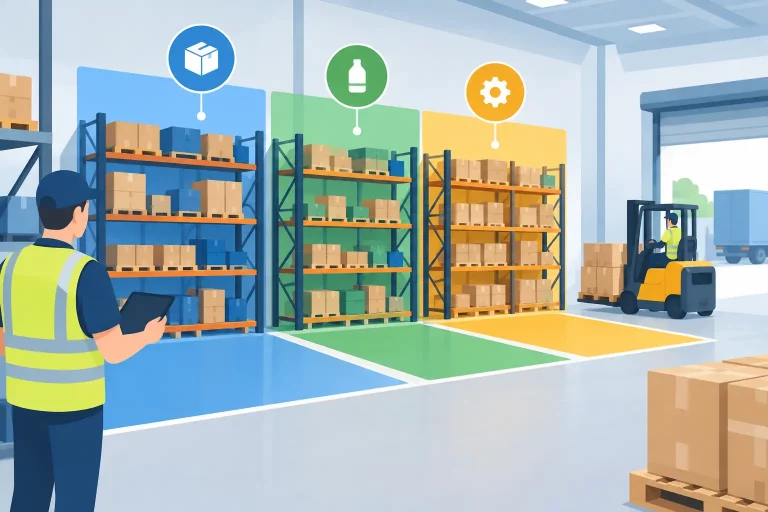
A marketplace order arrives for the last unit at the same moment your Shopify store sells it. Your spreadsheet still shows one available because the warehouse team has not updated the receiving tab, and now two customers have bought the same product. The inventory software vs spreadsheets decision becomes urgent when stock accuracy depends on someone manually catching up after every sale, return, transfer, and purchase order.

For a small catalog with one sales channel, a spreadsheet can be a practical starting point. It is familiar, inexpensive, and flexible enough to track basic quantities. But multichannel commerce creates a different operational problem. Inventory is no longer a static count. It is a live operational record tied to listings, orders, warehouse locations, replenishment, shipping, returns, and wholesale commitments.
The right choice is not about whether spreadsheets are useful. They are. The question is whether they can still support the speed, accuracy, and control your business requires.
Inventory Software vs Spreadsheets: The Operational Difference
A spreadsheet records inventory data. Inventory software manages inventory activity.
That distinction matters because commerce operations are driven by transactions. Every order should reduce available stock. Every cancellation, return, adjustment, receipt, bundle component, and warehouse transfer should update the correct quantity and location. When sales occur across Amazon, eBay, Walmart, Shopify, a B2B portal, and other channels, those updates need to happen quickly enough to prevent overselling.
With spreadsheets, the process often depends on exports, imports, formulas, and manual checks. A team member may download orders from each channel, adjust counts, update a master file, then upload revised quantities. Even when this workflow is carefully designed, it creates delays and introduces opportunities for errors. One copied formula, duplicate SKU, stale file version, or missed return can distort the entire stock picture.
Inventory software creates a central inventory record and connects it to the systems where sales and fulfillment happen. Instead of treating every channel as a separate stock pool, operators can manage available inventory from one source of truth. When configured correctly, the system updates sales channels as inventory changes and gives teams a current view of what is available, allocated, inbound, and stored at each location.
That control is especially valuable when the business carries fast-moving products, seasonal inventory, variants, kits, or products sold in both retail and wholesale quantities.
Where Spreadsheets Still Make Sense
Spreadsheets are not automatically the wrong answer. For a business with a limited number of SKUs, low order volume, one selling channel, and a single fulfillment location, a disciplined spreadsheet process can work well. They are also useful for ad hoc analysis, planning scenarios, supplier comparisons, and one-time data cleanup.
The trade-off is that spreadsheets require process discipline to remain reliable. Someone must own the file, control edits, reconcile data against orders and warehouse counts, and ensure that every inventory movement is recorded. As transaction volume rises, that administrative work grows faster than most teams expect.
A spreadsheet is also weak at enforcing operational rules. It cannot reliably stop a team from shipping the wrong item, allocating stock twice, or selling inventory reserved for a wholesale customer. You can create validations and formulas, but they are difficult to maintain across multiple users and increasingly complex workflows.
For early-stage operators, the practical question is not, “Can we make a spreadsheet work?” It is, “How much staff time and sales risk are we accepting to keep making it work?”
The Limits That Appear as You Scale
The first visible problem is usually overselling. Inventory counts are updated after orders arrive rather than at the point of sale, leaving a window where multiple channels can sell the same unit. Cancellations follow, customer service workload rises, and marketplace performance can suffer.
The next problem is visibility. A total on-hand quantity does not tell an operations manager what is actually sellable. Some units may be committed to open orders, held for quality checks, moving between warehouses, reserved for B2B accounts, or expected on an inbound purchase order. Without clear inventory statuses, purchasing decisions become guesswork.
Then fulfillment complexity enters the picture. A warehouse team needs more than a quantity column. It needs pick locations, barcodes, order priority, shipment status, packing workflows, and a record of who made an adjustment. Spreadsheet-based fulfillment can function at low volume, but it makes repeatable warehouse execution harder as order counts increase.
Catalog complexity creates another breaking point. Parent-child variations, product bundles, multipacks, and shared components require inventory logic that basic files do not handle well. If one bundle consumes two units of Product A and one unit of Product B, selling that bundle should update each component automatically. Manual bundle calculations are a common source of inaccurate availability.
What Inventory Software Changes
Inventory software is designed to make inventory movement part of a controlled workflow rather than a series of disconnected updates. The benefit is not simply a better-looking dashboard. It is the ability to run more transactions without adding the same amount of manual work or operational risk.
One inventory record across channels
A centralized system maintains SKU-level inventory information across connected marketplaces, online stores, and wholesale channels. Operators can see where products are listed, what is available to sell, what has been allocated, and which locations hold the stock. This reduces the need to reconcile separate files at the end of the day.
For multichannel sellers, speed matters. Inventory synchronization helps reduce the gap between a sale and the availability update sent to other channels. It does not remove the need for sound safety-stock policies, but it gives those policies a reliable system to operate through.
Automation for routine updates
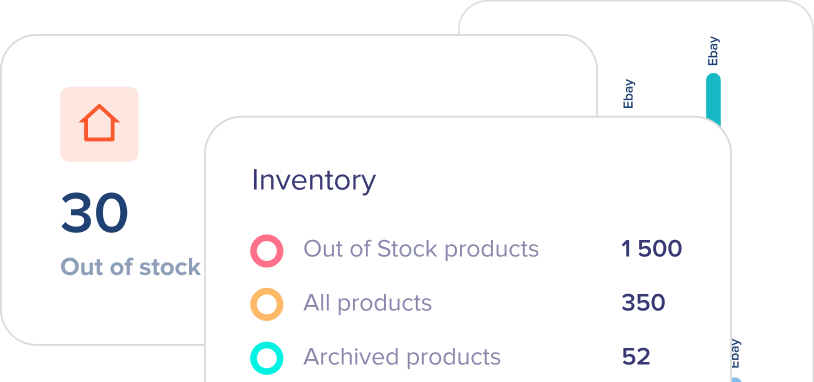
Automation removes repetitive tasks that are easy to overlook under pressure. Orders can flow into a central workspace, inventory can be allocated based on defined rules, and stock levels can update as orders move through fulfillment. Purchase orders, receiving, and inventory adjustments can be recorded against the same product data instead of managed in separate files.
The result is a cleaner operating rhythm. Teams spend less time exporting reports and checking formulas, and more time resolving exceptions that genuinely need judgment, such as supplier delays, damaged stock, or unexpected demand.
Better warehouse accountability
Inventory accuracy depends on what happens after an order is placed. A software system can support location-level stock tracking, barcode-based processes, picking and packing workflows, and auditable adjustments. That gives managers a way to investigate discrepancies instead of relying on memory or searching through email threads.
For businesses shipping from more than one warehouse or using a mix of internal and third-party fulfillment, location-level control becomes essential. Available stock in one facility is not always available stock for every order. Rules for fulfillment routing, shipping service selection, and inventory allocation need to reflect the physical reality of the operation.
The Cost Comparison Is Larger Than Subscription Price
Spreadsheets appear less expensive because the software itself is usually already available. But their true cost includes labor, mistakes, delayed purchasing, lost sales from stockouts, canceled orders from overselling, and the management time required to reconcile conflicting information.
Inventory software has a direct subscription cost and requires implementation effort. Product data must be cleaned up, SKUs standardized, channel connections configured, and workflows tested. Teams also need training. These are real costs, and businesses should not underestimate them.
However, the return becomes clearer when software replaces repeated manual work and prevents expensive errors. If an operations coordinator spends several hours each day reconciling orders and updating stock, the business is already paying for a system. It is simply paying in labor and risk rather than in a visible subscription line item.
The best fit depends on operational complexity, not revenue alone. A lower-revenue seller with thousands of SKUs, multiple warehouses, or fast-moving marketplace sales may need centralized inventory control sooner than a larger business selling a small, stable catalog through one store.
Signs It Is Time to Move Beyond a Spreadsheet
A business is usually ready for inventory software when spreadsheet maintenance has become a daily operational task rather than an occasional administrative task. Frequent stock discrepancies, oversold items, delayed order processing, and uncertainty around reorder quantities are clear signals.
Other signs include selling on more than one channel, managing inventory in multiple locations, offering bundles or product variations, processing wholesale orders alongside direct-to-consumer orders, or needing warehouse staff to work from standardized pick and pack instructions. Each added layer raises the cost of manual coordination.
It is also time to evaluate a system when leaders cannot answer basic questions quickly: What can we sell now? What stock is committed? Which products need replenishment? Where is this SKU located? Which orders are at risk of missing their ship-by date? If finding those answers requires merging files, the operation lacks real-time control.
Choosing a System That Supports the Next Stage
Do not evaluate inventory tools only by their stock count screen. The platform should fit the workflows surrounding inventory: order management, shipping, purchasing, warehouse operations, catalog management, and B2B sales. Disconnected point solutions can recreate the same data fragmentation that made spreadsheets difficult in the first place.
Look for reliable channel integrations, clear inventory statuses, support for multiple locations, automation rules, and reporting that helps teams act on inventory data. The system should also handle the product structures you sell, whether that means variants, bundles, multipacks, or wholesale price lists.
A platform such as eSwap is built for this broader operational need, bringing multichannel inventory, orders, fulfillment, shipping, purchasing, and wholesale workflows into one connected system. The goal is not to add another tool. It is to reduce the number of manual handoffs required to run the business.
Start the transition before the next peak season or major channel expansion forces a rushed decision. Clean product data, define inventory ownership, document warehouse processes, and move the most critical workflows first. The right system gives your team a dependable operating foundation, so growth adds capacity and revenue rather than more spreadsheets to manage.