
A product sells on Amazon at 10:02, two units move through your Shopify store at 10:03, and your warehouse team is packing a wholesale order at 10:05. If those stock changes are not reflected everywhere right away, inventory accuracy disappears fast. That is the core reason merchants ask, what is multichannel inventory sync?

Multichannel inventory sync is the process of automatically updating inventory quantities across every sales channel, warehouse, and operational system when stock changes. If one unit sells on one channel, the available quantity updates on the others. If inventory is received, transferred, reserved, or adjusted, those changes flow through the connected systems as well. The goal is simple: one current view of stock, no matter where you sell.
For growing merchants, this is not just a convenience feature. It is operational control. Without sync, teams end up managing inventory with spreadsheets, manual exports, delayed updates, and channel-by-channel fixes. That leads to overselling, stockouts, order delays, and a lot of time spent correcting preventable errors.
How multichannel inventory sync works
At a practical level, multichannel inventory sync connects the systems where inventory changes happen to the channels where inventory is sold. That usually includes marketplaces, DTC storefronts, warehouses, purchasing workflows, and shipping or order management tools.
When an order is placed, the synced system reduces available inventory for that SKU and pushes the new quantity to the other connected channels. When stock is received from a supplier, the quantity increases and updates everywhere. When inventory is allocated to open orders, moved between warehouses, or adjusted after a count, those events also affect what should be available for sale.
The key difference between true sync and a basic inventory import is timing and consistency. A one-time upload gives you a snapshot. Inventory sync keeps updating that snapshot as the business moves. That matters when you are processing high order volume across Amazon, eBay, Shopify, Walmart, wholesale accounts, and multiple warehouse locations at the same time.
What is multichannel inventory sync solving?
The short answer is that it solves the gap between where inventory physically exists and where inventory is digitally listed.
In a multichannel business, the same product can appear in several places at once. Customers only see what is available on the front end. Your operations team sees what is allocated, backordered, incoming, damaged, or stored in specific warehouse bins. If those views are disconnected, your catalog can show sellable stock that is not actually available.
That creates familiar problems. You oversell on one channel because another channel sold the last unit first. Your team pauses listings manually because they do not trust the counts. Purchase orders are based on stale inventory data. Fulfillment slows down because warehouse staff are working around inventory exceptions instead of shipping cleanly.
Multichannel inventory sync reduces those gaps by treating inventory as a live operational data set rather than a static number inside each sales channel.
Why manual inventory updates stop working
Manual updates can work when order volume is low and the business only sells in one or two places. Once channels, SKUs, bundles, or warehouse locations expand, the process starts breaking down.
The problem is not just labor. It is timing. Even a short delay between a sale and an inventory update can create errors. If your team updates stock every hour, that hour becomes a risk window. If they update at the end of the day, the risk gets much worse.
Manual processes also depend on clean SKU mapping and disciplined execution. One missed update, duplicate SKU, or listing mismatch can throw off stock across several channels. Then the business starts spending time on cancellation management, customer service issues, and marketplace performance penalties instead of shipping orders and planning replenishment.
The operational benefits of inventory sync
The biggest benefit is accuracy, but accuracy matters because of what it improves downstream.
First, it cuts overselling. When stock updates in near real time across connected channels, the chance of selling unavailable inventory drops significantly. That protects revenue, customer experience, and marketplace account health.
Second, it improves fulfillment speed. Warehouse teams can trust that released orders reflect actual stock. That means fewer exceptions, fewer last-minute substitutions, and less time spent checking whether inventory really exists.
Third, it gives better planning visibility. Inventory sync helps merchants see available stock, committed stock, and incoming stock with more confidence. That improves purchasing decisions and helps avoid both stockouts and excess inventory.
Fourth, it supports scale without adding as much manual work. As channels and product counts grow, the business does not need to expand headcount at the same rate just to keep inventory aligned.
What good multichannel inventory sync includes
Not all sync setups are equal. Some only update channel quantities after orders import. Others handle wider inventory events across warehouses, purchasing, and order allocation. The right setup depends on how complex your operation is.
A strong inventory sync process usually includes accurate SKU matching, centralized inventory logic, support for multiple warehouses, and clear rules for what counts as available stock. It should also account for order reservations, returns, stock receipts, and adjustments.
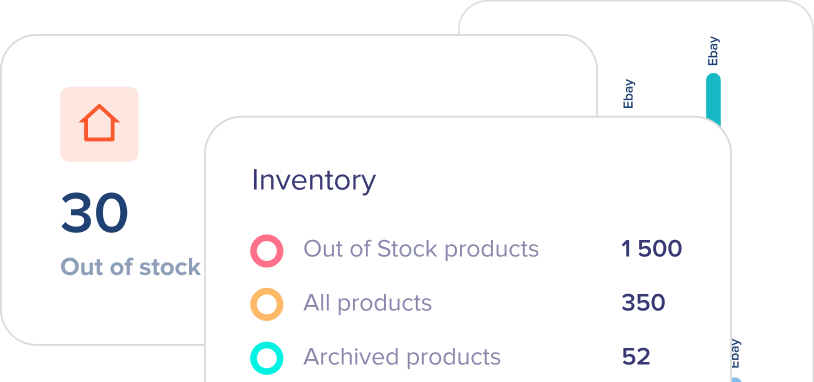
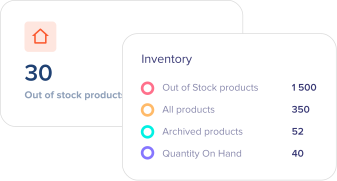
For example, if you hold safety stock or want to reserve inventory for wholesale accounts, your sync rules should reflect that. If you sell kits or bundles made from shared components, the system should update component availability when the parent product sells. If you split inventory across fulfillment locations, each channel should receive the correct available quantity based on your allocation rules.
This is where many businesses outgrow lightweight channel apps. Basic connectors may sync simple stock counts, but they often struggle with operational realities like warehouse transfers, purchasing workflows, composite SKUs, or channel-specific inventory logic.
Common challenges and trade-offs
Inventory sync is valuable, but it is not magic. Results depend on data quality, process design, and how your systems are configured.
If SKUs are inconsistent across channels, sync can fail or update the wrong listings. If returns are not processed correctly, available stock can be overstated. If a business has multiple warehouses but no clear allocation strategy, inventory can still look accurate overall while being unavailable in the right location.
There is also a timing question. Some businesses need updates within seconds. Others can operate effectively with short sync intervals. The right threshold depends on order velocity, sales channel mix, and how costly an inventory error is for the business.
Another trade-off is centralization versus flexibility. A centralized system gives tighter control, but it also requires teams to follow standardized workflows. For scaling merchants, that is usually a good trade. For teams used to making isolated channel-level changes, it can take adjustment.
Who needs multichannel inventory sync most?
Any seller operating across more than one sales channel can benefit, but the need becomes urgent when inventory complexity starts affecting performance.
That usually means businesses selling on multiple marketplaces and storefronts, merchants with more than one warehouse, brands managing fast-moving SKUs, wholesalers balancing B2B and DTC demand, and teams dealing with bundles, preorder inventory, or shared stock pools.
If your team regularly pauses listings to avoid overselling, checks inventory manually before shipping, or reconciles stock discrepancies after orders come in, you are already paying the cost of not having reliable sync.
How to evaluate an inventory sync solution
Start by looking beyond the phrase inventory sync and asking what events the system actually syncs. Does it only reduce stock after a sale, or does it also reflect purchase receipts, warehouse transfers, returns, and manual adjustments?
Then look at channel coverage. The more your operation depends on Amazon, eBay, Shopify, Walmart, wholesale workflows, carriers, and back-office systems, the more important it is to have one platform coordinating those moving parts.
Next, evaluate warehouse logic. If inventory is stored in multiple locations, your sync process should not just track total stock. It should support operational rules around availability, picking, routing, and allocation.
Finally, look at visibility. Good sync is not just about automation. It is about giving operators confidence in what they are seeing. If the team cannot trace inventory changes or understand why a quantity was updated, errors become harder to fix.
Platforms built for commerce operations, including systems like eSwap, are designed around this bigger requirement: not just syncing stock counts, but coordinating inventory, orders, warehouses, shipping, and purchasing in one controlled workflow.
What multichannel inventory sync really means for growth
At a certain stage, inventory management stops being a listing problem and becomes an operations problem. That is when multichannel inventory sync matters most.
It keeps the business from selling disconnected promises. It helps every channel reflect what your operation can actually fulfill. And it gives your team a cleaner foundation for shipping faster, buying smarter, and scaling without turning inventory control into a daily fire drill.
If your stock is moving in more than one place at once, sync is no longer optional. It is the system that keeps growth from creating chaos.