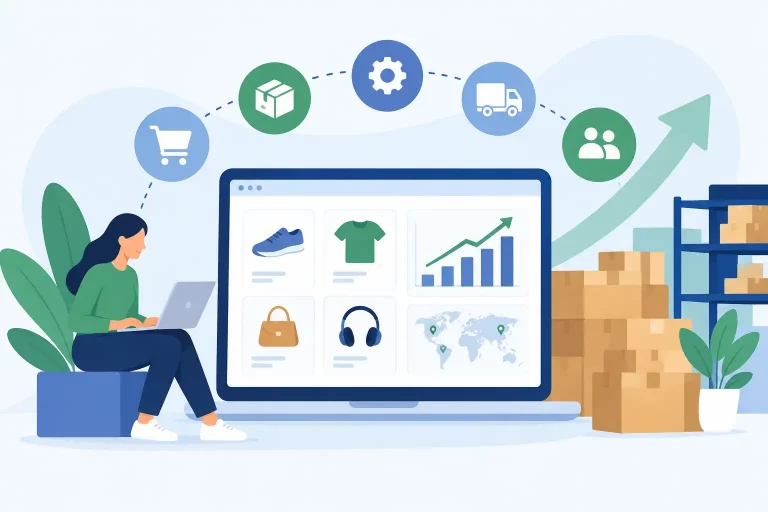
A shipping tool can print a label. Shipping platforms should do much more. For multichannel merchants, shipping is where inventory accuracy, warehouse execution, carrier costs, customer expectations, and marketplace performance meet. When those processes operate in separate systems, even a growing order volume can create late shipments, incorrect tracking, stock discrepancies, and costly manual work.

The right platform gives your team control over the fulfillment process from the moment an order is received to the moment it is delivered. It should help you choose services intelligently, automate repeatable decisions, keep orders moving through the warehouse, and ensure the shipping data sent back to each sales channel is accurate.
What Shipping Platforms Need to Solve
Many businesses start with carrier portals or a basic label-printing application. That approach can work when orders come from one storefront, one warehouse, and one carrier. It becomes difficult to manage when sales expand across Amazon, eBay, Shopify, Walmart, wholesale accounts, and additional channels.
At that point, shipping is not a standalone task. It is one part of a larger operations workflow. An order needs the right stock allocation before a label is printed. Warehouse staff need accurate pick instructions. The selected carrier service must match the delivery promise and package details. Tracking needs to update the source channel promptly. Returns, cancellations, and partial shipments must also be reflected in inventory and order records.
A platform that only sits at the end of this process can reduce some label work, but it will not fix the operational gaps that cause fulfillment mistakes. Merchants should look for shipping capabilities that connect directly to order management, inventory, warehouse workflows, and sales channels.
Evaluate Shipping Platforms as Part of Operations
The most useful evaluation question is not, “Which platform has the lowest label rate?” It is, “Which system lets our team fulfill accurately and efficiently as complexity increases?” Carrier discounts matter, but the cost of a wrong shipment, an oversold item, or a missed marketplace shipping deadline can be much higher.
Carrier and Service Coverage
Start with the carriers your business uses today, then account for the services you will need as volume, product categories, and customer expectations change. Domestic parcel shipping may be your primary requirement, but international services, regional carriers, freight options, or specialized delivery methods may become relevant later.
Coverage alone is not enough. Teams need the ability to compare eligible services using live order information, including destination, package dimensions, weight, requested service level, and delivery commitment. A platform should make it practical to apply your own carrier accounts and shipping rules without forcing staff to make the same decisions order by order.
The best choice depends on your shipping profile. A retailer with lightweight consumer goods may prioritize parcel rate shopping and branded tracking. A wholesaler moving larger cartons may need stronger support for batch fulfillment, commercial documents, and warehouse packing workflows. Businesses with high-value products may place more weight on insurance rules, signature requirements, and address validation.
Multichannel Order Connectivity
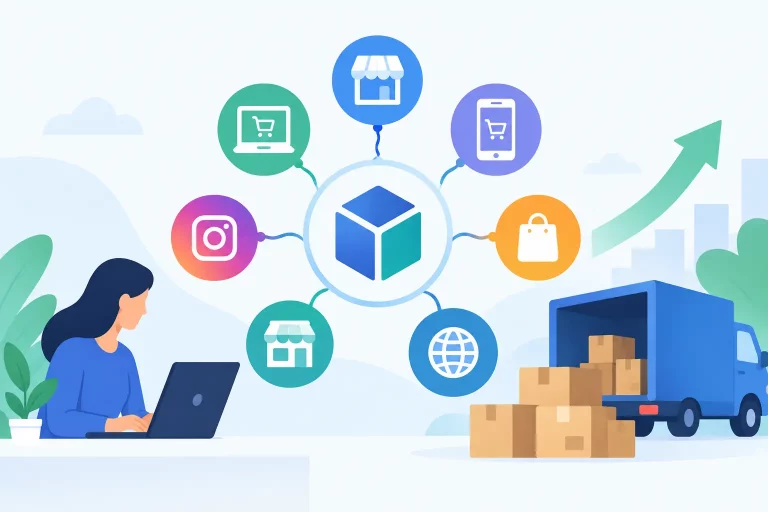
Shipping speed suffers when staff must export orders from marketplaces, import them into a shipping tool, and then manually post tracking information back. That process creates delays and leaves room for duplicate orders, incorrect status updates, and fulfillment against stale inventory data.
Look for a platform that centralizes orders from your selling channels and keeps status information synchronized. Once an order ships, tracking, carrier service, shipment confirmation, and inventory changes should flow to the right destination automatically. This is especially important for marketplace sellers, where late confirmations or invalid tracking can damage account health.
Centralization also makes exceptions easier to manage. If an address fails validation, inventory is unavailable, or an order must be held, your team should see the issue in the same operational environment where it manages orders and stock. Separate dashboards may look manageable at low volume. They become a bottleneck when exceptions multiply.
Shipping Automation That Reflects Your Rules
Automation is valuable when it captures the decisions your experienced operators already make. For example, a rule might select a carrier service based on destination zone, order value, package weight, product type, or a customer’s requested delivery speed. Another rule might route orders to the warehouse with available stock, apply signature confirmation above a set order value, or hold orders flagged for review.
The goal is not to automate every decision without oversight. It is to remove repetitive work while preserving control over exceptions. Shipping rules should be visible, adjustable, and easy to test. If your team cannot understand why a particular service was selected, it will be difficult to troubleshoot costs or delivery issues later.
Batch processing is equally important. During peak periods, fulfillment teams need to pick, pack, rate, and print labels for large groups of orders without opening each order individually. A capable system supports this speed while maintaining order-level accuracy.
Warehouse Execution Cannot Be an Afterthought
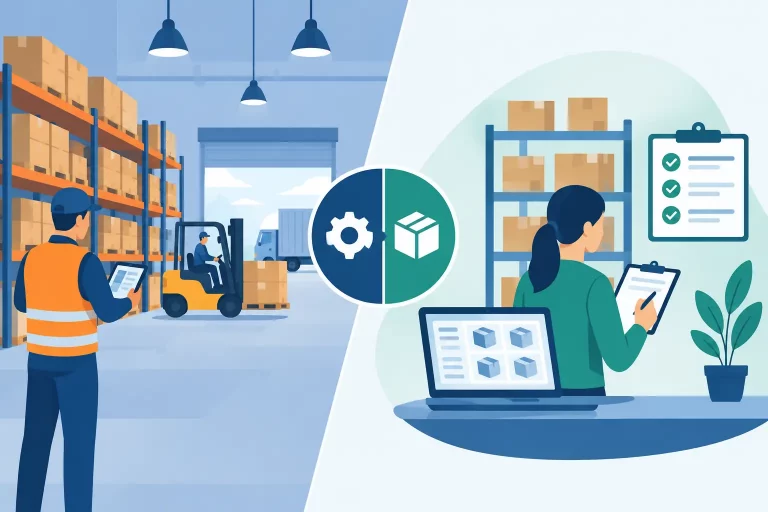
Shipping platforms are often evaluated by the person purchasing labels, but their success is decided on the warehouse floor. Labels printed quickly do not help if the warehouse picked the wrong SKU, packed the wrong quantity, or shipped an item that was already allocated to another channel.
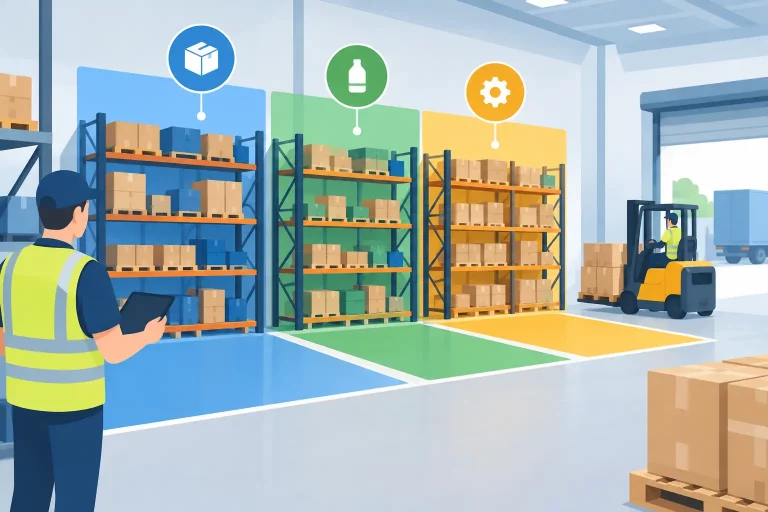
For businesses operating their own fulfillment, shipping should be connected to barcode scanning, pick lists, packing stations, bin locations, and inventory movements. This gives staff a controlled workflow: verify the item, confirm the quantity, pack the order, generate the appropriate label, and mark the shipment complete. Each step reduces reliance on memory and manual data entry.
Warehouse integration also improves accountability. Operations managers can see where orders are waiting, whether a specific carrier cutoff is at risk, and which exceptions are preventing shipment. That visibility is more actionable than a daily report showing only the number of labels printed.
If you use third-party logistics providers, the priority shifts slightly. You need reliable order transmission, shipment acknowledgments, tracking updates, inventory receipts, and stock adjustments between systems. The principle remains the same: shipping data should not become disconnected from inventory and order data.
Measure Cost Beyond the Label Price
A lower carrier rate is useful, but it is not the complete cost of shipping. Evaluate the labor required to process an order, the frequency of corrections, the expense of reships, and the customer service time spent answering “Where is my order?” questions. These costs often reveal why a low-cost point solution becomes expensive at scale.
A shipping platform should provide reporting that helps operators identify meaningful patterns. That may include carrier spend by service, shipment volume by channel, delivery performance, average cost per order, late-shipment risk, and exceptions by reason. The exact reports depend on your business, but the data must be available without building spreadsheets from multiple disconnected sources.
It is also worth checking whether the platform handles packaging data well. Accurate dimensions and weights improve rate selection, reduce adjustment charges, and help teams identify products that need better packaging rules. For merchants shipping thousands of orders, small inaccuracies can become a significant cost line.
Build for Growth Without Adding Process Chaos
A platform that fits today’s workflow but cannot handle additional channels, warehouses, users, or product complexity will eventually force another migration. That does not mean every merchant needs enterprise-level functionality on day one. It means the system should give you a credible path to add control as your operation grows.
Consider whether you can add new sales channels without recreating product records, introduce warehouse locations without losing inventory visibility, and support wholesale fulfillment alongside direct-to-consumer orders. Also examine how user permissions, workflow rules, and operational reporting will work as more people join the team.
For multichannel businesses, an integrated commerce operations platform such as eSwap can bring shipping into the same environment as orders, inventory, warehouse activity, purchasing, catalogs, and B2B workflows. That approach reduces handoffs between tools and gives operations teams a clearer view of what must happen before an order leaves the building.
Questions to Ask Before You Commit
Before selecting a platform, walk through real orders with your team instead of relying only on a feature checklist. Use a domestic order, an international order, a split shipment, an out-of-stock order, and a return. Ask how each case moves from sales channel to warehouse to carrier confirmation, and identify where employees need to intervene.
You should also ask whether shipping rules can be configured around your actual business logic, how inventory is reserved before fulfillment, what happens when a label is voided, and how quickly tracking returns to each marketplace. A vendor demonstration should show these workflows in context, not just a label being printed.
The strongest shipping operation is not the one with the most carrier options or the flashiest dashboard. It is the one that helps your team ship the right order, from the right location, with the right service, every time. Choose a system that makes that discipline easier to maintain as orders keep coming in.